by T. Stanfill Benns | Apr 17, 2020 | New Blog
+Pope St. Anicetus+
What was said in our last blog — that as all theologians teaching before the death of Pope Pius XII unanimously taught — matters regarding the validity of the Sacraments and eternal salvation do not fall under the category of doubtful laws. This is because “A doubtful law has no binding force whenever the doubt concerns the lawfulness of an act and not its validity” (Rev. Dominic Prummer) and “…The common good demands certitude concerning the validity of acts,” (Abp. Amleto Cicognani). When the doubt concerns something which is absolutely necessary for salvation, (for example, the necessity of obedience to the Roman Pontiff), then a probable opinion (probability) cannot be relied upon to determine validity. One must know the man elected is a certainly valid pope before rendering obedience. That it is the validity of the one elected and not lawfulness per se is proven in the following from Fr. E. Sylvester Berry in his The Church of Christ.
- “If the Church could fail in any of its essentials, even for a time, it would lose all authority to teach and govern, because the faithful could never be certain at any time that it had not failed — that it had not ceased to be the Church of Christ, thereby losing all authority. But an authority that may be justly doubted at all times is no authority; it commands neither obedience or respect…” (p. 55-56) “Jurisdiction can be conferred only by a lawful superior…and may be revoked at any time. [It] can neither be obtained nor held against the will of her supreme authority; its transmission depends entirely on legitimate succession…” And on p. 402: “When there is a prudent doubt about the validity of an election to any official position, there is also a similar doubt whether the person so elected really has authority or not. In such a case, no one is bound to obey him, for it is an axiom that a doubtful law [the duty to obey one doubted to be a true pope] begets no obligation — a doubtful law does not oblige. But a superior whom no one is bound to obey is, in reality, no superior at all. Hence the saying of Bellarmine: a doubtful pope is no pope.”
- “A doubtful pope may be really invested with the requisite power, but he has not practically in the Church the same right as a certain pope — he is not entitled to be acknowledged as Head of the Church, and may be legitimately compelled to desist from his claim,” (The Relations of the Church to Society — Theological Essays, Rev. Edmund James O’Reilly, S.J.). The statement regarding desisting from his claim can only be a reference to Pope Paul IV’s bull, Cum ex Apostolatus Officio.
- This teaching is reflected in the opinions of six different notable theologians (Reiffenstuel, Schmalzgrueber, Ferraris, Vecchiotti, Vermeersch-Creusen), satisfying the moral prerequisites for establishing true probability, “There is no schism involved…if one refuses obedience [to a pope] inasmuch as one suspects the person of the Pope or the validity of his election…” (The Communication of Catholics with Schismatics, Rev. Ignatius J. Szal, A.B., J.C.L.). Still, no positive doubts regarding the validity of a papal election can be entertained without presenting at least oneserious and compelling reason for such doubts. Below are listed seven areas of doubt regarding the election of Angelo Roncalli, John 23rd, following the death of Pope Pius XII, and not all doubts may have been covered in this list.
Questions regarding John 23rd’s election
- Were the electors of John 23rd competent to elect? (Because they were not acting in harmony with the sacred canons and in retrospect were doubtful Catholics they were not competent electors according to Can. 147, Pope Pius XII’s Vacantis Apostolicae Sedis (VAS). Their heresy may have been occult at the time but was later unquestionably manifested during the false Vatican 2 council.)
- Did a two-thirds plus one majority elect? (This majority is necessary for validity per VAS and cannot be omitted without voiding the election.)
- Was the one elected certainly a member of the Catholic Church on election? (The one elected must certainly be a Catholic for validity according to the teaching of St. Robert Bellarmine. Roncalli’s Communist and liberal leanings, also his liturgical renewal sympathies and Masonic affiliations pose grave doubts regarding his Catholicity.)
- Was the one elected qualified for election under VAS? (Grave doubts exist as to whether the candidate was able to be elected because he campaigned for election prior to the death of Pius XII and was subject to excommunication reserved to a future pope. Many reports also suggest there was lay interference during the conclave, forbidden by VAS.)
- “The Pope, having full authority in the government of the Church, may establish laws which would render a papal election null and void unless the prescribed conditions be fulfilled. It is true the laws made by one pope do not bind his successors, but they can and do bind the one to be elected” (Berry, p. 399). See also https://www.betrayedcatholics.com/free-content/reference-links/1-what-constitutes-the-papacy/apostolic-constitution-vacantis-apostolicae-sedis/.
- Were those who accepted Roncalli’s election truly Catholic? Certainly by 1969 it was clear who was and who was not siding with the Novus Ordo church. No claim can be made that an election is validated by the acceptance of the faithful if those accepting are not faithful CATHOLICS, uncontested members of Christ’s Mystical Body. Most of the bishops were no longer Catholic as proven at Vatican 2; many of the faithful were certainly not Catholic after John 23rd’s election, either, because the majority accepted Vatican 2 and the new mass. And those who exited the Vatican 2 church following Paul 6’s promulgation of the NOM certainly can be said to have doubts regarding the authority demanding such a promulgation or they would never have left.
- In Cum ex Apostolatus Officio, Pope Paul IV teaches in paragraph seven: “It shall be lawful for all and sundry who would have been subject to persons so promoted and elevated, had these not first strayed from the Faith or been heretics, or incurred or incited or committed schism; for clerics, secular or regular, and for laymen; likewise for Cardinals, even for those who participated in the election of one straying from the Faith, or of a heretic or schismatic to the Papacy, or who otherwise presented and pledged him obedience and paid him homage… to depart with impunity at any time from obedience and allegiance to said promoted and elevated persons and to shun them as sorcerers, heathens, publicans, and heresiarchs… Nor shall they be liable to reprisal through any censure or penalty, as renders of the Lord’s robe, for departing…”
John 23rd’s papacy was short, just a little over four and a half years. Not many major changes were made, and the average Catholic had little reason for alarm. But when the false Vatican council ended in 1965, the rites of the Sacraments were changed in 1968 and the Novus Ordo Missae issued in 1969, true Catholics realized something was very wrong and began exiting the Church. Some estimate up to 40 percent of all Catholics left at that time, but most of them remained only nominally Catholic. The rest affiliated with the Traditionalist movements, which wasted no time in organizing. Had it not been for the questionable character of John 23, and proofs which emerged only much later that his election was not held according to Pope Pius XII’s election constitution Vacantis Apostolicae Sedis (VAS), we might be able to say he was validly elected. Knowing today that he was only a “transition pope,” something said at the time he was elected but not fully understood, in and of itself suggests that a plan was in place to elect not only Roncalli, but a specific person after his reign ended. This alone voided Montini’s election, since it was a second prearranged plan in violation of VAS.
From Rev. Francis Connell we read: “What certainty have we that the reigning Pontiff is actually the primate of the universal Church – that is, that he became a member of the Church through valid baptism, and that he was validly elected Pope? We have human moral certainty that the reigning Pontiff was validly elected in conclave and accepted the office of Bishop of Rome, thus becoming head of the universal Church. The unanimous consensus of a large group of Cardinals composing the electoral body gave us this assurance… For if we did not have infallible assurance that the ruling Pontiff is truly in the eyes of God the chief teacher of the Church of Christ, how could we accept as infallibly true his solemn pronouncements?” This is but an echo of Fr. Berry above, who provides the answer. Louis Cardinal Billot, Rev. Charles Journet and others are of the same opinion as Connell, agreeing the acceptance of the Church cures defects in election.
But they are presuming that the man elected was indeed a Catholic, when this fact cannot be certainly known given the evidence of Cardinal Roncalli’s activities and statements pre-election. They also are assuming there was no question that the cardinals electing were Catholic. The papal bull Cum ex Apostolatus Officio, retained in the 1917 Code of Canon Law, declares that any man who was a heretic, apostate or schismatic prior to his election as pope, or appointment as a cardinal or bishop, never assumes the position in question and has no power to command whatsoever. The pope cannot become a heretic as pope: this must occur before his election. But cardinals and bishops can definitely become heretics and schismatics while seeming to retain their positions, as later happened following Vatican 2. Paul IV’s bull gives Catholics, even cardinals and bishops, time to figure out a man falsely elected was never pope without incurring censure. But the liturgical renewal crowd who happily accepted John 23rd’s election still accepted him and Paul 6 as undoubted popes even after Vatican 2 and the introduction of the NOM. This despite the doubts raised by Traditionalists regarding their Catholicity. So in the end, were those who accepted these two men as “popes” even Catholic themselves?
Those cardinals electing John 23 are condemned by the words of Pope Pius XII as follows, “We command those individuals to whom it pertains and will pertain for the time being to vote, that the ordinances must be respectively and inviolably observed by them, and if anyone should happen to try otherwise relative to these things, by whatever authority, knowingly or unknowingly, the attempt is null and void.” Yet despite this the cardinals elected a man many of them knew to be unworthy, a man who promoted his own election contrary to Pope Pius XII’s specific ordinance and therefore was not capable of being elected according to the law. Numerous examples of Roncalli’s and Montini’s dalliances with socialism and Communism, also Freemasonry, are documented in the book The Phantom Church in Rome, available on this website. The statements they made pre-election as well as their actions both before and after their “elections” would create grave doubt even among the simplest of Catholics. And that is just one doubt, which is all that is needed to call an election into question.
Summary of doubts about John 23rd’s election
- Roncalli’s own heresy and Masonic affiliations, which amount to apostasy
- His violation of the provisions of Vacantis Apostolica Sedis, which subsequently voided the election, consisting in:a) allowing himself to be promoted for election prior to the death of Pius XII; b) agreeing to act as a “transition pope” to usher in the false Vatican 2 Council and c) in order to make Giovanni Montini, Paul 6 a cardinal; d) this to enable Montini, a candidate favored by the secular powers that influenced the election, capable of election at the next conclave; and e) despite the four different latae sententiae excommunications attached to these violations, Roncalli allowed himself to be selected as a grossly unworthy candidate incapable of accepting the election.
- The questionable Catholicity of several of the Cardinal-bishops based on statements made prior to the conclave (most of whom later participated in Vatican 2 and helped implement the changes it dictated). Their collaboration with those promoting Roncalli voided the election, It furthermore called into question the two-thirds plus one majority of cardinals mandated by Pius XII to elect the pope, something that is strictly required for validity.
- In retrospect, the Catholicity of those “accepting” John 23rd’s election, clergy and laity alike, seeing that most of them later also accepted the V2 changes and NOM mass. Under Paul IV’s bull, they were allowed ample time to assess the situation and separate themselves from it but did not even consider this possibility when doubts were later raised.
How many different ways would one wish to see an election voided? None of those writing about the acceptance of a papal election ever anticipated these circimstances. There are clear proofs from several sources that Roncalli promoted himself for election. His own words show he associated with Communists, and historians and journalists have chronicled his associations with Freemasons. Once again, all this is documented in The Phantom Church in Rome and was initially documented in part long before that in this author’s first self-published work. In addition, according to Can. 2391, “A college which knowingly elects an unworthy person is automatically deprived, for that particular election, of the right to hold a new election.” This would automatically void the “election” of Paul 6. While this canon may be said by some not to apply to a papal election, the law does not specifically exclude such application, either.
Still, strictly speaking, the canon is not needed since it applies to ecclesiastical elections and laws. The matters we have addressed here pertain to divine law because the pope canonically elected receives jurisdiction from God, not the electors, upon acceptance of the election; but only if the election is canonical. This is a matter of faith. And canonical means it must be carried out in full compliance with Pope Pius XII’s 1945 election law. It is plain to see, however, that the provisions of this law were not followed in Roncalli’s election. That election was therefore voided according to the infallible command of Pope Pius XII. Obedience upon which one’s salvation depends cannot be rendered to a doubtful authority; this is an absurd proposition, as Fr. Berry notes above. The safer course — keeping the faith at home — protects all Catholics from sacrilege, idolatry and the false teachings of thieves and hirelings, including those of a false pope. This was clearly the intention of the popes and Ecumenical Councils in their laws and teachings condemning antipopes and those who falsely claimed the offices of bishops without papal approval.
Pope Paul IV taught that these usurpers can never be considered as quasi-legitimate and all of their actions, including appointments or promotions to Holy Orders, are null and void. But Traditionalists and their followers resort instead to “recognize and resist,” a thoroughly unCatholic principle, or use the lack of bishops and priests to justify creating their own hierarchy, as with sedevacantists. Only recognition of the extent of the damage done to the Church will result in a true reconciliation of these groups, but it seems God did not intend this to be. Therefore we must trudge forward and accept His will, knowing that while we may be persecuted for following our conscience, we are protecting God’s rights and safeguarding our immortal souls.
by T. Stanfill Benns | Apr 12, 2020 | New Blog
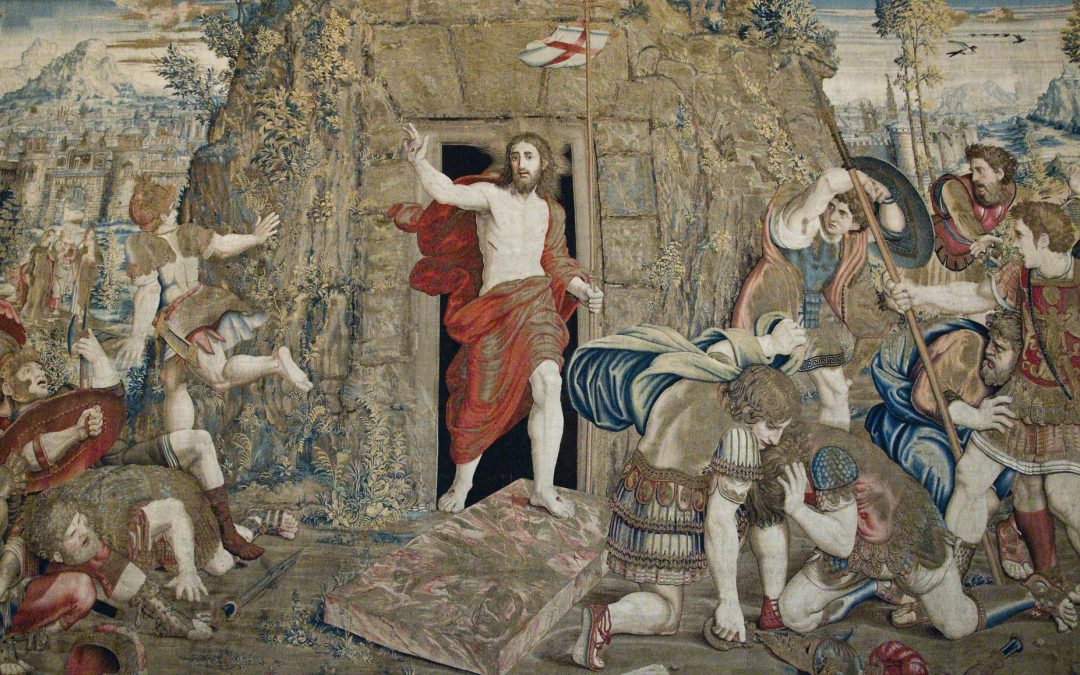
HE IS RISEN! ALLELUIA!
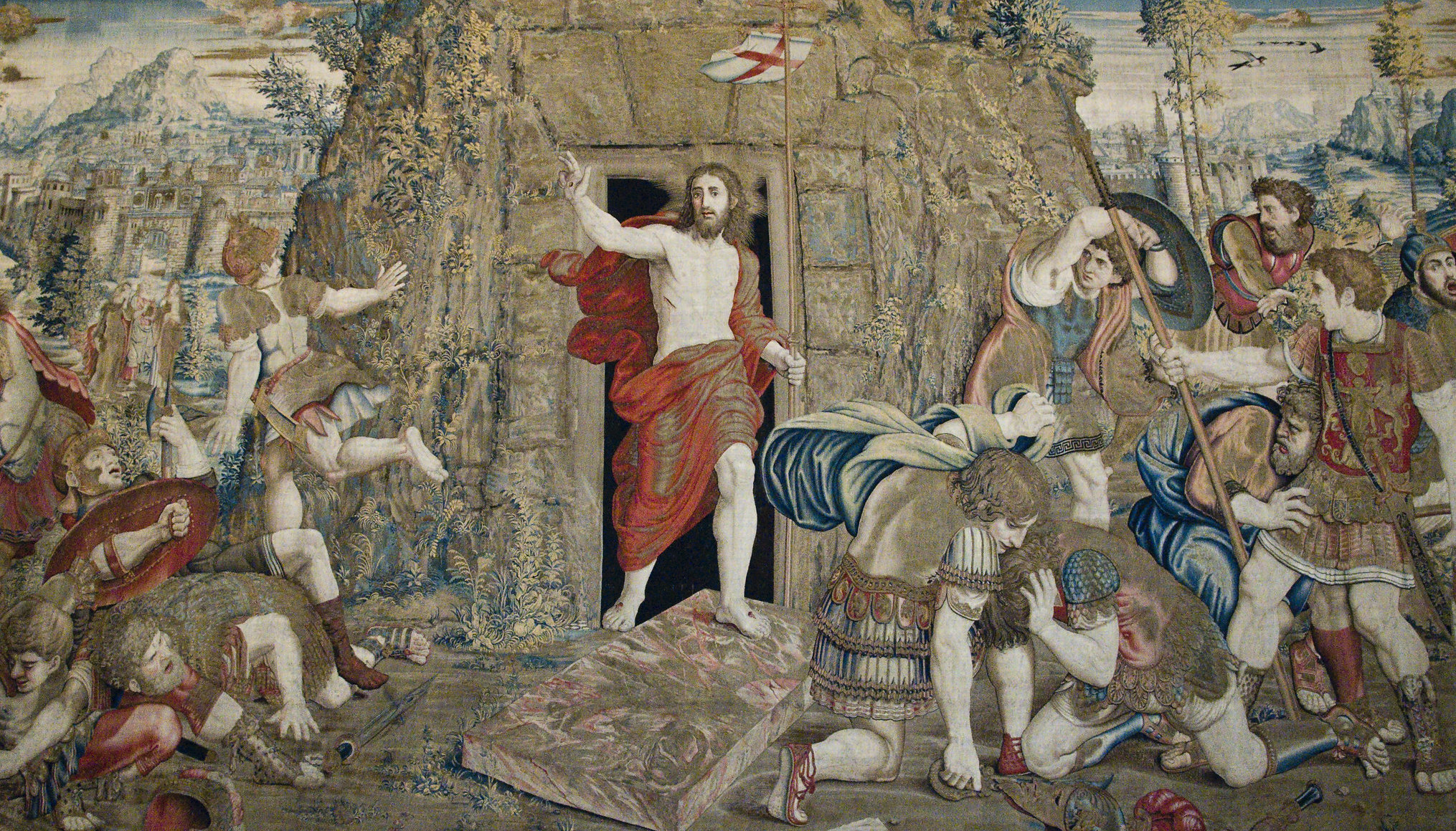
Wishing all my readers a blessed Easter and spiritual and physical health in these difficult times. May you be granted all the graces you need to save your souls.
Introduction
Before beginning this piece, a few reminders are in order. First of all, the minds of the popes have been clearly and forcefully represented in this series of blog posts and, for many years running, in articles on this website. Traditionalists may brandish canon laws on publishing to squelch the theological works of their opponents, but we long ago posted this article at https://www.betrayedcatholics.com/free-content/1-credentials/where-is-your-imprimatur/citing the documents of several popes who encourage Catholics to defend the faith, especially in times such as these. (Please note the comment posted to the Palm Sunday blog on “ignorance” for important exceptions to this obligation). As we have noted in nearly every article posted to this website, the authority of the popes, the Sacred Congregations, the Ecumenical Councils and the unanimous opinions of theologians is superior to anything that can possibly be produced by Traditionalists on their own authority, whether they quote a specific theologian or point to the canons. They betray their ignorance of the Catholic faith whenever they pretend that these inferior sources could ever provide them with the proofs of validity and liceity they are obligated to produce (Can. 200) to continue their ministrations, ministrations which the Roman Pontiffs have utterly voided.
Canon Law
Catholics are obliged to heed all papal decrees as well as obey the canons, which the Church tells us are negatively infallible (The Catholic Encyclopedia). This means they cannot teach anything contrary to doctrine, nor can these decrees be twisted around to make it appear they are doing so. We are to obey only the popes, Christ’s Vicars, NOT Traditionalists peddling their interpretations of papal decrees and Canon Law; they are not our lawful pastors as previous blogposts and website articles have repeatedly demonstrated. Nor can anyone object to laypersons who point out the teachings of Canon Law according to the very rules laid down for its interpretation (see https://www.betrayedcatholics.com/articles/a-catholics-course-of-study/canon-law/who-interprets-the-law/) And while Traditionalists try to make it seem that Canon Law can somehow be used to circumvent papal teaching, they have it backwards. This error is pointed out and circumscribed by Pope Pius IX in Quartus Supra, quoted in our blog piece on the necessity of the papal mandate:
“They call Our attention to the customs and canons of their churches as if We had abandoned the provisions of the sacred canons. We might respond to these men in the same way Our predecessor St. Gelasius did when the Acacian schismatics brought the same false accusation against him: ‘They cite the canons against Us without knowing what they are saying since they show that they are themselves in opposition to the canons by the very fact that they deny obedience to the first See although its advice is sound and correct.’ For these are the very canons which recognize the full, divine authority of blessed Peter over the whole Church. Indeed, they proclaim that he lives and exercises judgment in his successors to the present time and forever, as the Council of Ephesus affirmed.”
Concerning Canon Law’s constitution, Rev. Francis J. Schaeffer writes in this volume: “The ultimate source of Canon Law is God, whose will is manifested either by the very nature of things (natural Divine law) or by Revelation (positive Divine law) …To attain its sublime end, the Church, endowed by its Founder with legislative power, makes laws in conformity with natural and Divine law. The sources or authors of this positive ecclesiastical law are essentially the episcopate and its head, the pope, the successors of the Apostolic College and its divinely appointed head, St. Peter. They are, properly speaking, the active sources of Canon Law. Their activity is exercised in its most solemn form by the ecumenical councils…(these) councils, especially…Trent, hold an exceptional place in ecclesiastical law… The sovereign pontiff is the most fruitful source of Canon Law: …From the earliest ages the letters of the Roman Pontiffs constitute, with the canons of the Councils, the principal element of Canon Law; … they are everywhere relied upon and collected, and the ancient canonical compilations contain a large number of these precious decretals.”
The Roman Pontiff has the last say on Canon Law; not vice versa. Owing to his supremacy of jurisdiction. The pope is bound by the laws he enacts, to set an example for the community. But according to Abp. Amleto Cicognani in his Canon Law (1935), he is still able to change those same laws and clarify them if any questions should arise. When it comes to interpretation, the mind of the lawgiver is the only trustworthy guarantee of what the Church teaches regarding any given canon of the 1917 Code, and this brings us to the considerations below.
Doubts of law
- THE EXCEPTIONS TO CAN. 15 BELOW EXCLUDES THOSE DOUBTS REGARDING THE VALIDITY OF THE SACRAMENTS, ETERNAL SALVATION AND THE RIGHTS OF A THIRD PARTY. NEITHER DOUBTS OF LAW NOR EPIKEIA CAN BE INVOKED TO VALIDATE TRADITIONALIST OPERATIONS.
In the scheme of things, Can. 6§4 regarding doubts of law must be followed before the other canons (Can. 18 or 20) can even be consulted, but Traditionalists do not even attempt to obey this canon. Revs. Woywod-Smith write in their Canon Law commentary: “The student of Canon Law must keep in mind the rules of Can. 6 throughout the whole course of study of the Code, for these rules are the key to the correct interpretation of all the laws of the Code.” As Abp. Cicognani points out: “Correction of the law is essentially odious,” and Pope Pius XII has infallibly enshrined this statement in his Vacantis Apostolicae Sedis. Canon 6§4 instructs the canonists: “In case of doubt, whether some provision of the Canons differs from the old law, the old law must be followed.” Canon 18 tells readers that when they encounter doubts regarding ecclesiastical law, they must consult the end and circumstances of the law, the mind of the lawgiver and parallel passages of the Code.
So now we jump to Can. 18 to find the provisions of the old law listed under that canon, which number only two. The footnote admonishes canonists: “Our words are interpreted by others according to their intended meaning. The intention ought not to be subservient to the words, but the words to the intention. The first footnote source, the Sacred Congregation of Propaganda Fide, Cochin, China,1827, explains: “Human law does not oblige, nor does it operate beyond the expressed intention of the legislator.” The second and primary source, Pope Eugenius IV’s letter Fide Digna, (July 8, 1440) teaches: “We say explicitly that it was not the intention of the lawgiver to expose the souls of the faithful to the danger of mortal sin in communicating… For the intention rather than the sound of words is to be carefully considered.” So much for the CMRI claim that Pope Pius XII would not wish his laws to bind because they are injurious to souls. Any rational person reading these words would automatically know that this intention could never countenance the clear lack of confessional jurisdiction Traditionalists falsely claim to possess and the Sacrament of the Eucharist they sacrilegiously administer. This is proven below.
Those wishing to question or term as doubtful any laws regarding the nature, possession or application of jurisdiction will first have to reject the infallible papal election law of Pope Pius XII, written specifically for these times. This law, Vacantis Apostolicae Sedis (https://www.betrayedcatholics.com/free-content/reference-links/1-what-constitutes-the-papacy/apostolic-constitution-vacantis-apostolicae-sedis/), forbids anyone to usurp anything regarding papal jurisdiction or to change the laws or disregard them during an interregnum. Furthermore, there is Pope Pius XII’s related authentic interpretation of Can. 147 with its ipso facto excommunication especially reserved to the Holy Seefor: “1) those who contrive against legitimate ecclesiastical authorities or attempt in any way to subvert their authority; 2) anyone who without a canonical investiture or provision made according to the sacred canons occupies an ecclesiastical office, benefice or dignity, or allows anyone to be unlawfully intruded into the same, or who retains the same; 3) those who have any part directly or indirectly in the crimes mentioned in one (1) and two (2).” Canon 2345 also declares an ipso facto excommunication especially reserved to the Holy See for “usurpation and retention of the goods and rights of the Papacy.”
Canons 15 and 16
Abp. Amleto Cicognani discusses Canon 15, which states: “All laws, including invalidating and inhabilitating laws, lose their binding force in a doubt of law.” And Can. 16 states that no ignorance of invalidating or disqualifying laws excuse from their observance unless the law so states. Can. 15 is the canon most Traditionalists cite to justify dismissing a doubtful law as non-binding, allowing them to proceed to celebrate the Mass and administer the Sacraments. They ignore Can. 16. Cicognani explains Can.15 as follows: “The present Canon is not concerned with doubts about the divine law or those regarding the matter and form of the Sacraments. These points we leave to Moral Theology, particularly to that part which treats of Probabilism, which teaches that system is tenable though requiring caution in its use…The inscription of this title of the Code is ‘Ecclesiastical Laws’ and of these alone, therefore, do we speak.” Both Cicognani and Revs. Woywod-Smith, in their Canon Law commentary, (also Revs. McHugh and Callan in their Moral Theology, A Complete Course, #678) list the following exceptions to Can. 15, which are enumerated below by Reverend Dominic Prummer, O.P., (Handbook of Moral Theology):
“A doubtful law has no binding force whenever the doubt concerns the lawfulness of an act AND NOT ITS VALIDITY. Whatever may be said about the truth of this principle, which is fiercely attacked by some theologians, all modern theologians are agreed that it cannot be applied in the following cases:
“a) When the doubt concerns the validity of the Sacraments;
“b) When the doubt concerns something which is absolutely necessary for salvation” (for example, the necessity of obedience to the Roman Pontiff) or
“c) When the question involves the established right of a third party” (end of Prummer quote). Canon 682 documents the rights of the laity to receive the spiritual goods and especially the necessary means of salvation from theclergy, (but first PROVE that Traditionalists have received tonsure and are members of the clergy.) And this must be done “according to the rules of ecclesiastical discipline.”
In his The History, Nature, and Use of Epikeia in Moral Theology, Catholic University of America Press, (1948), Rev. Lawrence Joseph Riley concurs with the above, writing on pages 344 and 347: “Those elements which are necessary to the validity of the Sacraments remain so EVEN IN THE FACE OF EXTREME DIFFICULTY OR IMPOSSIBILITY — much more so in the presence of a situation where the difficulty is not so grave. The Sacraments exist according to the institution of Christ or they don’t exist at all. In short, it may be concluded that IN REGARD TO MATTERS WHICH TOUCH THE ESSENCE OF THE SACRAMENTS, THE USE OF EPIKEIA IS ALWAYS EXCLUDED…In regard to the essence of these Sacraments, what has been explained above of all the Sacraments is applicable to them – viz., that epikeia is never licit.”
Traditionalists claim Rev. Riley’s work grants them the specific capacity to act, but they do not factor in the papal teaching which supersedes Riley’s work, the above teachings by canonists and theologians and the fact that this teaching cannot be merrily gainsaid since it is shown to be the unanimous opinion of the theologians. The higher law always prevails, but Traditionalists know no law. A thorough reading of Riley’s work will prove their allegations are baseless.
These exceptions to Can. 15 are founded on Bd. Pope Innocent XI’s teaching (DZ 1151), which forbids the use of probable opinions in the reception of the Sacraments. Prummer, agreeing with other Catholic canonists and theologians, explains that no one is allowed to perform an act while in a state of positive, practical doubt. When in doubt about whether an action is lawful, one must refrain from acting or remove the doubt. This is done directly by searching for the truth, and when that truth can be proven from the laws and teachings of the Church Herself, then there is no longer any doubt.
Since what Prummer presents on sacramental validity and eternal salvation is the unanimous opinion of theologians, it binds all Catholics as a truth of faith (see the blog post on religious assent). Pope Pius IX teaches in Tuas Libentur,(1863): “It is not sufficient for learned Catholics to accept and revere the aforesaid dogmas of the Church…It is also necessary to subject themselves to the decisions pertaining to doctrine which are issued by the Pontifical Congregations, and also to those forms of doctrine which are held by the common and constant consent of Catholics as theological truths and conclusions, so certain that opinions opposed to these same forms of doctrine, although they cannot be called heretical, nevertheless deserve some other censure” (DZ 1684). Catholics have no choice but to obey.
Why Traditionalists are not serving the faithful
For a moment it will be useful to return to Pope St. Pius X and Acerbo Nimis, where this saintly pope emphasizes the necessity of teaching over that of administering the Sacraments as a means of salvation. Instead, Traditionalistswithhold necessary teachings of the Church from their followers to retain membership in whatever sect they operate, and essentially intellectually deprive them of the ability to inform their consciences and secure the state of their souls. While the canonists include especially the “necessary sacraments” among those means, these cannot be administered outside “the rules for ecclesiastical discipline,” (see Can. 682), and they certainly cannot be administered when there is any doubt regarding their validity, as demonstrated above. Moreover, only the sacrament of Baptism and Holy Orders are truly Sacraments necessary for salvation, and Holy Orders only when it is conferred in the manner prescribed by the Church. The preceding blogs have amply demonstrated just how far outside the rules of all ecclesiastical discipline Traditionalists operate, and how many different popes declare their actions null, void and invalid.
Very serious reasons sufficient to remove ALL doubt that Traditionalists could possibly be valid have been advanced from the teachings of the Roman Pontiffs and office of the Holy See in questioning their validity. The following is only a brief summary of why any right-thinking Catholic should hold the sacraments dispensed by Traditionalists as doubtfully valid, based on those proofs.
- All those Traditional priests now consecrated as bishops were ordained by Marcel Lefebvre and/or Peter Ngo dinh Thuc, (or one of their “successors”) during an interregnum despite the notorious nature of their affiliation with the Roman usurpers. Recognize and resist, practiced by both men, involves Catholics cooperating in sin with individuals St. Bernard and the ecumenical councils call antichrists.
- Both Thuc and Lefebvre recognized John 23 and Paul 6 and their successors as true popes, said the Novus Ordo Missae, and signed Vatican 2 documents, incurring communicatio in sacris, schism and infamy of law, (Canons 2314 §3 and 188 no. 4). Infamy of law alone invalidates their ecclesiastical acts, including ordinations and consecrations (Can. 2294 §2). Their creation of any so-called clerics never happened.
- Such public and external acts detailed above should be more than enough to convince a reasonable person that these men could not have acted with the intention to create truly Catholic priests and bishops loyal to the Roman Pontiff even if they had been able to do so validly.
- None of the above possessed the required papal mandate before performing their consecrations and were excommunicated ipso facto per Pope Pius XII’s Ad Apostolorum Principis. Furthermore, Vacantis Apostolicae Sedis also nullified even their attempted acts because we live during an interregnum.
- None of these men received valid tonsure, (an act of jurisdiction, not orders), because Lefebvre and Thuc could not validly administer it since they possessed no jurisdiction. Without valid tonsure they are not considered clerics. “Those who have been assigned to the divine ministry at least by the first tonsure are called clerics” (Can. 108), and Cicognani says this canon originates from divine law. “By reception of the first tonsure, a cleric is ascribed to — or incardinated in — the diocese for the service of which he was promoted.” (Can. 111). What diocese?
- None of those ordained or consecrated by anyone claiming to be a bishop attended papally erected and approved seminaries.
- Few if any of their teachers were validly ordained before Pope Pius XII’s death, so the validity of their instruction in Catholic theology is gravely in question.
- And the list goes on, and on…
Just as a doubtful law is no law and a doubtful pope is no pope, likewise doubtful sacraments are no sacraments. This is a universal principal of Canon Law now endorsed unanimously by moral theologians in this instance. It is not just the consecrations that are in question but the ordinations of those consecrated as well. And as both Pope Pius VI and Pope Pius XII teach infallibly, acts performed by those so consecrated outside the Church, and the acts of those they “ordain,” are null and void SIMPLY BECAUSE THE POPES SAY THEY ARE NULL AND VOID. These same popes also teach that we are bound to obey their edicts as a condition of eternal salvation, per (b) above in Rev. Prummer’s quote. This obedience to the laws regarding the sacraments IS NECESSARY FOR SALVATION; receiving doubtfully valid Sacraments is a sacrilege, and sacrilege is a mortal sin. Therefore, these laws must be obeyed, if the safer course is to be followed, and indeed it must be followed regardless.
Furthermore, regarding the cessation of law, we read from the moral theologians: “If no serious reasons can be found to prove or directly disprove that a certain law has ceased or been abrogated, the principle to be followed is: ‘In doubt, decide for that which has the presumption.’ In this case the presumption is for the continuance of the law, since it was certainly made, and there is no probability for its non-continuance,” (St. Alphonsus Liguori as quoted by Revs. McHugh and Callan under the rules of conscience in their Moral Theology: A Complete Course). What better “presumption” than the decrees of the Roman Pontiffs that bind us in conscience?! Regarding these laws governing the canonical assessment of doubt, we have amply demonstrated in the preceding blog pieces that the Roman Pontiffs themselves provide the grounds for regarding both the consecration of Traditional bishops as well as the men these “bishops” subsequently “ordain” as null, void and invalid. This is the highest form of proof, for the pope and his successors hold the primacy of jurisdiction and are the supreme legislators in the Church, (The Vatican Council, DZ 1823, 1831).
Canon 1812 tells us that acts issuing from the Roman Pontiff and the Roman Curia during the exercise of their office and entered as proof (in ecclesiastical courts) “prove the facts asserted,” (Can. 1816), and force the judge to pronounce in favor of the party producing the document, (commentary by Revs. Woywod-Smith). “Proof to the contrary is not admitted against Letters of the Roman Pontiff bearing his signature,” (Cicognani, ibid. p. 626, ft. note). Documents entered into the Acta Apostolic Sedis do not need to be submitted in the original or be an authenticated copy, (Can. 1819). “In doubt, facts cannot be presumed, but must be proved. When in doubt one must stand by presumption and presumption must yield to truth. There is no argument against the evidence. No argument or conclusion contrary to the evident facts is valid, (Rev. Bernard Wuellner, S. J., Summary of Scholastic Principles,1956). Therefore, no proof can be offered against these documents. These operating principles of the Roman Curia are one of the rules Canon Law requires those proceeding on the premise of doubt to consult, (see Can. 20).
Epikeia and Canons 16, 18, 20 and 21
- Epikeia is also excluded from use in invalidating laws, in the interests of the common good and in reference to Can. 15.
Epikeia is considered only a moderating influence in the application of the law. Abp. Cicognani tells us under Can. 16, which explains that ignorance cannot be used to excuse oneself from invalidating and disqualifying laws: “EPIKEIA HAS NO PLACE IN INVALIDATING LAWS, for the common good demands certitude concerning the validity of acts” (Canon Law). He makes an exception for those things where the law, sacramental validity and matters involving eternal salvation, also the rights of third parties, are excluded from consideration in doubts of law. This is true because these exceptions concern validity, not lawfulness, as Prummer points out. So now we know that Traditionalists cannot claim they are serving the common good whenever these three principles are in question. The common good “demands certitude” in this regard, as Rev. Riley also states, and we have already seen such certitude cannot and does not exist.
Rev. Riley also states on p. 387 of his work already cited above: “At most, epikeia can excuse the individual from the precept, but it can never confer the capacity to act. Epikeia cannot bestow upon him the power which he does not now possess, nor can epikeia restore the power which the law has withdrawn. For such bestowal or restoration of power a positive act is required.” The Roman Pontiffs who have voided these acts cannot be consulted concerning a decision on the matter, but they have left copious works to us which indicate their intention in no uncertain terms. Rev. Riley rightly states that “The lawful use of epikeia demands on the part of the subject a prudent judgment that the legislator excluded from his law the case in question,” and such a judgment Traditionalists cannot provide.
- Canons 18 and 21 won’t save them.
In their rush to justify their actions, Traditionalists appeal to Can. 20, disregarding the method provided by Canon Law to resolve doubts. Since there really is no doubt that can be resolved in their case, considering the Sacraments are excluded from consideration, their appeal is only an exercise in futility. Abp. Cicognani says about Canon 18: “If there is a law covering this case, this rule (Can. 20) is not to be applied according to the meaning of Can. 18.” In a doubt of law, Canon 18 refers readers to parallel passages of the Code, the end and circumstances of the law and the mind of the legislator. As seen above, the supreme legislators, the Roman Pontiffs, have given the faithful abundant indications of their intentions both in their non-infallible and infallible pronouncements — end of story. As Abp. Cicognani and Rev. Charles Augustine both point out, Canon 21 would temper Canon 20 anyway, even though Traditionalists are not allowed to bypass Can. 18 to appeal to that canon.
Canon 21: “Laws made for the purpose of safeguarding the public against a common danger bind, even though in a particular case there is no danger.” Under Can. 19, Can. 21 must be interpreted strictly, because, as Abp. Cicognani stated, “This principle establishes an exception…[to] the cessation of ecclesiastical law… The matter is closely connected with the doctrine on presumption, ‘A probable conjecture about an uncertain affair,’ that is, a deduction… Objectively considered, a presumption is termed…of private, or personal danger, or of common danger, when the law presumes that in certain circumstances there exists…for all individuals the danger of sin or fraud, deception or perversion.” But Cicognani has already told us that doubts regarding divine law and the matter and form of the Sacraments cannot be covered under the heading of ecclesiastical law. A probable conjecture (probability) cannot be used in regard to the Sacraments. But because Traditionalists misinterpret the terms of Can. 21 to suit themselves, this canon will be examined below.
What Traditionalists dispute here is the definition of common danger. They present this common danger as the absence of Mass and Sacraments, the ordinary means of grace, because they tell their followers this is the only possible way to save their souls. But the Church provides other channels of grace and substitutes for this loss (Act of Perfect Contrition, Spiritual Communion, St. John’s Mass), means which Traditionalists denigrate and even denounce. What might their motives be? Suffice it to say that money and power are only two possibilities that come to mind. But the REAL common danger, mentioned above by Cicognani, is “the danger of sin or fraud, deception or perversion.” Sin, being the sacrileges Traditionalists commit and induce others to commit in dispensing and receiving the “sacraments,” which cannot fall under the title of ecclesiastical laws. Fraud and deception meaning the misrepresentation of the true means of grace, the infallible teachings of the Church, the very nature of that infallibility and the true status of the “clergy” — those simulating Mass and Sacraments. Perversion? Well that is a story all in itself, and it is not limited to Novus Ordo clergy by any means.
Conclusion
Reverends Cicoganni, Bouscaren-Ellis, Woywod-Smith, Francis Miaskiewicz, Raymond Kearney, Lawrence Joseph Riley, McHugh and Callan — all these canonists and theologians also warn in their works of the great caution that must be used in applying epikeia, and the many dangers of abuse in attempting this application even if limited, as it must be, to ecclesiastical law; but matters concerning the Sacraments and eternal salvation do not fall under ecclesiastical laws (1). Abp. Cicognani clearly states it is NOT to be applied to invalidating laws (2) and they must adhere to laws governing doubts under Can. 18 that would consult the circumstance of the law and the intention of the lawgiver (3). So that is three strikes you’re out for Traditionalists.
Epikeia cannot be said to overturn the unanimous opinion of theologians, far less papal decrees. These are documented expressions of the mind of the lawgiver binding on the consciences of the faithful and cannot be dismissed. The intention of the lawgiver can never be construed to approve anything that would amount to an abuse of the Sacraments. The lawfulness of Traditionalist acts is not what is being questioned here as Prummer observes. It is the very validity of their acts, and at no time can that validity ever be in doubt when it involves the Sacrament of Orders and jurisdiction necessary for the Sacrament of Penance, the Eucharistic consecration or a question involving eternal salvation. Obedience to the lawgivers, the Roman Pontiffs, alone is the overriding interpreter of Canon Law and they have spoken frequently and eloquently on the nullity and invalidity of Traditionalist acts. The choice is to obey either the Continual Magisterium or Traditionalists, and Catholics who hear the voice of their Shepherd know who they must choose to follow. “He who is not with Me is against Me: and he that gathereth not with Me, scatters” (Matt. 12:30).
by T. Stanfill Benns | Apr 5, 2020 | New Blog
+Palm Sunday+
It has come to my attention that many Traditionalists are under the impression they are not “allowed” to judge the teachings of the Roman Pontiffs, the Ecumenical Councils or approved theologians and must instead rely solely on whatever is fed to them by their so-called priests and bishops. Some may think these deluded souls can be excused owing to invincible ignorance, but unfortunately it seems most of them will not fall into that category.
Of all the theologians writing on invincible ignorance, the Scottish Bishop George Hay provides one of the best descriptions of this unfortunate state available. Hay is commended by Henry Cardinal Manning as “one of the most energetic and learned…Vicars Apostolic of Scotland in the last century,” (from Manning’s Miscellanies, 1870, “The Bishop of Rome.”). To quote Hay at length is not necessary. He states quite clearly in his The Sincere Christian that no one — not Turks, heathens or Jews; not sincere Protestants living where there are no Catholics and especially not non-Catholics living amongst Catholics (which describes Traditionalists with access to these and other articles, and most importantly, papal encyclicals) can plead invincible ignorance and expect to be saved. The reason is simple: God died for all men although all did not take advantage of the graces He made available to them, (Council of Trent, Sess. 6, Ch. 3). No one who is truly invincibly ignorant will be condemned for his ignorance per se, but the question is more complicated than just this one consideration.
“Although this invincible ignorance will certainly save a man from sin, in wanting that of which he is invincibly ignorant, yet it is plainly impossible and childish to suppose that this invincible ignorance in one point will make up for the want of all the other conditions required,” Hay wrote. Even validly baptized, sincere Protestant adults having no acquaintance with Catholics cannot retain their baptismal innocence without Confession and therefore cannot be saved unless they manage to make a Perfect Act of Contrition or its equivalent before death, Hay explains, (although their children dying before the age of reason can gain heaven). Owing to the absence of the Church today as a visible juridic Body, and the many deliberate obfuscations and misrepresentations of the faith by Her enemies, this author prays that God is more lenient in this regard than in the past, especially in certain cases. Nevertheless, Bp. Hay comments, “For invincible ignorance to exist, three things are necessarily required:
1) “That a person has a real and sincere desire of knowing the truth. For if he be cold and indifferent about an affair of so great concern as his eternal salvation; if he be careless whether he be in the right way or not; if being enslaved to this present life, he takes no care about the next, it is manifest that an ignorance arising from this disposition is a voluntary ignorance and therefore highly culpable in the sight of God…
2) “For one to be in invincible ignorance it is required that he be sincerely resolved to embrace the truth wherever he may find it and whatever it may cost him. For if he be not fully resolved to follow the will of God, wherever it shall appear to him, in all things necessary to salvation; if on the contrary, he be so disposed that he would rather neglect his duty and hazard his soul than correct an ill custom, or disoblige his friends, or expose himself to some temporal loss or disadvantage…Such a disposition must be highly displeasing to God and an ignorance arising from it can never excuse him before his Creator…(all emphasis in bold throughout this work is the author’s unless stated otherwise).
3) “He must sincerely use his best endeavors to know his duty, and particularly that he recommend that matter earnestly to Almighty God, and pray for light and direction.
For whatever desire he may pretend of knowing the truth, if he do not use the proper means for finding it, it is manifest that his ignorance is not invincible but voluntary; for ignorance is only invincible when one has a sincere desire to know the truth with a full resolution to embrace it, but either has no possible means of knowing it or, after using his best endeavors to know it, yet cannot find it.” (Nor does a formal doubt excuse, for all are expected to resolve such doubts.) “A person brought up in a false faith, which the Scripture calls sects of perdition, doctrines of devils, perverse things, lies and hypocrisy; and who has heard of the true Church of Christ, which condemns all these sects, and sees the divisions and dissensions which they constantly have among themselves, has always before his eyes the most cogent reasons to doubt of the way he is in.” And the dissension among Traditionalists who claim the name Catholic but deny truths of the Catholic faith should be a red flag for all.
Bp. Hay goes on to remind his readers that many are called and few are chosen, and that broad is the path to destruction and narrow is the way to salvation. When asked if he is saying that none who are in heresy and invincible ignorance can be saved, he answers, “God forbid that we should say so! All the above reasons only prove that if they live and die in that state they will not be saved…No man knows or can know what may have passed between God and the soul in his last minutes.” Many attempt to appeal to the various exceptions cited in Canon Law to justify their ignorance in matters of faith. But Canon Law does not generally excuse one from observing the law for reasons of ignorance, the general rule being “Ignorance of the law is no excuse…”
Those now in Traditionalists sects should be advised that Can. 16 tells us NO ONE can plead ignorance when it comes to invalidating and incapacitating laws. In other words, followers of Traditionalist “priests,” once the question has been raised concerning their validity or (even their liceity) cannot neglect or refuse to investigate the matter. The law clearly states that a mere doubt regarding sacramental validity or the validity of any given ordination or consecration is sufficient to absent themselves from all contact with Traditionalists. (This will be addressed fully in the next blog on epikeia.) Affected or pretended ignorance “is never admitted as an excuse from latae sentenetiaecensures” (Can. 2229), and this sort of ignorance is often the kind exhibited by Traditionalists. Referring to this canon, Abp. Amleto Cicognani writes under Can. 16: “In law, affected ignorance is held equivalent to fraud, so much so that it does not excuse from any penalty.” It should be further noted that grave fear does not exempt from latae sententiaepenalties either, whenever a specific act would constitute contempt of faith or of ecclesiastic authority, or public injury to souls (Can. 2229 §3).
Traditionalists are instructed by their “clergy” that they are to obey without question and cannot make any judgments regarding what they are “taught” by these men. They also are warned against even the casual reading of any literature that questions their leaders’ authority or the correctness of what they teach. This might have some traction were these men truly priests and bishops educated in papally approved Catholic seminaries, but we know this is not the case. As bishop Hay warns above, no one can claim even invincible ignorance if they do not make such inquiry and the necessary judgments that inquiry requires! Any sect operating on the premise that such inquiry is forbidden or even strongly discouraged is operating as a cult, not a sect.
Michael de la Bedoyere commented on this tendency to blind obedience in his Christianity in the Marketplace, noting that the training necessary to execute the high standards of Catholic existence was available to Catholics then (the 1940s), and by extension it is still available to Catholics today in all the papal documents online. Bedoyere nailed the real problem to the wall when he wrote: “What too often is lacking is the interest and training in APPLYING those standards and knowledge to every circumstance in life. The man of the world HAS to think for himself if he wants to act intelligently at all, for there is no one to think for him; THE CHRISTIAN IS IN DANGER OF NEVER THINKING FOR HIMSELF BECAUSE HE EXPECTS ALL HIS THINKING TO BE DONE FOR HIM…” (The ideal of action) “is not to act just BECAUSE someone else tells one to, but to act for oneself BECAUSE ONE SEES FOR ONESELF, in the light of God’s will and the teaching of the Church or one’s lawful superior [who today can only be past popes], that the action IS right…”
Peter Michaels also states, in his work This Perverse Generation (1949): “If all Catholics have a moral duty to understand the faith at their level of secular education, few of us are going to be saved… How much longer are Catholics going to pretend that if our hearts are in the right place, we can safely continue to live in an intellectual void?” Traditionalists may obey their (unlawful) “superiors” and refrain from making the required judgments, but they do not and cannot escape the Church’s latae sententiae, ipso facto censures for heresy, schism, and communicatio in sacris. That is something they will never hear from their erstwhile “clergy,” but it is the absolute reality that constitutes the Catholic Church. And so these unfortunates, who willfully choose not to educate themselves, will go to the end thinking they are members of the Church, only to find at their private judgment they left Her long ago, and God expected them to put forth far more effort to discover the truth than they were willing to expend. It is a terrifying thought, one not many will be willing to entertain. But it is not just a thought or an opinion — it is Church teaching, Church law, and they are bound by it. In fact the Church condemns this practice of Traditionalists under the titles of Fideism and Traditionalism.
The Catholic Encyclopedia states that Fideism teaches there is no need of intellectual assent based on objective evidence and the only thing expected of Catholics is to make an act of faith. The article explains that Fideists falsely teach: “The supreme criterion of certitude is authority…,” noting that, “An act of faith cannot be the primary form of human knowledge. Authority, indeed, in order to be a motive of assent, must be previously acknowledged as being certainly valid; before we believe in a proposition as revealed by God we must first know with certitude that God exists, that He reveals such and such a proposition, and that His teaching is worthy of assent, all of which questions can and must be ultimately decided only by an act of intellectual assent based on objective evidence. Thus, fideism not only denies intellectual knowledge but logically ruins faith itself… As to the opinion of those who maintain that our supernatural assent is prepared for by motives of credibility merely probable, it is evident that it logically destroys the certitude of such an assent. This opinion was condemned by Bd. Innocent XI in the decree of 2 March 1679 (DZ 1171), and by Pope St. Pius X in the Lamentabili sane.”
And here we see mirrored the very assent the followers of these Traditionalists are expected to give contrary to the teachings of these holy popes and the unanimous opinion of theologians: acceptance of the orders and the sacraments these self-appointed “clerics” dispense as valid. Not only are their claims based on the thinnest possible evidence, which cannot even be said to amount to a probable opinion, their teachings and actions have been proven over and over again to be in direct contradiction of the constant teachings of the continual magisterium.
Pascal Parente and other authors define Traditionalism as: “A philosophico-religious system, which depreciates human reason and establishes the tradition of mankind, which is bound up with language, as the criterion of truth and certainty,” (Dictionary of Theology; many Traditionalists experience this as the teachings offered them on the “sensus catholicus”). This error was condemned by Pope Pius IX in Qui pluribus and by the Sacred Congregation in 1855 (DZ 1649) So it must be understood, as explained elsewhere, that the choice of the name Traditionalism was not a random one. Those selecting this name for their sect in the 1970s following the cessation of the Latin Mass, did not necessarily intend for it to reflect the Traditions of faith as most Traditionalists innocently assume. For true Tradition is bound up with the deposit of faith Christ entrusted to His Apostles and the transmission of that same deposit by the Roman Pontiffs, unchanged, throughout the centuries. This is definitely something not transmitted by Traditionalists.
By leading those wishing to be Catholic away from the teachings of the Roman Pontiffs and exerting a false authority they insist must be obeyed, Traditionalist “clergy” falsify the Catholic faith and drag souls with them into hell. Those who prefer lies to truth should be scrambling to discover what it really means to be a Catholic or be prepared to give an accounting to Truth itself when they leave this world.
by T. Stanfill Benns | Apr 2, 2020 | New Blog
+Seven Sorrows of the BVM +
(This article is longer than the others so please bear with me here. Also, as is the case in all my blogs and articles, any emphasis within the texts quoted is my own unless otherwise noted.)
Can. 953: “The episcopal consecration is reserved to the Roman Pontiff in such a manner that NO BISHOP IS ALLOWED TO CONFER EPISCOPAL CONSECRATION ON ANYONE UNLESS HE HAS FIRST ASCERTAINED THAT THERE IS A PAPAL MANDATE TO THAT EFFECT.” A papal mandate is permission issued specifically by the Roman Pontiff to those consecrating any bishop confirming the bishop’s nomination or election and assuring his fitness for consecration. As Abp. Cicognani comments in his Canon Law, according to a rule of law, wherever the Church in Her laws does not differentiate, neither should we. So how do Traditionalists and their pet theologians explain away “NO BISHOP” and “ANYONE” here? Yet those claiming to be bishops in the Traditional movement have attempted to dismiss these papal decrees forbidding their so-called consecrations using every possible loophole they can find. Necessity and epikeia are the excuse most often used for the consecration of these men they call bishops but as will be seen below and in the later article on epikeia, this will not suffice.
It must be remembered that there can be no apostolic succession without an unquestionably canonically elected pope, (and no, lay people and not even so called Traditionalists “clerics” can pose as electors). Validly and licitly consecrated bishops must be approved and appointed by a canonically elected pope and be fully in communion with him to ordain priests and assign them to parishes. Apostolic succession exists only when orders AND jurisdiction both are present, and neither is the case with Traditionalists whose orders are at best questionably valid (see https://www.betrayedcatholics.com/free-content/reference-links/1-what-constitutes-the-papacy/apostolic-succession-are-schismatic-clergy-and-laymen/). Jurisdiction cannot be present because it was never received, it CANNOT come directly from Christ Himself as our last blog demonstrated, and without a canonically elected Roman Pontiff it cannot be supplied, even in danger of death.
Traditionalists are robbers and thieves because they have not come through the door. They have not received their jurisdiction through the competent ecclesiastical authority in harmony with the canons as Can. 147 and Pope Pius XII demands. They have not been rightly ordained nor sent by ecclesiastical and canonical authority, because even in the case of “priests,” the ordination proceeds without the dimissorial letters. Impediments also are removed in those to be ordained by “bishops” who have no jurisdiction whatsoever and whose acts are made null and void under the terms of Pope Pius XII’s papal election constitution Vacantis Apostolicae Sedis.
Pope Pius VI’s Charitas is listed as one of the sources from the old law for Can. 147, which states: “An ecclesiastical office cannot be validly obtained without canonical provision. Canonical provision means the grant of an ecclesiastical office by competent ecclesiastical authority, made according to the sacred canons.” After quoting this teaching from the Council of Trent, (“If anyone says that… those who are neither duly ordained nor sent by ecclesiastical and canonical authority, but who come from elsewhere are legitimate ministers of the word and of the Sacraments, let him be anathema,” DZ 960,) the Sacred Congregation of the Council declared under Can. 147:
“In order to preserve more inviolate these same sacred principles and at the same time forestall abuses in a matter of such great importance, His Holiness Pope Pius XII has deigned to provide,” an ipso facto excommunication especially reserved to the Holy See for: “1) those who contrive against legitimate ecclesiastical authorities or attempt in any way to subvert their authority; 2) anyone who without a canonical investiture or provision made according to the sacred canons occupies an ecclesiastical office, benefice or dignity, or allows anyone to be unlawfully intruded into the same, or who retains the same; 3) those who have any part directly or indirectly in the crimes mentioned in one (1) and two (2),” (Canon Law Digest, Vol. 3, under Can. 147. And as Pope Pius IX teaches, Catholics are bound in conscience to obey also any decree issued by the Sacred Congregations.) This proves without a doubt that the section of Trent referring to unlawful pastors is not limited to the Protestants. These censures are very similar in nature to the excommunication found in Can. 2345 and Pope Paul IV’s condemnation in Cum ex Apostolatus Officio of those who usurp ecclesiastical offices. The canonists Revs. T. Lincoln Bouscaren and Adam Ellis, editors of the Canon Law Digest, say that Can. 147 applies also to the Holy See.
This excommunication is listed under Can. 2394, which automatically deprives anyone, not just bishops, of an office seized illicitly and recommends them for punishment by the Ordinary. This for taking possession “of an ecclesiastical benefice, office or dignity by his own authority or before he has received the necessary letters of confirmation or institution [from the bodies or individuals electing or nominating clerics for various offices] and has exhibited them to the persons designated by law.” The meaning of offices will be explained below. Pope Pius XII was deadly serious about the confirmation of all offices by the necessary superior; he was guarding here the rights of the hierarchy, i. e. the Church. This is why only a year later he would write Ad Apostolorum Principis. So clearly the mind of the Church in this matter is that expressed here by Pius XII, as well as by the Council of Trent and Pope Pius VI in Charitas.
Offices and those who occupy them
We already know what constitutes canonical appointment; it has to be done by the authority who in the canons is indicated as the one competent to make the appointment and confirm it. In this case those priests and bishops “electing” or choosing candidates for the episcopacy are not certainly even clerics and cannot elect or appoint anyone; they do not constitute competent ecclesiastical authority. In the case of bishops, the Roman Pontiff, even if one existed, could only confirm such an election or appointment if made by competent ecclesiastical authority. The mandate provides proof the appointment has been reviewed and approved and permission given to consecrate, and this would not happen if the electing or appointing body was found to be wanting in any way.
Next must be determined what constitutes an office. By office, according to Can. 145, is meant, “in a broad sense…any employment which is legitimately practiced for a spiritual purpose. In the strict sense, an ecclesiastical office means a stable position created either by the divine or ecclesiastical law, conferred according to the rules of the sacred canons and entailing some participation at least in ecclesiastical power, whether of orders or jurisdiction. In law, the term ecclesiastical office is used in its strict sense…” unless a specific law indicates otherwise. If Traditionalists were qualified to assume an office, they would have to call it an office, but they are not qualified to assume anything.
No matter what kind of bishop is intended here, when they are appointed or elected, they are assigned to a specific office according to this definition. These Trad clerics cannot claim jurisdiction of any kind, because jurisdiction is a grant of authority made by a competent superior in communion with the Roman Pontiff to be exercised over specific subjects. Nor can they claim certainly valid orders. Lefebvre and Thuc may have been validly appointed, but without the papal appointment of the bishops they consecrated, these bishops were never validly created for ANY position. Both Lefebvre and Thuc have huge clouds hanging over their heads where intention, their own validity and fitness are concerned. This cloud would need to be lifted before any question of the validity of their ordinations and consecrations could be decided by a true Roman Pontiff. They certainly could not give to others what they did not receive themselves, (please see website link on Apostolic Succession above).
Those they created, whether priests or bishops, are only doubtfully valid AT BEST; and according to Pope Pius VI in Charitas, the whole affair is null and void. They possess no jurisdiction and cannot use any assumed power of Orders for any purpose. This because we cannot resort to doubtfully valid ministers according to Pope Innocent XI’s declaration that it is not safe to receive sacraments from such persons, (DZ 1151). Furthermore, Can. 154 declares that, “Offices which entail the care of souls cannot be validly conferred upon clerics who are not ordained priests.” Like it or not, Trads all have assumed an office they are not qualified to possess. And if the office of bishop is not validly held, how can such men possibly call and create priests?
The canons say they cannot. A priest cannot create a priest, and in most cases these “bishops” are not even priests themselves! In the consecration rite, these men are specifically called to the office of bishop. If they cannot accept such an office because papal appointment was never made, how can they receive it?! As Rev. Patrick Madgett S. J. teaches in Vol. II of his work Christian Origins (1943) under bishops: “A successor in any office or task is one who is lawfully substituted in place of another to perform the same duties, with the same powers.” And Trad “bishops” present as successors of the Apostles with all the same duties and powers but are not lawful and are at the very least doubtfully valid.
Can. 148 defines appointments as any of the following: (1) free appointment by the legitimate superior; (2) by the so-called “institution” in cases where a patron has the right to nominate or present to the ecclesiastical superior the person who is to obtain the office; (3) confirmation by a superior in the case of elections and (4) In the case of postulation in religious officers, when voters appoint a certain candidate for office the superior accepting the determination of the voters is said to grant admission and (5) an office may be obtained simply by election and acceptance of the elected, but only if the law does not require confirmation of the elected. Canon 110 states:
“Though the Holy See gives some of the clergy the title of prelate without jurisdiction as a mere honorary title, the term ‘prelates’ properly denotes in law clerics, either secular or religious, who have ordinary jurisdiction in the external forum.” Under Canons 147 and 148, Rev. Augustine comments that: “The competent authority in conferring major ecclesiastical offices (prelacies) is the Roman Pontiff.” A prelate is one who “rules over the clergy and people of a district that is separated from every other diocese,” (Revs. Woywod-Smith, Can. 319). Donald Attwater defines a prelate as, “A dignitary having jurisdiction in the external forum. The principal prelates are the bishops; others are vicars and prefects apostolic.” So regardless of whether Traditionalists claim to be “residential bishops” or not, they are bound to be confirmed by the Roman Pontiff for consecration regardless.
This is demonstrated by what Pope Pius IX taught regarding the Old Catholics in Germany:
Etsi Multa, Pope Pius IX, Nov. 21, 1873
“24. But these men, having progressed more boldly in the ways of wickedness and destruction, as happens to heretical sects from God’s just judgment, have wished to create a hierarchy also for themselves, as we have intimated. They have chosen and set up a pseudo-bishop, a certain notorious apostate from the Catholic faith,Joseph Humbert Reinkens. So that nothing be lacking in their impudence, for his consecration they have had refuge to those very Jansenists of Utrecht, whom they themselves, before they separated from the Church, considered as heretics and schismatics, as do all other Catholics. However, this Joseph Humbert dares to say that he is a bishop, and, what passes belief, he is recognized and named in an explicit decree by the most serene Emperor of Germany and is proposed to all his subjects as a lawful bishop. But as even the rudiments of Catholic faith declare, no one can be considered a bishop who is not linked in communion of faith and love with Peter, upon whom is built the Church of Christ; who does not adhere to the supreme Pastor to whom the sheep of Christ are committed to be pastured; and who is not bound to the confirmer of fraternity which is in the world.
“And indeed “the Lord spoke to Peter; to one person therefore, so that He might found unity from one”; to Peter, “the divine dignity granted a great and wonderful consortium of his power, and if He wished anything to be common with him and the rest of the princes, He never gave, except through him, what He did not deny to the others.” Hence it is from this Apostolic See, where blessed Peter ‘lives and presides and grants the truth of faith to those seeking it, that the rights of venerable communion flow to all’; and this same See ‘for the Churches spread throughout the whole world is certainly the head, as it were, of their members, from which if one cuts himself off, he becomes an exile from the Christian religion, as soon as he begins not to belong to its structure.’
“25. Therefore the holy martyr Cyprian, writing about schism, denied to the pseudo-bishop Novatian even the title of Christian, on the grounds that he was cut off and separated from the Church of Christ. ‘Whoever he is,’ he says, ‘and whatever sort he is, he is not a Christian who is not in the Church of Christ. Let him boast and preach his philosophy and eloquence with a proud voice; he who does not have fraternal charity and does not retain ecclesiastical unity, loses also what he previously had. Since by Christ one Church was founded divided into many members throughout the world, so likewise one episcopate, diffused in the harmonious multiplicity of many bishops. Subsequent to the teaching of God and the conjoined unity of the Catholic Church, he attempts to build a human church. Therefore, he who does not retain unity of spirit nor communion of peace and thus separates himself from the bond of the Church and the college of the priesthood cannot have the power nor the honor of a bishop because he kept the unity or the peace of the episcopacy.’”
Excommunication
“26. We have been undeservingly placed on this supreme seat of Peter to preserve the Catholic faith and the unity of the universal Church. Therefore following the custom and example of Our Predecessors and of holy legislation, by the power granted to Us from heaven, We declare the election of the said Joseph Humbert Reinkens,performed against the sanctions of the holy canons to be illicit, null, and void. We furthermore declare his consecration sacrilegious. Therefore, by the authority of Almighty God, We excommunicate and hold as anathema Joseph Humbert himself and all those who attempted to choose him, and who aided in his sacrilegious consecration. We additionally excommunicate whoever has adhered to them and belonging to their party has furnished help, favor, aid, or consent. We declare, proclaim, and command that they are separated from the communion of the Church. They are to be considered among those with whom all faithful Christians are forbidden by the Apostle to associate and have social exchange to such an extent that, as he plainly states, they may not even be greeted.”
Does this even give Traditionalists any pause whatsoever, that something so similar to their own elections and consecrations of bishops results in a sacrilegious act and VITANDUS excommunication for those following said bishop?! And here we see Pope Pius IX holds Reinkens’ election null and void, and this following “custom, the example of Our predecessors and holy legislation.” Likewise Pope Pius VI’s Charitas held France’s appointment of constitutional bishops null and void, so surely Pope Pius IX was referring to Charitas as well as other decrees in Etsi Multa. When such consecrations are performed during an interregnum outside the laws of the Church, Pope Pius XII has decreed they are null and void altogether.
Vacantis Apostolicae Sedis, Pope Pius XII, 1945 (paras.1- 3, Ch. 1)
- While the Apostolic Seat is vacant, let the Sacred College of Cardinals have no power or jurisdiction at all in those things which pertain to the Pope while he was alive…but let everything be held, reserved for the future Pope. And thus we decree that whatever power or jurisdiction pertaining to the Roman Pontiff, while he is alive (unless in as far as it is expressly permitted in this, Our Constitution) the meeting of Cardinals itself may have taken for exercising, is null and void.
- “Likewise we order that the Sacred College of Cardinals is not able to dispose of the laws of the Apostolic Seat and the Roman Church in any manner it wishes, nor may it attempt to detract wheresoever from the laws of the same, either directly or indirectly through a species of connivance, or through dissimulation of crimes perpetrated against the same laws, either after the death of the Pontiff or in time of vacancy, [however] it may seem to be attempted. Indeed, we will that it ought to guard and defend against the same contention of all men.
- “Laws given by the Roman Pontiffs are in no way able to be corrected or changed through the meeting of the cardinals of the Roman Church [the See] being vacant; nor is anything able to be taken away or added, nor is there able to be made any dispensation in any manner concerning the laws themselves or some part of them. This is very evident from pontifical Constitutions [on]…the election of the Roman Pontiff. But if anything contrary to this prescript occurs or is by chance attempted, we declare it by Our Supreme authority to be null and void”(private translation commissioned by Irene Keast).
In the above papal paragraphs, we find the phrase “null and void” just as it is found as follows in Charitas: “We therefore severely forbid the said Expilly and the other wickedly elected and illicitly consecrated men, under this punishment of suspension, to assume episcopal jurisdiction or any other authority for the guidance of souls since they have never received it. They must not grant dimissorial letters for ordinations. Nor must they appoint, depute, or confirm pastors, vicars, missionaries, helpers, functionaries, ministers, or others, whatever their title, for the care of souls and the administration of the Sacraments under any pretext of necessity whatsoever. Nor may they otherwise act, decree, or decide, whether separately or united as a council, on matters which relate to ecclesiastical jurisdiction. For We declare and proclaim publicly that all their dimissorial letters and deputations or confirmations, past and future, as well as all their rash proceedings and their consequences, are utterly void and without force…”
And in Ad Apsotolorum Principis: “…Bishops who have been neither named nor confirmed by the Apostolic See, but who, on the contrary, have been elected and consecrated in defiance of its express orders, enjoy no powers of teaching or of jurisdiction since jurisdiction passes to bishops only through the Roman Pontiff as We admonished in the Encyclical Letter Mystici Corporis.” This key phrase referencing jurisdiction and teaching is what Traditionalists consistently ignore, which is why they must pretend to receive their jurisdiction directly from Christ.
In Vacantis Apostolicae Sedis, no change in the law is allowed even to the cardinals, most of whom were bishops. There can be absolutely no usurpation of papal jurisdiction; all must be left to the future pope. Even any attempt at such things is null and void and this is infallibly decreed in Etsi Multa, Charitas, and is clearly stated in equivalent terms in Ad Apostolorum Principis. And the cardinalate is directed by Pope Pius XII to prevent any such crimes from occurring. We live in an interregnum. Traditionalists have created their own “hierarchy” and yet all is an illusion; their acts were null and void. They will say the law does not apply to them, that they are allowed to function and call the law itself into question. They say this about all these laws and infallible decrees except those they feel serve their purpose. They offer no proofs whatsoever giving them direct permission to proceed; all the proofs are against them. Yet still they continue to offend God, violate the law and refuse to do His will.
And there is something else that to date no one seems to have pointed out. In the episcopal consecration ceremony, any and ALL bishops, whether being consecrated as ordinaries or for other positions are asked to present the “Mandate or Apostolic Letter from the Pope,” which is read aloud. The Bishop-elect then kneels before the consecrator and solemnly swears an oath to submit himself to the Holy See, an oath which in the case of Traditionalists, if indeed it is even made, is as barren and worthless as the episcopal ceremony itself. As we have seen above, all such candidates for the episcopacy must be approved by the Roman Pontiff and present themselves for consecration within three months of such approval. In his Ad Apostolorum Principis as well as in Charitas, no distinction is made between residential bishops, titular bishops, missionary bishops, etc.
In the episcopal rite of consecration, the one being consecrated is consecrated for the OFFICE of bishop. The one being consecrated makes this solemn oath to submit to the Holy See as follows: “I shall render to our Holy Father, Pope N., and to his aforesaid successors an account of my whole pastoral office, and of all things pertaining in any manner whatsoever to the state of my Church, to the discipline of the clergy and the people, and finally to the salvation of the souls which are entrusted to me: and in turn I shall receive humbly the apostolic mandates and execute them as diligently as possible.” (Some Trad bishops have removed all reference to the papal mandate from the rite, something that is strictly forbidden by the Church. Only the pope can attenuate the rites of the Sacraments.) Later in the rite, the consecrator says to the one being consecrated: “Will you teach the people for whom you are ordained, both by words and by example, the things you understand from the divine Scriptures? Will you receive, keep and teach with reverence the traditions of the orthodox fathers and the decretal constitutions of the Holy and Apostolic See?“ If these so-called bishops are not teaching obedience to the Roman Pontiffs and the continual magisterium �— and they are not — then this oath is worthless. (See the two rites compared at https://www.academia.edu/646882/Comparison_of_Old_and_New_Catholic_Rites_of_Ordination_to_the_Priesthood).“Bishop” Anthony Cekada and others pretend that only ordinaries or residential bishops can hold an office, but the rite itself contradicts him. As seen above, even a priest or religious can hold an office by appointment of the superior.
The Catholic Encyclopedia under “bishop” elaborates further on the above. In the case of those allowed to make recommendations for candidates to the episcopacy, “this does not juridically bind the sovereign pontiff, who has the power to choose the new bishop from persons not included in the list of recommendations.” In certain countries where bishops are elected, the votes are sent to the Holy See for approval along with a list of “useful information” about each of the candidates. “Whatever the manner of his nomination, the bishop has no power until his nomination has been confirmed by the Holy See…” The request to receive the papal mandate, which is to be read aloud, followed by the oath of the one consecrated, is the first and most important part of the entire rite. This should be obvious to any rational person, because in the wording of the rite, it is implied that without the papal mandate, the man seeking consecration has no right to be consecrated.
Nullity according to Pope Leo XIII’s constitution on Anglican Orders
Then we have yet another problem to address, that of those who challenge the true meaning of null and void in all the above decrees. One person claims it need not be interpreted to mean exactly what it says, according to canonists and theologians, and does not mean that all the acts so declared are invalidly or even illicitly performed before or after the fact. Unfortunately, this is not the teaching of the Holy See and does not provide the out these “bishops” are so desperately seeking. In fact it strengthens the case for invalidity — something surely unintentional in raising this issue on our opponents’ part — but providential for those who believe the Roman Pontiffs enjoy the primacy of jurisdiction and supreme power in the Church and are to be obeyed when defining terms over theologians and canonists. From Pope Leo XIII in Apostolicae Curae:
“For to obtain orders nulliter means the same as by act null and void, that is invalid, as the very meaning of the word and as common parlance requires. This is especially clear when the word is used in the same way about Orders as about ‘ecclesiastical benefices.’ These, by the undoubted teaching of the sacred canons, were clearly null if given with any vitiating defect. Moreover, when some doubted as to who, according to the mind of the pontiff, could be called and considered bishops ‘validly and lawfully ordained,’ the said Pope (Pope Paul IV) shortly after, on October 30, issued a further letter in the form of a brief and said:
‘We, desiring to wholly remove such doubt, and to opportunely provide for the peace of conscience of those who during the aforementioned schism were promoted to Holy Orders, by clearly stating the meaning and intention which we had in our said letters, declare that it is only those bishops and archbishops who were not ordained and consecrated in the form of the Church that cannot be said to be duly and rightly ordained…’” Pope Leo XIII continues:
“The authority of Julius III, and of Paul IV, which we have quoted, clearly shows the origin of that practice which has been observed without interruption for more than three centuries, that Ordinations conferred according to the Edwardine rite should be considered null and void. This practice is fully proved by the numerous cases of absolute re-ordination according to the Catholic rite even in Rome.
“Wherefore, strictly adhering, in this matter, to the decrees of the pontiffs, our predecessors, and confirming them most fully, and, as it were, renewing them by our authority, of our own initiative and certain knowledge, we pronounce and declare that ordinations carried out according to the Anglican rite have been, and are, absolutely null and utterly void” (end of Pope Leo XIII quote).
Commenting on Canon 11 (invalidating and disqualifying laws), Abp. Cicognani wrote: “Invalidating and disqualifying laws certainly bind in conscience… Certain acts are not to be upheld as valid, nor are they considered to be a source of rights or emoluments. However, it should be noted that if the laws forbid and at the same time nullify an act…they oblige in conscience to omit the act…” Hence what is stated in Canon 11: “Laws only are to be considered invalidating or disqualifying which explicitly or equivalently state that an act is null and void or that a person is incapable of acting” (Canon Law, 1935). But the real key to everything Traditionalists have attempted to do is found under Can. 15, and will be examined in the article on epikeia.
This clarifies the true definition of null and void, and it was likewise made clear by Pope Paul IV in his Bull Cum ex Apostolatus Officio, where he states: ”If ever at any time it becomes clear that any Bishop…Archbishop, Patriarch, or primate; or any Cardinal of the aforesaid Roman Church…or likewise if any Roman Pontiff before his promotion or elevation as a Cardinal or Roman Pontiff, [has strayed from the Catholic Faith or] fallen into some heresy, [or has incurred schism], then his promotion or elevation shall be null, invalid and void.” But it raises yet another issue: If the presentation of the papal mandate is omitted from the form quoted above, is not this an alteration of the form calling it into question, just as the Anglican form was called into question and declared null and void?
Pope Leo XIII in his constitution on Anglican Orders quotes this from Pope Paul IV’s Praeclara carissima as follows: ‘“Those who have been promoted to Ecclesiastical Orders by anyone but a bishop validly and lawfully ordained [see the Council of Trent, DZ 960, 967] are bound to receive those orders again.’” And those bishops not validly and lawfully ordained were, Leo XIII continues, those promoted to the episcopate and other orders “not according to the accustomed form of the Church… the form and intention of the Church.” Was Lefebvre validly and lawfully ordained and consecrated? We have grave doubts. Thuc was apparently validly and lawfully ordained and consecrated, but neither he nor Lefebvre could ordain and consecrate “priests and bishops” without the jurisdiction they lost by affiliating with the Novus Ordo church and minus the papal mandate. At that point they were outside the Church and their actions were nullified by Pius XII’s law governing interregnums.
Here several things must be addressed. Despite any alleged validity of the consecrators, the papal mandate is an essential part of the consecration ceremony. Secondly, no one whatsoever may tamper with the rite of consecration in its essentials. According to Pope Pius XII in the first paragraph of Sacramentum Ordinis: “As the Council of Trent teaches, … the seven Sacraments of the New Law were all instituted by Jesus Christ Our Lord, and the Church has no power over the substance of the Sacraments…” The omission of this part of the consecration ceremony is essential to its validity, since the bishop receives no power without it as the Catholic Encyclopedia observes above.
It also is essential to the profession of the one consecrated that he is in communion with the Roman Pontiff, also his predecessors, and recognizes him as the supreme head of the Church. The Chinese bishops were not denying Pope Pius XII was their pope, they were simply disobeying him; pertinaciously continuing in such disobedience after a rebuke would constitute rejecting papal authority, which automatically results in incurring the censure for heresy. So to omit this ceremony also calls into question the orthodoxy of the subject seeking to be consecrated as well as the intention of the one consecrating. Do they intend to carry on the mission of the Church as it was constituted by Christ? Obviously not, or they would have recourse to a true pope for the mandate, and in his absence would abide by his laws. Without the mandate, all their machinations are null and void for want of the proper form and intention.
CMRI attempts to justify their consecrations by stating on their website: “The strict observance of Pope Pius XII’s decree on the prohibition of the consecration of bishops without papal mandate would become injurious to the salvation of souls.” This is the same rationalization used by conclavists to justify various attempts at election: “The Church has to have a pope because she cannot exist without one.” But the danger of a lay election and even one posited by doubtful clergy is actually a greater danger, given the possibility of electing an unfit candidate, as was later proven in all these cases. Moreover, lay elections are condemned by papal election law and other binding papal and conciliar documents. Pope Pius VI’s Charitas would have Catholics stay at home rather than resort to the Constitutional bishops; Etsi Multa issues similar warnings and declares null and void the old Catholic bishop(s) and Vacantis Apostolicae Sedis forbids anyone to act outside papal laws during an interregnum under the pain of nullity (invalidity). These and all other papal teachings are what the faithful are bound to obey.
The proofs provided above demonstrate the collective minds of the Roman Pontiffs regarding the function of bishops who are not approved by him or his canonically elected successors and declare those so proceeding excommunicated. Traditionalists posing as clergy falsely claim that even though they may be excommunicated they still possess jurisdiction, supplied or provided by Christ, demonstrated earlier to be A COMPLETE LIE. There is NO Church teaching to support this conjecture, forbidden by Pope Pius XII in Humani Generis, that in this emergency Christ would supply such jurisdiction. Nor would the pope supply it to doubtful clergy in any event. To possess true apostolicity, one must possess both valid and licit Holy Orders AND jurisdiction (see the Catholic Encyclopedia article on this topic), something none of these pretenders can lay claim to. And what of the oaths they took in their phony consecration ceremonies to uphold the teachings of the Holy See? Such oaths, if they were even taken, were as phony as the consecrations themselves, invalidated by the lack of the indispensable papal mandate and the (at least implicit) denial by Traditionalists of the necessity of the papacy.
There is no shame or blame in keeping the faith at home in light of such compelling evidence that these men are not providing true Mass and Sacraments and are involving their followers instead in sacrilege and cooperation in sin, both mortal sins. In fact, as we will see in the blog on epikeia, Catholics are bound to avoid these pretenders and their “sacraments” whenever such serious doubt becomes known to them. The real issue at stake is your immortal soul and whether Our Lord will acquire an accounting from you for choosing to follow these men and ignoring the Vicars He sent to speak for Him. Are you willing to take that risk? Are you willing to continue to cooperate in sin and incur communicatio in sacris for participating in false worship, placing you outside the Church and unable to save your soul?
by T. Stanfill Benns | Mar 26, 2020 | New Blog
+St. John Damascene+
Antiquarianism, condemned by Pope Pius VI in Auctorem Fidei, (DZ 1533) originated at the Jansenistic Council of Pistoia in the 1700s. It resurfaced again in the late 1800s. Pope Pius XII officially condemned this resurgent heresy, the teaching that ancient practices can be reverted to despite later teachings of the Roman Pontiffs. This error was condemned in Mediator Dei (1947), regarding the liturgy, after the liberals once again began promoting it in the name of liturgical renewal. In his work The Vatican Council Decrees and their Bearing on Civil Allegiance, Henry Cardinal Manning tells us that the Vatican Council retroactively made Auctorem Fidei infallible, hence the condemnation of this error then was as infallible as it is today. Since the Novus Ordo Missae under the guise of Catholic liturgy incarnated this error, it certainly must be considered an even more dangerous heresy. Traditionalists have revived this heresy in claiming they have no need for a papal mandate since there is no pope and can proceed on their own since their bishops have jurisdiction directly from Christ, (a notion discounted by Pope Pius XII).
They base their claims to be able to proceed without papal approval on the “precedents” of the consecrations performed during a three-year interregnum between the death of Pope Clement IV (November 29, 1268) and the election of Pope Gregory X (September 1, 1271); also jurisdiction as it was exercised during the Western Schism. Precedents, however, are operating principles in common law, not Canon Law, and can be traced back to the heresy of Gallicanism. Traditionalists are not even remaining within the Church’s own legal system to try and justify their actions. Canon Law is primarily based on the laws of Popes and Councils, not just any law. Follow the trail of Traditionalists — they will circumvent the continual magisterium and attempt to misinterpret and manipulate Canon Law to accomplish this every time. Understanding the reasons why these precedents will not hold water and what really happened during these two time periods is important to understanding what follows.
“To some, the system followed by the Catholic Church seems antiquated and secretive. However, the real difficulty from a common law perspective may be the lack of understanding of the Church’s law and the lack of understanding of how canon law is applied. “While both common law and canon law have their roots in the ancient law systems of the world, they developed along different lines. Common law developed more along the lines of Germanic and English law while canon law developed more along the lines of Roman law. The common law system is generally based on a judge applying precedent while the canon law system is generally based on an individual judge applying the law to the specific case. In common law, most interpretation of law is provided by the judicial system. In canon law, interpretation is provided by the legislator. Both systems work, or do not work, based on how well they are applied,” (“Canon Law and Common Law,” www.canonlawprofessionals.com/).
This common law system of precedents is referred to as “stare decisis.” According to the U.S. History Encyclopedia: “Stare Decisis is the principle of deciding judicial controversies on the basis of precedent. It is a principle of the common-law legal systems that distinguishes them from civil-law systems. Adherence to precedent, following the decision rules and reasoning set out in earlier similar cases, is frequently cited as an attribute that gives consistency and predictability to the law and that ensures political stability. However, assumptions concerning the significance and impact of adherence to stare decisis have been subjected to serious logical and empirical challenges…” The use of precedents can be traced to another source, and this is where we find the true identity of Traditionalists advocating their use. Those so advocating betray their Gallicanist mindset, for as A. Degert notes in the Catholic Encyclopedia, Gallicanism was based on: “a revival of the most ancient traditions of Christianity; a persistence of the common law,” made up of early councils, canons of general and local councils and the decretals, ancient and modern.
Then we have the case of the Western Schism, which also has been presented as a precedent but is really used by Traditionalists more in the way of an analogy. They try to compare it to our own time, but the circumstances existing today are not the same as those existing in the 14th and early 15th centuries. What results, then, is a false analogy which is rejected by scholastic theologians as an illogical and invalid argument. In his work Logic (1940), Rev. Joseph Walsh identifies such analogies as “drawn from another subject which only in appearance resembles the subject in question.” During the Western Schism, a true pope reigned all along but those living then did not know which of the three popes was the true pope. (For a complete history, see the Catholic Encyclopedia online under Western Schism.) Today NO true pope has reigned for over 60 years and no Catholic cardinals or bishops exist to elect a true pope. Ergo, the two situations are not analogous. Because only the scholastic method of determination is to be used according to Church teaching, those things determined to be fallacies under this system cannot be used as the basis for any argument hoping to arrive at the truth.
Not only do we find references to antiquarianism in Mediator Dei; we find them also in Ad Apostolorum Principis as well. There Pope Pius XII condemned antiquarianism because the Chinese bishops had used it to justify deviation from the very form of the Sacrament of Holy Orders. They had done this by allowing themselves to be elected bishops by the clergy and laity and receiving consecration without papal mandate, a requirement written into the Catholic episcopal rite itself. This is precisely what Traditionalist bishops do today, some being elected by fellow “clergy,” others simply materializing onto the Traditionalist stage. All lack the papal mandate. They excuse the need for this by pointing to customs and practices allowed hundreds of years ago, and as seen below this is the very thing condemned by Pope Pius XII in two separate papal documents. We must note that this involves two errors. One, it uses the excuse of previous usage to justify the action. Two, it then involves the actual deviation from the sacramental form in omitting the papal mandate, something Pope Pius XII tells the faithful is defined by the Vatican Council as belonging to the powers of the Roman Pontiff alone.
So read what is said by Pius XII below with this in mind.
Mediator Dei, Pope Pius XII, Nov. 9, 1947:
“Clearly no sincere Catholic can refuse to accept the formulation of Christian doctrine more recently elaborated and proclaimed as dogmas by the Church, under the inspiration and guidance of the Holy Spirit with abundant fruit for souls, because it pleases him to hark back to the old formulas. NO MORE CAN ANY CATHOLIC IN HIS RIGHT SENSES REPUDIATE EXISTING LEGISLATION OF THE CHURCH TO REVERT TO PRESCRIPTIONS BASED ON THE EARLIEST SOURCES OF CANON LAW. Just as obviously unwise and mistaken is the zeal of one who in matters liturgical would go back to the rites and usage of antiquity, discarding the new patterns introduced by disposition of divine Providence to meet the changes of circumstances and situation.
“This way of acting bids fair to revive the exaggerated and senseless antiquarianism to which the illegal Council of Pistoia gave rise. It likewise attempts to reinstate a series of errors which were responsible for the calling of that meeting as well as for those resulting from it, with grievous harm to souls, and which the Church, the ever watchful guardian of the “deposit of faith” committed to her charge by her divine Founder, had every right and reason to condemn. For perverse designs and ventures of this sort tend to paralyze and weaken that process of sanctification by which the sacred liturgy directs the sons of adoption to their Heavenly Father of their souls’ salvation.”
Ad Apostolorum Principis, Pope Pius XII, June 29, 1958:
“… For those who profess themselves most interested in the welfare of their country have for some considerable time been striving to disseminate among the people the position, devoid of all truth, that Catholics have the power of directly electing their bishops. To excuse this kind of election they allege a need to look after the good souls with all possible speed…
“For it has been clearly and expressly laid down in the canons that it pertains to the one Apostolic See to judge whether a person is fit for the dignity and burden of the episcopacy and that complete freedom in the nomination of bishops is the right of the Roman Pontiff. But if, as happens at times, some persons or groups are permitted to participate in the selection of an episcopal candidate, this is lawful only if the Apostolic See has allowed it in express terms and in each particular case for clearly defined persons or groups, the conditions and circumstances being very plainly determined.
“Granted this exception, it follows that bishops who have been neither named nor confirmed by the Apostolic See, but who, on the contrary, have been elected and consecrated in defiance of its express orders, enjoy no powers of teaching or of jurisdiction since jurisdiction passes to bishops only through the Roman Pontiff as We admonished in the Encyclical Letter Mystici Corporis in the following words: ‘. . . As far as his own diocese is concerned each (bishop) feeds the flock entrusted to him as a true shepherd and rules it in the name of Christ. Yet in exercising this office they are not altogether independent but are subordinate to the lawful authority of the Roman Pontiff, although enjoying ordinary power of jurisdiction which they receive directly from the same Supreme Pontiff.’
“And when We later addressed to you the letter Ad Sinarum Gentem, We again referred to this teaching in these words: ‘The power of jurisdiction which is conferred directly by divine right on the Supreme Pontiff comes to bishops by that same right, but only through the successor of Peter, to whom not only the faithful but also all bishops are bound to be constantly subject and to adhere both by the reverence of obedience and by the bond of unity.’
“Acts requiring the power of Holy Orders which are performed by ecclesiastics of this kind, though they are valid AS LONG AS THE CONSECRATION CONFERRED ON THEM WAS VALID, are yet gravely illicit, that is, criminal and sacrilegious.
“To such conduct the warning words of the Divine Teacher fittingly apply: ‘He who enters not by the door into the sheepfold, but climbs up another way, is a thief and a robber.” The sheep indeed know the true shepherd’s voice. ‘But a stranger they will not follow, but will flee from him, because they do not know the voice of strangers.’
“We are aware that those who belittle obedience in order to justify themselves with regard to those functions which they have unrighteously assumed defend their position by recalling a usage which prevailed in ages past. Yet everyone sees that all ecclesiastical discipline is overthrown if it is in any way lawful for one to restore arrangements which are no longer valid because the supreme authority of the Church long ago decreed otherwise. In no sense do they excuse their way of acting by appealing to another custom, and they indisputably prove that they follow this line deliberately in order to escape from the discipline which now prevails and which they ought to be obeying…
“…The faithful are bound by the duty of hierarchical subordination and true obedience not only in matters which pertain to faith and morals, but also in those which concern the discipline and government of the Church.”
“From what We have said, it follows that no authority whatsoever, save that which is proper to the Supreme Pastor, can render void the canonical appointment granted to any bishop; that no person or group, whether of priests or of laymen, can claim the right of nominating bishops; that no one can lawfully confer episcopal consecration unless he has received the mandate of the Apostolic See.
“Consequently, if consecration of this kind is being done contrary to all right and law, and by this crime the unity of the Church is being seriously attacked, an excommunication reserved specialissimo modo to the Apostolic See has been established which is automatically incurred by the consecrator and by anyone who has received consecration irresponsibly conferred.”
And so Traditionalists, believing themselves to be validly ordained and consecrated when they are not, argue, “Well the pope didn’t say not invalid, only unlawful, so we can still function, and our acts will be valid.” Note, however, that Pope Pius XII also says that those consecrating must have been validly consecrated themselves in order for such lawfulness to be presumed, and we have every reason to believe these Traditional consecrations were all, at the very least, doubtfully valid. And even the lawfulness of such consecrations and ordinations is refuted by the Council of Trent: “In the ordination of bishops, priests and of other orders …those who by their own temerity take these offices upon themselves are not ministers of the Church, but are to be regarded as ‘thieves, robbers who have not entered by the door’” (The Council of Trent, Sess. 23, July 15, 1563; DZ 960). Notice that Pope Pius XII repeats this very language in paragraph 42 of his constitution above. (One conclavist contended that Trent was written only for the Protestants. However, the same teaching is cited by Pope Pius XII under Can. 147, which will be treated in the next blog post). Also from the Council of Trent:
“If anyone says that … those who have neither been rightly ordained nor sent by ecclesiastical authority, but come from a different source, are the lawful ministers of the Word and of the Sacraments, let him be anathema.” (Council of Trent, Sess. 23, July 15, 1563; DZ 967, Can. 7; also DZ 424). By their actions, these Traditionalists present both as lawful and valid ministers; yet in reality, they most likely are only laymen; and as such, Pius XII’s excommunication reserved only to clerics does not apply. What does apply, however, are the excommunications reserved in a special manner to the Apostolic See for “pretending to say Mass or hear Sacramental Confessions by one who is not an ordained priest (Can. 2322 §1) and “for the usurpation and retention of goods and rights of the papacy” (Can. 2345). The sending power here, the grantor of jurisdiction necessary to possess apostolic succession, is the Roman Pontiff himself. He would never approve those men seeking ordination and consecration today from doubtfully consecrated bishops who were ordained themselves by notoriously schismatic bishops (Lefebvre, Thuc, et al). As will be explained in the article on epikeia, even being only doubtfully (not certainly) valid prevents any of these men from dispensing the Sacraments and their followers from receiving them.
Auctorem Fidei, Pope Pius VI, Aug. 28, 1791
The following is condemned in Pope Pius VI’s Auctorem Fidei, referenced above: (Errors regarding the proper order of the liturgy) “by recalling it to a greater simplicity of rites, by expressing it in the vernacular language, by uttering it in a loud voice” (DZ 1533). Also, “The proposition which states ‘that power has been given by God to the Church, that it might be communicated to the pastors who are its ministers for the salvation of souls’; if thus understood that the power of ecclesiastical ministry and of rule is derived from the COMMUNITY of the faithful to the pastors, — heretical” (DZ 1502). And so how can Traditional “priests”— with at least the implicit approval of the Traditional community (the “faithful”) — elect or appoint Traditional “bishops” without a papal mandate and not become heretics?!
Charitas, Pope Pius VI, April 13, 1791
And from Charitas, by Pope Pius VI, written in reference to those who were appointed as constitutional bishops by the state in France, not the Pope, and were therefore acting outside the Pope’s jurisdiction:
“Love, which is patient and kindly, as the Apostle Paul says, supports and endures all things as long as a hope remains that mildness will prevent the growth of incipient errors. But if errors increase daily and reach the point of creating schism, the laws of love itself, together with Our duty, demand that We reveal to the erring their horrible sin and the heavy canonical penalties which they have incurred. For this sternness will lead those who are wandering from the way of truth to recover their senses, reject their errors, and come back to the Church, which opens its arms like a kind mother and embraces them on their return. The rest of the faithful in this way will be quickly delivered from the deceits of false pastors who enter the fold by ways other than the door, and whose only aim is theft, slaughter, and destruction…
“We therefore severely forbid the said Expilly and the other wickedly elected and illicitly consecrated men, under this punishment of suspension, to assume episcopal jurisdiction or any other authority for the guidance of souls since they have never received it. They must not grant dimissorial letters for ordinations. Nor must they appoint, depute, or confirm pastors, vicars, missionaries, helpers, functionaries, ministers, or others, whatever their title, for the care of souls and the administration of the Sacraments under any pretext of necessity whatsoever. Nor may they otherwise act, decree, or decide, whether separately or united as a council, on matters which relate to ecclesiastical jurisdiction. For We declare and proclaim publicly that all their dimissorial letters and deputations or confirmations, past and future, as well as all their rash proceedings and their consequences, are utterly void and without force…”
“At length We beseech you all, beloved Catholic children, in the kingdom of France; as you recall the religion and faith of your fathers, We urge you lovingly not to abandon it. For it is the one true religion which both confers eternal life and makes safe and thriving civil societies. Carefully beware of lending your ears to the treacherous speech of the philosophy of this age which leads to death. Keep away from all intruders, whether called archbishops, bishops, or parish priests; do not hold communion with them especially in divine worship. Listen carefully to the message of your lawful pastors who are still living, and who will be put in charge of you later, according to the canons. Finally, in one word, stay close to Us. For no one can be in the Church of Christ without being in unity with its visible head and founded on the See of Peter.”
And in Artaud de Montor’s The Lives and Times of the Popes, Vol. VIII, Catholic Publication Society 1911, we find 266 pages devoted to Pope Pius VII, including several of Cardinal Consalvi’s verbatim communications to Napoleon on behalf of the pope. One of these addressed Napoleon’s nomination of 15 constitutional bishops for the pope’s approval to take possession of the newly created sees, a right guaranteed to him in the concordance signed with Pope Pius VII. Cardinal Consalvi wrote to the emperor on behalf of Pope Pius VII as follows:
- “The case of the constitutional bishops is already decided by the Apostolic See, in the dogmatic brief of Pius VI beginning ‘Charitas.’ THAT DOGMATIC DEFINITION CANNOT BE REFORMED. His Holiness may mitigate the penalties therein inflicted on the said bishops, but the judgment of his predecessor is irrefragable.
- “The Catholic Church and the whole episcopal body has received and respected this judgment of the Holy See… The Civil Constitution of the Clergy was condemned by the same dogmatic judgment of Pius VI, as containing errors against the deposit of faith… His Holiness observes that, as his predecessor found it impossible to yield to the request made… it is equally impossible for him to admit to his communion and invest with canonical constitution the constitutionals, who, contrary to the dogmatic decision contained in said briefs, persist in maintaining the error condemned in them, refuse to acknowledge their illegitimate character, and to adhere and submit to the judgment pronounced by the Holy See.
- “A matter of faith is in question. His Holiness observes that, according to the rules of faith, it belongs to him, and to no other, to judge what the constitutional bishops have done… by pronouncing the profession of faith and the oath, and to confer institution if they are nominated… The rules and constant practice of the Church have always required that none should be received into its bosom, much less assigned as pastors, who have left any heresy or schism, unless they avow expressly that they condemn especially their errors.”
Thus is ended the contention of certain Traditionalists who hold Charitas was never a dogmatic decree, or was later qualified or rescinded. Please note above that Pope Pius VI says nothing about a lack of validity on the part of these bishops but addresses only jurisdiction, just as Pope Pius XII does in Ad Apostolorum Principis. On this basis he declares that without said jurisdiction, which only he could grant, all the future acts of these bishops are null and void. And they cannot use the pretext of necessity to justify their actions. This is all very interesting, because in the last paragraph he tells the faithful to listen to their true bishops in exile and warns them not to resort to the ministrations of the constitutional bishops lacking jurisdiction. This resulted in a “home alone” like situation where these Catholics were without Sacraments and Mass for quite some time, yet the pope did not see this as justification in any way to allow them to seek out the bishops he sanctioned.
We have the popes, clearly telling us over and over, that these men have no jurisdiction and precisely why they have no jurisdiction. Pope Pius XII, in deciding that the bishops receive their power from the Roman Pontiff, not directly from Our Lord, squashes every possibility such jurisdiction could ever be granted by Christ. And to those Traditionalists who attempt to quote previous arrangements and canons in support of their consecrations without the papal mandate, we quote the following from Pope Pius IX’s Quartus Supra:
“28. However, some resent and bemoan both Our declaration that this Apostolic See has the right and power to elect a bishop either from the three names recommended or apart from them and Our prohibition against the enthronement of an elected Patriarch without Our prior confirmation. They call Our attention to the customs and canons of their churches as if We had abandoned the provisions of the sacred canons. We might respond to these men in the same way Our predecessor St. Gelasius did when the Acacian schismatics brought the same false accusation against him: ‘They cite the canons against Us without knowing what they are saying since they show that they are themselves in opposition to the canons by the very fact that they deny obedience to the first See although its advice is sound and correct.’ For these are the very canons which recognize the full, divine authority of blessed Peter over the whole Church. Indeed, they proclaim that he lives and exercises judgment in his successors to the present time and forever, as the Council of Ephesus affirmed.”
And forever means even now, even though he who withholdeth, who Henry Cardinal Manning tells us is the Roman Pontiff, has been taken out of the way for a time.