by T. Stanfill Benns | Feb 28, 2020 | New Blog
+St. Gabriel of Our Lady of Sorrows+
A blessed Lent to all, and may we use this time wisely to better compassionate Our Lord’s sufferings during His Passion and comfort Him during this time of wholesale evil and irreligion.
Feeneyites, having seen that they are losing ground, are working feverishly to repair the inroads made into their position over the years by this author, other stay-at-home Catholics and indirectly by certain sedevacantists. Those operating Feeneyite-related websites and blogs and sites such as “truecatholics” have redoubled their efforts to erase what is left of the Catholic Church while pretending to champion its teachings. They are nothing more than a faction of the Modernist movement, which always attacks authority and its source yet wishes to retain many of the other Catholic teachings and practices; that is, at least those which work to their benefit and can be accommodated to their perverted understanding of the faith.
Several non-Catholic Traditionalist-style sects, most of whom express Feeneyite sympathies, attempt to base their entire premise on the claim that those believing there can be baptism of desire reject the dogma of “outside the Church no salvation,” and those so rejecting therefore are heretics. They include in their anathema Benedict XV, Pope Pius XI and Pope Pius XII, or at least in their website copy insinuate past popes have fallen into error. They ignore the fact that Pope Pius XII, in approving the issuance by the Holy See of the instruction Suprema haec sacra, specifically confirms this dogma as follows:
“The unfortunate controversy [which occasioned the action of the Holy Office] arose from the fact that the axiom ‘outside the Church there is no salvation’ was not correctly understood and weighed, and that the same controversy was rendered more bitter by serious disturbance of discipline arising from the fact that some of the associates of the institutions mentioned above [St. Benedict Center and Boston College] refused reverence and obedience to legitimate authorities. Now, among those things which the Church has always preached and will never cease to preach there is also contained in that infallible statement by which we are taught that there is no salvation outside the Church. However, this dogma must be understood in the sense in which the Church itself understands it. For Our Saviour gave the things that are contained in the deposit of faith to be explained by the ecclesiastical magisterium and not by private judgments… No one will be saved who, knowing the Church to have been divinely established by Christ, nevertheless refuses to submit to the Church or withholds obedience from the Roman Pontiff, the Vicar of Christ on earth.
“In His intimate mercy God has willed that the effects, necessary for one to be saved, of those helps to salvation which are directed towards man’s final end, not by intrinsic necessity, but only by divine institution, can also be obtained in certain circumstances when these helps are used only in intention or desire… This we see clearly stated in the Sacred Council of Trent, both with reference to the sacrament of regeneration and with reference to the sacrament of penance. In its own way, the same thing must be said about the Church, insofar as the Church itself is a general help to salvation.
“Therefore, in order that one may obtain eternal salvation, it is not always required that he be incorporated into the Church actually as a member, but it is required that at least he be united to it by intention and desire. However, this desire need not always be explicit, as it is in catechumens; but, when a person is involved in invincible ignorance, God accepts also an implicit intention (votum) which is so called because it is included in that good disposition of the soul whereby a person wishes his will to be conformed to the will of God. These things are clearly taught in that dogmatic letter which was issued by the Sovereign Pontiff, Pope Pius XII, on June 29, 1943, “On the Mystical Body of Jesus Christ.” For in this letter the Sovereign Pontiff clearly distinguishes between those who are really (in re) incorporated into the Church as members and those who are joined to it only in intention (in voto).”
The Feeneyites direct all their ire toward this document which addresses the errors of their founder. They rail at it and condemn it as a non-infallible document which has no authority whatsoever to bind them. Likewise they rail at the excommunication of Feeney two years later for his failure to heed this letter to his superior, Abp. Cushing of Boston, and desist from his false teachings which unquestionably have to do with dogmatic definitions. While they call the excommunication a “disciplinary matter,” Pope Pius IX, clearly teaches that such disciplinary matters fall within the range of infallible definitions and decisions in his Quartus Supra. While it is true Suprema haec sacra is not of itself infallible, the author of the letter makes it clear that the actual dogma Feeney contradicted is contained in Mystici Corporis, which IS dogmatic. So not being able to overcome this major hurdle, Feeneyites, like their founder, declared Pope Pius XII a heretic in order to wipe out his encyclical on the Mystical Body.
Fenton wrote in his The Catholic Church and Salvation: “The Holy Office letter is the first authoritative document to bring out in full explicitness the teaching that the Church is necessary for salvation both with the necessity of precept and with the necessity of means. A thing is said to be necessary for salvation with the necessity of precept when it has been commanded in such a way that, if a person disobeys this order, he is guilty of mortal sin. A means necessary for salvation, on the other hand, is something which a man must have if he is to attain eternal salvation. This paragraph brings out two truths about the Church as a necessary means to the attainment of eternal salvation. First, there is the fact that the Church is a means necessary for salvation only by divine institution and not by intrinsic necessity. Second is the fact that the means necessary for salvation by divine institution can produce their effects, as the document says, ‘in certain cases’ when there is only a will or desire to possess these things.” The Council of Trent’s teaching on the efficacy of grace in the case of baptism of desire explains these two separate elements.
But regardless of this explanation and despite numerous proofs that the Church did teach this doctrine throughout the centuries — something they deny and have consistently refused to recognize — Feeneyites insist there are few instances of the Church’s continual teaching on baptism of desire. They follow the course of all heretics and ignore the teachings of popes and councils, as demonstrated below.
The Popes and the Councils
An examination of the Index for the Sources of Catholic Dogma show no less than five listings on the teaching that those desiring Church membership can be saved without being actual Church members. DZ 388 is Innocent II’s Letter to the Bishop of Cremona, a determination that a priest who died without Baptism was freed from original sin and saved his soul because he persevered in the faith 388 (DZ 388, circa the 1140s). In Debitum pastoralis officii, from Pope Innocent III, (August 28, 1206), we find: “You have, to be sure, intimated that a certain Jew, when at the point of death, since he lived only among Jews, immersed himself in water while saying: ‘I baptize myself in the name of the Father, and of the Son, and of the Holy Ghost, Amen.’ We respond that, since there should be a distinction between the one baptizing and the one baptized, as is clearly gathered from the words of the Lord, when He says to the Apostles: “Go baptize all nations in the name etc.” (Matthew 28:19), the Jew mentioned must be baptized again by another, that it may be shown that he who is baptized is one person, and he who baptizes is another. … If, however, such a one had died immediately, he would have rushed to his heavenly home without delay because of the faith of the sacrament, although not because of the sacrament of faith,” (DZ 413).
Then is listed Boniface VIII’s Unam Sanctam: “The Church, because of the unity of the spouse, the faith, the Sacraments and the charity of the Church… is that seamless tunic of the Lord (John 19:23) which was not cut but came forth by chance” (DZ 468). So it is not just the Sacraments, but also the charity of the Church, with Christ as the head of His Mystical Body, by which souls are saved; Christ alone knows who is included in this Body. The Council of Constance in 1415, also previous Bulls of Pope Martin V, in addressing the errors of John Hus, condemned the notion that the “foreknown, although at one time he is in grace is never a part of the Holy Church;” only the predestined are actual Church members (DZ 629, 631). This means that the Church condemns the teaching that grace outside Church membership is not sufficient to procure salvation. The Systematic Index notes: “The predestined are not always necessarily members of the Church.” The teachings of the Council of Trent (DZ 796, 847) also are listed in the Index. Several other condemned teachings on the workings of grace are mentioned as well, but it would be too difficult to adequately explain them in this short post.
Decades later, Pope St. Pius V condemned the following errors of Michael du Bay: “Perfect and sincere charity, which is from ‘a pure heart and a good conscience and a faith not feigned’ [I Tim. 1:5], can be in catechumens as well as in penitents without the remission of sins.” And also: “A catechumen lives justly and rightly and holily, and observes the commandments of God, and fulfills the law through charity, which is only received in the laver of Baptism before the remission of sins has been observed.” (DZ 1031, 1033). In his dogmatic Bull Unigenitus, Clement XI in 1713 condemned the proposition by the Jansenist Quesnel which falsely stated that: ‘outside the Church, no grace is granted,’ (DZ 1379).
In 1690, Alexander VIII had already condemned the Jansenistic proposition of Arnauld that “Pagans, Jews, heretics, and other people of the sort, receive no influx [of grace] whatsoever from Jesus Christ,” (DZ 1295). One other papal condemnation of note is the misinterpretation of the composition of the Mystical Body of Christ by the Hussites which would limit Church membership to the faithful only. This teaching was condemned as heretical in 1794 by Pope Pius VI in Auctorem Fidei (DZ 1515). All of the above can scarcely be dismissed as “ a few instances” of this dogma on baptism of desire, nor can the later teachings of the Church’s two outstanding Doctors below be brushed off as inconsequential by the Feeneyites.
The pre-eminent Doctors
According to St. Alphonsus Liguori: “So then, he that in reality has not received Baptism cannot reach heaven? To this I reply, that he also can be saved if he has conceived an ardent desire to be baptized, and believes in Jesus Christ, as happened to many, who, unable to receive Baptism, supplied its place by their desires. “Baptism by fire… is the perfect conversion to God through contrition, or the love of God above all things, with the explicit desire, or implicit desire, for the true river of baptism. As the Council of Trent says (Sess. 14, Chap. 4), it takes the place of the latter with regard to the remission of the guilt but does not imprint a character nor take away all the debt of punishment. It is called fire because it is made under the impulse of the Holy Ghost, who is given this name… Thus it is of faith (de fide) that men are saved even by the baptism of fire, according to c. Apostolicam, de pres. non bapt. and the Council of Trent, Sess. 6, Chap. 4, where it is said that no one can be saved without the laver of regeneration or the desire for it.”
And from St. Thomas Aquinas, writing in the13th century (1200s): “Secondly, the sacrament of Baptism may be wanting to anyone in reality but not in desire: for instance, when a man wishes to be baptized, but by some ill chance he is forestalled by death before receiving Baptism. And such a man can obtain salvation without being actually baptized, on account of his desire for Baptism, which desire is the outcome of ‘faith that worketh by charity,’ whereby God, Whose power is not tied to visible sacraments, sanctifies man inwardly. Hence Ambrose says of Valentinian, who died while yet a catechumen: ‘I lost him whom I was to regenerate: but he did not lose the grace he prayed for,’” (“Summa Theologica,” Pt. 1, Obj. 1, art. 5, objection 2).
The Catholic Encyclopedia
All of these teachings are reflected in the 1911 Catholic Encyclopedia article on predestination: “We may now briefly summarize the whole Catholic doctrine, which is in harmony with our reason as well as our moral sentiments. According to the doctrinal decisions of general and particular synods, God infallibly foresees and immutably preordains from eternity all future events (cf. Denzinger, n. 1784), all fatalistic necessity, however, being barred and human liberty remaining intact (Denz., n. 607). Consequently man is free whether he accepts grace and does good or whether he rejects it and does evil (Denz., n. 797). Just as it is God’s true and sincere will that all men, no one excepted, shall obtain eternal happiness, so, too, Christ has died for all (Denz., n. 794), not only for the predestined (Denz., n. 1096), or for the faithful (Denz., n. 1294), though it is true that in reality not all avail themselves of the benefits of redemption (Denz., n. 795).
“Though God preordained both eternal happiness and the good works of the elect, (Denz., n. 322), yet, on the other hand, He predestined no one positively to hell, much less to sin (Denz., nn. 200, 816). Consequently, just as no one is saved against his will (Denz., n. 1363), so the reprobate perish solely on account of their wickedness (Denz., nn. 318, 321). God foresaw the everlasting pains of the impious from all eternity, and preordained this punishment on account of their sins (Denz., n. 322), though He does not fail therefore to hold out the grace of conversion to sinners (Denz., n. 807), or pass over those who are not predestined (Denz., n. 827). As long as the reprobate live on earth, they may be accounted true Christians and members of the Church, just as on the other hand the predestined may be outside the pale of Christianity and of the Church (Denz., nn. 628, 631). Without special revelation no one can know with certainty that he belongs to the number of the elect (Denz., nn. 805 sq., 825 sq.).
“…In reality only those reach heaven who die in the state of justification or sanctifying grace, all these and only these are numbered among the predestined, strictly so called. From this it follows that we must reckon among them also all children who die in baptismal grace, as well as those adults who, after a life stained with sin, are converted on their death-beds. The same is true of the numerous predestined who, though outside the pale of the true Church of Christ, yet depart from this life in the state of grace as catechumens, Protestants in good faith, schismatics, Jews, Mahommedans, and pagans. Those fortunate Catholics who at the close of a long life are still clothed in their baptismal innocence, or who after many relapses into mortal sin persevere till the end, are not indeed predestined more firmly, but are more signally favoured than the last-named categories of persons.”
So for Feeneyites to claim that this understanding of the “outside the Church no salvation” dogma was an innovation is nothing more than sophistry and an attempt to remain loyal to a man who was the first to accuse Pope Pius XII of heresy — their founder, Leonard Feeney.
St. Bellarmine’s teaching perverted
What really happened — and this they fail to tell those they seduce — is that the original teaching of this dogma by St. Robert Bellarmine was so misconstrued and misrepresented by later theologians that it caused all the confusion regarding the right understanding of outside the Church no salvation. These wrongheaded theologians actually reversed the teaching of St. Robert as it was intended to be understood. This perversion of Bellarmine’s teachings is explained at length by Msgr. Joseph C. Fenton in his work The Catholic Church and Salvation, pgs. 165-188. Fenton comments: “Less than a century after his death, the terminology peculiar to St. Robert’s De ecclesia militante was being used to advance the thesis contradictory to his own teaching.” This work is available for free download on the Internet and anyone truly serious about resolving their doubts on this subject are urged to read it. What St. Bellarmine wrote is clear, and he does extend salvation to catechumens and excommunicates. It was his use of the term “soul of the Church” that was later so misappropriated and lent itself to the “invisible Church” heresy condemned in Mystici Corporis. St. Bellarmine explains his position below.
“But it is our teaching that there is only one ecclesia, and not two, and that this one and true Church is the assembly of men bound together by the profession of the same Christian faith and the communion of the same sacraments, under the rule of the legitimate pastors, and especially that of the Roman Pontiff, the one Vicar of Christ on earth. From this definition it is easy to infer which men belong to the Church and which do not belong to it. There are three parts of this definition; the profession of the true faith; the communion of the sacraments, and subjection to the Roman Pontiff, the legitimate pastor.
“By reason of the first part all infidels, both those who have never been in the Church, such as Jews, Turks, and pagans; and those who have been in it and have left it, as heretics and apostates, are excluded. By reason of the second part, catechumens and excommunicated persons are excluded, because the former are not yet admitted to the communion of the sacraments, while the latter have been sent away from it. By reason of the third part there are excluded the schismatics who have the faith and the sacraments, but who are not subject to the legitimate pastor and who thus profess the faith and receive the sacraments outside [of the Church]. All others are included [within the Church in the light of the definition] even though they be reprobates, sinful and impious men…
“The Church is a living body, in which there is a soul and a body. And the internal gifts of the Holy Ghost, faith, hope, charity, and the rest are the soul. The external profession of the faith and the communication of the sacraments are the body. Hence it is that some are of the soul and of the body of the Church, and hence joined both inwardly and outwardly to Christ the Head, and such people are most perfectly within the Church. They are, as it were, living members in the body…. Again, some are of the soul AND NOT OF THE BODY, as catechumens and excommunicated persons if they have faith and charity, as they can have them. And, finally, some are of the body and not of the soul, as those who have no internal virtue, but who still…profess the faith and communicate in the sacraments under the rule of the pastors” (De ecclesia militante, Ch. 2, 3).
Msgr. Fenton comments: “St. Robert obviously was fond of employing the ‘body’ and ‘soul’ dichotomy to explain and illustrate various distinctions within the Church… In the second chapter of the De ecclesia militante, ‘soul’ and ‘body’ are metaphorical names applied to two distinct sets of forces or factors that function as bonds of unity within the Church militant of the New Testament… The individual who is ‘de anima ecclesiae’ (soul of the church) is joined to Our Lord in His Church by all ‘the internal gifts of the Holy Ghost,’ or at least by genuine divine faith.” He explains that in a series of successive teachings, later theologians failed to note St. Bellarmine’s soul of the Church was intended to represent the Holy Ghost, and those constituting this soul as being in the state of grace. Later theologians separated the Church into two separate parts, visible and invisible, something St. Robert denies. They treated those associated with the Church’s soul as “invisible members” of the Church when they were not members at all and were not included as Church members by St. Robert.
The Council of Trent definitions on baptism of desire and all other subsequent papal condemnations of errors that would deny its existence were handed down after St. Bellarmine had published his theological works, or sometime after his death. They were made in light of his teaching that such individuals could be saved outside the Church, not within it. None of those theologians following him who distorted this teaching could ever claim to enjoy his stature or consideration by the Pontiffs in their official teachings. Many of St. Bellarmine’s theological conclusions, however, have often been confirmed by papal teaching. What Msgr. Fenton notes about the issuance of Pope Pius XII’s teaching on the true constitution of the Church and baptism of desire sums all this up nicely:
“The greatest favor accorded to sacred theology by the encyclical letter Mystici Corporis Christi was the banishment from theology, once and for all, of this teaching about an ‘invisible Church.’ Since the appearance of the Mystici Corporis Christi, and especially since the publication of the Humani generis and the Suprema haec sacra, the elements that have militated against an accurate explanation of this dogma have lost their force. These documents of the Holy See have manifested the truth of the Church’s necessity for salvation for what it really is, the statement of the dignity of the Catholic Church as the one supernatural kingdom of the living God.”
“The worst doctrinal tendencies of our time found their expression in the heresy of Modernism, and it was a basic tenet of the Modernists that the declarations of the ecclesiastical magisterium are to be accepted only when they are interpreted to mean something different from what the Church originally and constantly taught that they mean. The ecclesiastical magisterium, in teaching and guarding this dogma, insists that there is no salvation outside of the Catholic Church and at the same time likewise insists that people who die without ever becoming members of the Catholic Church can obtain the Beatific Vision.
“Furthermore the Suprema haec sacra has shown us that no one can be ‘within’ the Church even by implicit desire or intention in such a way as to attain the life of grace in it, unless he has true supernatural faith and unless he loves God and his neighbor with the genuine and supernatural affection of divine charity… [Therefore] the non-member of the Church who dies believing God’s message with the assent of faith, loving God with the affection of charity, and sincerely willing and praying to enter God’s ecclesia, will live forever in the social unit within which he willed and prayed to live and for which he was fighting at the moment of his death.”
This concept should not be difficult to understand. One can make a Perfect Act of Contrition when one is not able to go to Confession. This perfect act will remit any mortal sins as long as the intention to confess when able exists. It is the same with Spiritual Communion, (which the saints say sometimes is more efficacious), because one actually longs to receive Our Lord in the Eucharist and for some reason is prevented from doing so. Likewise, one can desire Church membership, explicitly or implicitly in certain cases, and that desire will suffice to unite the soul in some salvific way to the Church without actual membership.
This can occur when there is no way of being able to determine which is the true Church, as is so easily the case today, or it can happen because one truly believes him or herself to be within the true Church and cannot be convinced otherwise (invincible ignorance). Such ignorance, however, is not to be confused with affected ignorance, which is the failure to investigate matters pertaining especially to one’s own salvation, often out of fear it will cause inconvenience, involve hard work or occasion some disruption in the emotions. Pope Pius IX most certainly did not mention affected ignorance, so prevalent among Traditionalists, as an excusing factor for not belonging to the Mystical Body.
So are Benedict XV, Pius XI and Pius XII true popes?
Even if they were in good faith, the Feeneyites could not defend their contention that the popes had denied the dogma of no salvation outside the Church, as the Church Herself understands this teaching, since clearly Pope Pius XII confirmed this dogma in Suprema haec sacra above. Nor, given the wealth of the Church’s teachings on grace, could they deny that those outside the Church, in certain circumstances, can be saved as just explained by Msgr. Fenton. Both teachings are true, and it must be understood that absolutely every baptized person who has the ability to determine which is the true Church of Christ on earth is obligated to belong to that Church and abide by the teachings of Her continual magisterium until death or they will not save their souls. This is the true meaning of “Outside the Church, no salvation.”
Among those teachings are the following: “The judgment of the Apostolic See, whose authority is not surpassed, is to be disclaimed by no one, nor is anyone permitted to pass judgment on its judgment” (the Vatican Council, DZ 1830). And here the Council refers to DZ 330: “The first seat shall not be judged by anyone” (Pope St. Nicholas I). Pope St. Leo IX also says: “By passing a preceding judgment on the great See, concerning which it is not permitted any man to pass judgment, you have received anathema from all the Fathers of all the venerable councils” (DZ 352). And from Pope Boniface VIII: “We declare, say, define and proclaim to every human creature that they by necessity for salvation are entirely subject to the Roman Pontiff” (Unam Sanctam, DZ 469). And especially in the absence of a true pontiff, we are bound by the decrees of all those pontiffs who went before. No one can question the pronouncements of the popes and remain Catholic, but of course Feeneyites were not Catholic to begin with.
Popes and councils teach that a pope can be judged by his inferiors only in the event he commits some heresy, (and by inferiors is meant the bishops and Cardinals, not the laity,) as happened at the Council of Constance. These teachings were advanced, however, before the definition of infallibility in 1870. At that time, it was determined by the Vatican Council fathers and reported by Henry Cardinal Manning that the pope could only become a heretic as a private person, although such a case had never occurred. The definition of infallibility ruled out the possibility that a pope could ever teach heresy publicly, as pope. The only set of circumstances that would explain what we have experienced since the death of Pope Pius XII is described by one of the popes citing heresy as a reason for judging a pope. That Pope is Paul IV, author of the infallible bull Cum ex Apostolatus Officio, written in 1559. Those wishing to study this further can read the bull itself and the articles explaining the bull on the Articles page and in the Archives. The book The Phantom Church in Rome also explains at great length the process for determining heresy in any given papal claimant, a process that, by infallible papal decree reflected in the Canon Law censures regarding ecclesiastical elections and heresy, can only be conducted by examining the claimant’s statements and actions pre-election.
And finally, since when has anyone ever, in the Church’s history, been taken seriously as the purveyor and teacher of anything when they have denied truths of faith expressed in infallible documents? The Feeneyite sect was condemned and its founder was excommunicated. As demonstrated above, they reject long-held Church teaching that had been badly mutilated and misconstrued by liberal and later Modernist theologians, then. They cannot pretend to act as competent witnesses or accusers; under Canon 2314, they are infamous and as a result they are deprived of the ability to perform valid ecclesiastical acts (teaching, publishing) under Can. 2294 §1. Here we are dealing with people who are attacking the authority of the Church and attempting to interpret privately what the Church reserves to Herself to interpret. They are no different in this respect than those Protestants who held the popes throughout the centuries to be Antichrist. Their accusations are both baseless and worthless.
During an interregnum, nothing can be decided in the absence of the pope. The hierarchy has been gone for decades and according to Church law and the last (infallible) constitution on papal elections (1945), nothing more can be done unless and until we are miraculously provided with a canonically elected Roman Pontiff. Reopen Feeney’s case? Only the Roman Pontiff could decide to do this. Examine alleged papal misconduct/heresy? Only a general council convened by a certainly valid Roman Pontiff could hear the case. Rule on the validity of certain papal elections? This would be a ruling after the fact. It would do well for those attacking these canonically elected popes to remember what happened to the last man who decided he would call out a pope and rouse the faithful to his defense to accuse Christ’s Vicar.
That man, the Dominican monk Savonarola, “spoke with increasing violence against the pope and the Curia… In a series of Lenten sermons he violently lashed the crimes of Rome… [and] was forbidden to preach.. Even then Savonarola refused obedience and again during the Lenten season of 1497 preached with uncontrolled violence against the Church in Rome. On 12 May 1497, he was excommunicated. [On] 19 June he published a letter ‘against the excommunication’ as being fraudulently obtained and sought to show that the judgment against him was null and void.
“Savonarola became more defiant. Notwithstanding his excommunication he celebrated Mass on Christmas Day and distributed Holy Communion. Even at this juncture the pope desired to act with gentleness, if the obstinate monk would submit, but the latter remained defiant and with his adherents set about calling a council in opposition to the pope” (https://newadvent.org/cathen/13490a.htm). Here Leonard Feeney appears to be a veritable clone of the Dominican, although Savonarola seems to have been far holier, at least in his early years. Historically he had his supporters, among them several popes and saints. But his case has never been reviewed or adjusted.
Eventually Savonarola’s followers abandoned him and he was turned over to the secular authorities, who hanged him and two of his fellow monks then burnt their bodies. As Henry Cardinal Manning observed in one of his many works, the powers that be may come after the papacy, but in the end the heavy stone on which Christ founded His Church will be moved and will grind them to powder.
by T. Stanfill Benns | Feb 20, 2020 | New Blog
+St. Bernadette Soubirous+
I have said I do not believe that catacomb Catholics have cornered the market in this era regarding their salvation, and that is simply a truth of faith. No one can be assured of their salvation, and if those teaching this falsehood would do their spiritual reading and learn their faith, they would know this. Even the great saints were terrified at times that they would lose their souls and redoubled their efforts to love God and serve Him. We all are expected to be those saints, symbolized by the “T” in betrayedcatholics, of a figure with a halo.
Nor do I believe that the bar has been lowered for us today because we have no pope, no Church, no priests, no Catholic schools, no Catholic life. Having said that, I do believe that if catacomb Catholics do their very best to serve Our Lord on this earth and to study their faith, to observe all the laws and teachings of the Church known to them, to perform their daily duties, to fulfill their obligations to defend the faith when the situation so requires, then I believe that will suffice. Whatever mistakes they might make in these times when not everything can be known to them and there is no one to consult regarding difficult moral questions and certain matters regarding faith, will be forgiven.
St. Augustine and St. Hippolytus have opined that the greatest saints shall live in the times of Antichrist (Huchede’s History of Antichrist, p. 28). Fr. Arminjon and St. Therese of Liseux, who read Fr. Arminjon’s works, believed this as well. We have no way to judge who among us may be saints, or what the saints believed would constitute “great saints.” Huchede seems to believe this means illustrious doctors of the Church to defend the faith, but this is an interpretation. St. Augustine merely mentions these saints will be great because they will have to deal with the devil unchained, when the saints then could scarcely deal with him chained. St. Hippolytus said they will be more illustrious than their fathers and will be victorious over the son of perdition. Little St. Therese, as reported in the book Her Last Conversations, “repeated with an air of conviction” this statement of Fr. Bourb’s: “The saints of the latter days will surpass those of the first days just as the cedars surpass the other trees” (1977, p. 101; translated by John Clarke from conversations recorded by the saint’s fellow nuns, sisters, relatives and friends. This conversation was from the “Yellow Notebook” kept by her superior, Mother Agnes.)
St. Therese and Fr. Bourb were no doubt echoing what they had read in St. Louis Marie de Montfort’s True Devotion to Mary: “Almighty God and his holy Mother are to raise up great saints who will surpass in holiness most other saints as much as the cedars of Lebanon tower above little shrubs. …These great souls filled with grace and zeal will be chosen to oppose the enemies of God. By word and example, they will draw all men to a true devotion to her and though this will make many enemies, it will also bring about many victories and much glory to God alone” (#47-48). And while St. de Montfort seems to see these saints working among priests and ecclesiastics (and they did for a time, during the 200 years after his writings, prior to Vatican 2), he does not come as close to predicting their circumstances as does Henry Cardinal Manning, Cardinal Pie or the historian Hilaire Belloc. These three men predicted a time where the faithful would be scattered and alone, totally bereft of the many aids and comforts of the Church and barely able to preserve their faith. Cardinal Manning wrote in his Temporal Power of the Vicar of Jesus Christ:
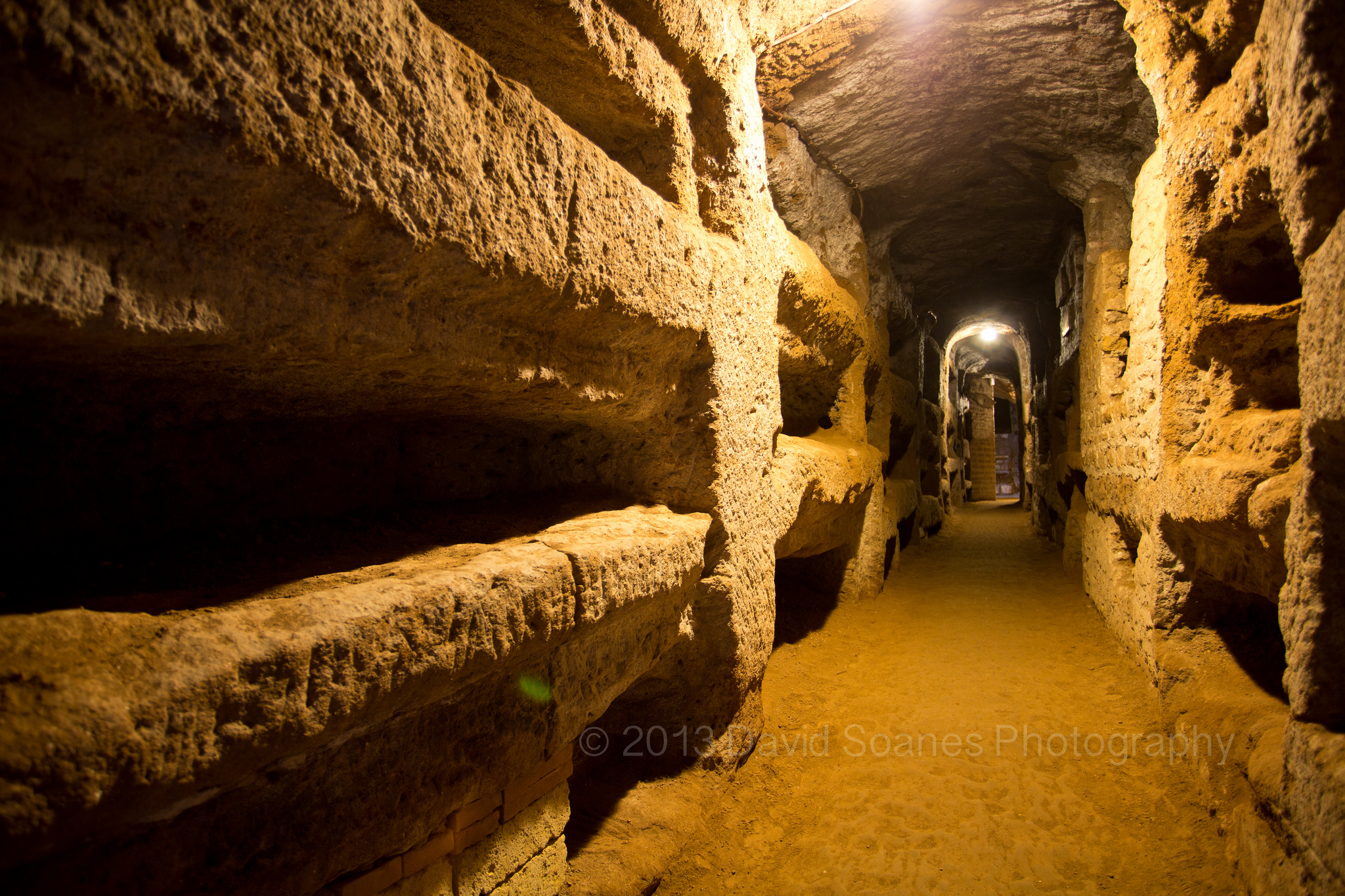
“The event may come to pass that as our Divine Lord, after His three years of public ministry were ended, delivered Himself of His own free will into the hands of men, and thereby permitted them to do that which before was impossible, so in His inscrutable wisdom He may deliver over His Vicar upon earth, as He delivered Himself, and that the providential support of the temporal power of the Holy See may be withdrawn when its work is done…when the whole number of those whom He hath chosen to eternal life is filled up. It may be that when that is done, and when the times of Antichrist are come, that He will give over His Vicar upon earth, and His Mystical Body at large, [for a time]…The Church would, as in the beginning, again be made up of members voluntarily uniting themselves together throughout the whole world, having indeed a legal recognition here and there, but wandering up and down the earth, without any contact with the nations of the world as such… the Church would descend again, if I may say so, into the Catacombs, and would be hidden from society…”
Louis Edward Cardinal Pie of Portiers, France, close friend of Cardinal Manning’s and favored by Pope St. Pius X, spoke of the time of Antichrist as follows: “The Church, though of course still a visible society, will be increasingly reduced to individual and domestic proportions…. And finally the Church on earth will undergo a true defeat: ‘…and it was given unto him to make war with the saints and to overcome them’ (Apocalypse 13:7). Now, in this extremity, what will be the remaining duty of all true Christians, of all men of faith and courage? The answer is this: spurred on to ever greater vigour by the apparent hopelessness of their predicament, they will redouble their ardour in prayer, their energy in works, and their courage in combat so that their every word and work cries out together:” (and here he recites the first part of the Our Father). “When The Lord taught His Apostles the Our Father, He made it clear that none of His followers could accomplish the first act of religion, which is prayer, without putting himself in relation with all that can advance or retard, favor or hinder, the reign of God on earth and he must do this in proportion to his intellectual attainments and to the extent of the horizon open before him” (from Cardinal Pie’s Kingship of Christ).
And this from Belloc: “The Church will not disappear, for the Church is not of mortal stuff; it is the only institution among men not subject to the universal law of mortality. Therefore we say, not that the Church may be wiped out, but that it may be reduced to a small band almost forgotten amid the vast numbers of its opponents and their contempt of the defeated thing. One of the most intelligent of French Catholics, a converted Jew, has written a work to prove (or suggest) that the first of these two possible issues will be our fate. He envisages the last years of the Church on this earth as lived apart. He sees a Church of the future reduced to very few in numbers and left on one side in the general current of the new Paganism. He sees a Church of the future within which there will be intensity of devotion, indeed, but that devotion practised by one small body, isolated and forgotten in the midst of its fellowmen.”
It seems that men will not number many in this group, and certainly the clergy will be absent, just as they were at the time of the Crucifixion.
“At some distance, two women covered with veils, one of whom leaned upon the other in an attitude which betrayed the most heartrending grief, timidly beheld the proceedings of the Roman soldiers: they were Mary and Magdalen, for Magdalen too was there; and in the distance were perceived the other women from Galilee, who had left all to devote themselves to Jesus, and who had not forsaken him in the hour of punishment and ignominy. “Honor to them!” says Abelard, “for when the disciples and apostles fled like cowards to the mountains, these weak but courageous creatures accompanied Christ even to the foot of the cross and did not leave him till he was laid in the sepulchre!” (The Pictorial Catholic Library, 1886, Murphy and McCarthy).
And so here we are, today, in exactly the situation these two cardinals and an historian predicted we would be, re-enacting Christ’s Passion as played out in His Church. We live in a world where temptations and near occasions of sin have been multiplied 1,000 times and more, and where no one even remembers what the Catholic Church once was and taught — and this includes Traditionalists. Most of us know that we received valid Baptism, but if we were unfortunate enough to have received the other Sacraments after the close of 1958, we have no real certainty we received them validly. We try our best to carry on without these Sacraments, save marriage and Baptism; without spiritual direction, without any real hope of anything changing, except for the worst. And yet we hang on for dear life to faith and hope and do our best to practice charity in a world filled with hate and every imaginable vice. Many of us, whether in the city or the country, live as virtual hermits to avoid contamination by the world. Scarred and dazed by our experiences with the Novus Ordo and Traditionalists, assaulted as fanatics, heretics and apostates by those same Pharisees who also tormented Jesus, abandoned by Trad and Novus Ordo “friends” and family members, we believe we have something in common with St. Paul in the Sexagesima Sunday Gospel. Carrying the banner of final perseverance before us, we beg Our Lord to forgive us for the many sins we have committed in trying to arrive at the safe harbor of the catacombs, and to help us sin no more.
Can we expect a reprieve of any kind in these dreadful times? Should we? St. Paul wrote this about the Christians living during the times preceding the Second Coming: “The testimony of Christ was confirmed in you… Nothing is wanting to you in any grace, waiting for the manifestation of Our Lord Jesus Christ. Who also will confirm you to the end without crime, in the day of Our Lord Jesus Christ” (I Cor. I, 6-8). And this, less encouraging, from the following source: “It is supposed that the just who are alive when Christ comes again, and who stand in need of cleansing, will be purified in some extraordinary way — e. g. by the troubles of the last days, by vehement contrition, etc.; but all this is mere conjecture” (The Pictorial Catholic Library, 1886, Murphy and McCarthy). That great preacher of the end times, St. Vincent Ferrar, teaches the following regarding the punishment of those still alive on earth when Our Lord comes again, and grants it greater weight than just a conjecture:
“Saint Thomas Aquinas speaks beautifully of this when he says that this last fire, inasmuch as it precedes the Judgment, will act as an instrument of God’s justice. It will also act like natural fire, inasmuch as, in its natural power, it will burn both wicked and good and reduce every human body to ashes. Inasmuch as it acts as an instrument of God’s justice, it will act in different ways with regard to different people. For the wicked will suffer intensely through the action of the fire, but the good in whom nothing is found which must be purged away will feel no pain from the fire, just as the three children felt nothing in the fiery furnace, although the bodies of these others will not be preserved as were those of the three children. And this will come to pass by the divine power, that without pain or suffering their bodies will be resolved into ashes.
“But the good in whom there is some stain to be purged away will feel the pain of this fire, more or less according to the merits of each. But they will be swiftly purged for three reasons. The first reason is that in them little evil is found, for they have been already in great measure purged by the preceding tribulations and persecutions. The second is that the living will voluntarily endure the pain; and suffering willingly endured in this life remits much more quickly than suffering inflicted after death. This is seen in the case of the martyrs, for if, when they came to die, anything worthy of purgation was found, it was cut away by the pruning knife of their sufferings. And the sufferings of the martyrs were short in comparison with the pains of purgatory. The third reason is that the heat of the fire gains in intensity what it loses through the shortness of the time. But in so far as the fire is active after the judgment its power only extends over the damned, since all the bodies of the just will be impassible” (Angel of the Judgment: A Life of Vincent Ferrer, by S.M.C., Ave Maria Press. Chapter 11, pgs. 102-117)
But what of those who will die before this conflagration? Is it not possible that the end-times tribulations and persecutions also will help to at least shorten their time in the purgatorial fires? We can only hope. Many believe there will be a chastisement that will cleanse the earth of the greater majority of evil persons and allow the Church to function again for a brief time before the persecutions are renewed. Numerous saints and holy people have predicted it. Others believe only in a spiritual chastisement, up to the end. God tells us no one knows the day nor the hour. Nor do we know exactly what will precede it, in what order or how — only what we read in Holy Scripture. We must pray and keep watch over our souls, that we remain in the state of sanctifying grace, for truly our end could arrive at any moment. We have been so desensitized to sin we often do not even realize that what we do on a daily basis is offensive to God. A general confession — an examination of conscience over the period of our entire life — will often show us the truth of this statement. And a constant watch over our actions each day, concluding in a nightly examination, will help us to become more aware of our particular sins so we may beg God to help us eliminate them. Constant vigilance over our souls and a daily increase in our love for God is the only hope we have of obtaining His mercy and meriting any lightening of our penalty for sin
Do we have what it takes to become the “great saints” foreseen in these times? If we beg God for the graces we need to keep the faith at home, then God will hear our prayers. In these times when everything is so broken that it seems impossible to fix, we must turn our gaze inward and keep it simple. Like St. Therese of the Child Jesus and her little way, we will trust in God on waking each day and ask Him to supernaturalize each of our everyday tasks, to demonstrate our love for Him. This is how St. Therese built her stairway to heaven, and we can ascend that stairway as well. “Jesus does not demand great actions from us,” she said, “but simply surrender and love.” By refusing to attend Traditionalist masses and receive their sacraments, we are surrendering our own will to that of God’s and offering ourselves as a sacrifice instead. Our Lady has led us to this spiritual desert and Her Son’s Church has provided the manna of the Act of Perfect Contrition and Spiritual Communion; also the “eighth” Sacrament, Our Lady’s Rosary. We are not alone; we have not been abandoned. Jesus and His Blessed Mother are enough for us.

by T. Stanfill Benns | Feb 12, 2020 | New Blog
+ Seven Holy Founders of the Servites +
I recently have received inquiries from readers about the “stay-at-home Catholics” site truecatholics.org. I also have been harassed over the past few months by two individuals, one of them a Feeneyite, disputing various topics covered on betrayedcatholics. These attacks may or may not be related, but often they precede the appearance of wannabe sites or publications claiming to be Catholic.
Before beginning, it will be useful to point out the teaching of Pope St. Pius X in Pascendi Dominici Gregis: “They put their designs for Her [the Church’s] ruin into operation not from without, but from within… The more intimate their knowledge of Her, the more certain the injury.” This can describe Traditionalists of all shades, including the Feeneyites, and some Feeneyites style themselves as “stay-at-home Catholics.” They present with all the external trappings of the Church and nearly all Her teachings, save the one drop of heretical poison here and there that sends souls to hell. They are convinced, of course, that their heresies are actually true teachings of Christ’s Church on earth, as are all heretics. This is especially true of the Feeneyites, who never cease to fiercely defend their errors.
Any stay-at-home minded Catholic pulling up the trueCatholics site would immediately presume they have found like-minded faithful, based on the appearance of its content. All has been designed to attract those searching for answers, with several media options avaialble. An “easy way” to understand what has happened to the Church is offered in short articles that use the “just listen to me” method to present truths of faith. But like so many sites, bite a little deeper into the apple and the worm surfaces. During a brief search of the trueCatholics site, the following heretical statements were discovered:
“Water baptism only forgives sins — There is no forgiveness of sins and hence no possibility of salvation without a correct and proper Baptism of Water and a correct and proper Profession of Faith” (https://truecatholics.org/catholicism/baptism-is-necessary-for-salvation/).
“There is no such thing as Invincible ignorance — Ignorance has never been a means of salvation. (Fr. Goffine, 1687) Today, there are many wicked heresies like invincible ignorance, which have fooled people into believing ideas condemned by Christ and His Catholic Church. They cause unthinking, deceived people to fall into heresy and fall outside the pale of the Church. No heretic shall be worthy of eternal life.” Pope Eugene IV, ex Cathedra, Cantate domino, 1441.
“Heretics won’t go to heaven — It is true. Heretics cannot go to heaven. This is Church dogma. Council of Florence, Pope Eugene IV, ex Cathedra, Cantate domino, 1441: “The Most Holy Roman Church firmly believes, professes and preaches that none of those existing outside the Catholic Church, not only pagans, but also Jews, and heretics, and schismatics, can ever be partakers of eternal life, but that they are to go into the eternal fire “which was prepared for the devil, and his angels,” (Mt. 25:41) unless before death they are joined with Her…”
“Only stay-at-home Catholics will save their souls — Only true Catholics who stay at home on Sunday (i.e. don’t attend any “masses”) are in the true Catholic Church” (https://truecatholics.org/catholicism/stay-at-home-catholic-overview/).
To find the true teachings of the popes on the above subjects, go to https://www.betrayedcatholics.com/the-saved-and-the-lost-some-points-to-consider/ Baptism of blood and desire are treated in an article available from the Archives and two articles listed under recent articles on the Articles page. The fact that this teaching is not readily apparent and openly stated at the outset on trueCatholics shows that the creators of the site hope to lure in younger Catholics not familiar with some of these longstanding issues with Feeneyites. This way they can redirect them from sites that are truly written for stay-at-home — Catacomb — Catholics while pretending to be in agreement with them, constituting one, big happy family.
After all, many of the quotes and the premises used on betrayedcatholics can be found embedded in the writings on the trueCatholics site in order to make it appear they are on the same page with us. While quotes cannot be copyrighted, they can be considered ingredients of intellectual property when used to construct demonstrations according to the Scholastic method of presentation required by the Church. This is especially true when the books these quotes are taken from cannot be found available for sale or download on the Internet. I have a 4,000-volume library in my home and many of these books are out of print or considered rare. I doubt there are many copies floating around. These erudite Catholics also “borrowed” a declaration from my website which has appeared here since 2003. It also can be found in the opening pages of my first self-published work Will the Catholic Church Survive…? written 30 years ago. Here is the declaration as found on their site:

Anyone can rewrite something they would like to use or ask for permission to use it; that is what professional journalists do. But that aside, what kind of Catholic does not give credit to those who went before him or her in the field of Catholic truth, especially when they are so bold as to accommodate the hard-won fruits of their literary labor?! The trueCatholics site does not once mention betrayedCatholics, and that is not only dishonest, it is also not Catholic. When any scholar or theologian creates a work based on another work, those works are always listed in either footnotes or the bibliography. Not to use the Scholastic method to present truths of faith is to ignore the Church’s orders to do so and to set oneself up as sole authority in matters of faith.
In his comments about these teachings regarding salvation, Msgr. Joseph C. Fenton tells us in his work The Catholic Church and Salvation that Pope Pius XII’s decree against the Feeneyites, Suprema haec sacra “is an authoritative, though obviously not an infallible, document. That is to say, the teachings contained in the Suprema haec sacra are not to be accepted as infallibly true on the authority of this particular document. Nevertheless, the fact remains that much of its teaching — Indeed, what we may call the substance of its teaching — is material which has appeared in previous documents emanating from the Sovereign Pontiff himself and from Oecumenical Councils of the Catholic Church… [However] the Cardinals of the Supreme Sacred Congregation of the Holy Office decreed that these explanations be given, and the Holy Father approved their decision. We are dealing, then, with an authoritative document. It would be wrong for any teacher of Catholic doctrine to ignore or to contradict the teachings contained in this Holy Office letter” (see https://www.betrayedcatholics.com/the-sincere-internal-assent-catholics-owe-papal-pronouncements/). So why are trueCatholics teaching otherwise?
Here there is no denial by Pope Pius XII, but only confirmation, of “outside the Church no salvation.” Fenton writes: “That there is no salvation outside the Catholic Church is a doctrine ‘which the Church has always preached and will never cease to preach’ …as an ‘infallible statement.’ This states clearly that it is a dogma — in other words, one of the teachings which the Church finds in Scripture or in divine apostolic tradition, and which, by either solemn judgment or in its ordinary and universal teaching activity, it presents to the people as something they must believe as a part of divine public revelation… [But] it is to be noted that this conclusion is the practical expression of the meaning of the Church’s necessity of precept. It very definitely is not, either in itself or in its context in in the Suprema haec sacra, an expression of the complete and ultimate meaning of the dogma of the necessity of the Church for salvation.
“The Holy Office letter is the first authoritative document to bring out in full explicitness the teaching that the Church is necessary for salvation both with the necessity of precept and with the necessity of means. A thing is said to be necessary for salvation with the necessity of precept when it has been commanded in such a way that, if a person disobeys this order, he is guilty of mortal sin. A means necessary for salvation, on the other hand, is something which a man must have if he is to attain eternal salvation. This paragraph brings out two truths about the Church as a necessary means to the attainment of eternal salvation. First, there is the fact that the Church is a means necessary for salvation only by divine institution and not by intrinsic necessity. Second is the fact that means necessary for salvation by divine institution can produce their effects, as the document says, ‘in certain cases’ when there is only a will or desire to possess these things.
“The Suprema haec sacra shows that the text of the Mystici Corporis, particularly those sections of the encyclical mentioned in the Holy Office letter, reproves two mutually opposed errors. The first error condemned in the Mystici Corporis is that according to which a man who has merely an implicit desire of entering the Catholic Church is in a situation in which it is impossible for him to attain to his eternal salvation. The second error proscribed is that which holds that men can be saved equally in every religion. Those who taught either error after the publication of Mystici Corporis were guilty of ignoring or defying the authority of the Sovereign Pontiff, teaching in his ordinary doctrinal activity or magisterium” (end of Msgr. Fenton quotes). Therefore, this is the case with the Feeneyites, who cannot accept the fact that certain individuals, (known only to God Himself, Pope Pius IX teaches), can be saved according to the necessity of means. And this, Pope Pius IX also teaches, can happen by way of invincible ignorance. So regardless of whether Suprema haec sacra is infallible, the Feeneyites are denying the teachings of the ordinary magisterium and defying the authority of the popes, just as their founder Leonard Feeney did. And it must be remembered that Feeney was excommunicated from the Church for his defiance.
As has been stated elsewhere, no one is certain of their eternal salvation, and this applies to stay-at-home Catholics. We most fervently wish to be numbered among the elect and are doing everything in our power to see that is the case. But we definitely do believe others can be saved by explicit or implicit desire, because to believe otherwise would be a denial of papal teaching and authority. This was explained in The Saved and the Lost blog post.
One more point needs to be made here. Any group or individual ignoring other existing stay-at-home Catholics then using their premises for one’s own purposes should send up a red flag. It should tell those reading the material on such sites that the only reason the site’s authors would have for ignoring fellow Catholics is if they did not agree with them on some important Catholic doctrine. It is Traditionalists who seek to burrow in and disguise their true intentions only to lead others away from already existing groups. These are the tactics of Protestant sects, not Catholics. As Fr. Demaris tells us in They Have Taken Away My Lord… “It is by faith that the faithful are united… Truth wins, no matter how small the number of those attached to our Lord.” If we have not the faith, whole and entire, we have nothing.
by T. Stanfill Benns | Feb 6, 2020 | New Blog
+St. Agatha+
It is the common opinion of scholastic theologians that the majority of mankind, (and some even say the majority of Catholics), will be lost. This is the opinion of St. Thomas Aquinas, St. Alphonsus Liguori and many others, among them the Early Fathers and Doctors of the Church. Msgr. Joseph C. Fenton tells us that “The common teaching is …a proper theological conclusion which by reason of the authority of a moral unanimity of scholastic theologians, can be received as true Catholic doctrine. It would be at least rash to deny it.” Revs. John A. McHugh O.P and Charles Callan, O.P., in their Moral Theology, a Complete Course, elaborate on the common opinion as follows:
“If the opinion has the support of only one theologian, it may be followed without further investigation if he has received special mention from the Church as an authority and a safe guide. Thus the Holy See has expressly declared that the doctrine of St. Alphonsus may be safely followed by confessors and the approbation given to St. Thomas Aquinas as universal Doctor makes his word more convincing than a contrary argument based on one’s own reasoning” (#669). In this case, both St. Alphonsus and St. Thomas Aquinas teach the following regarding the subject of the saved and the lost:
“Since their eternal happiness, consisting in the vision of God, exceeds the common state of nature, and especially in so far as this is deprived of grace through the corruption of original sin, those who are saved are in the minority. In this especially, however, appears the mercy of God, that He has chosen some for that salvation, from which very many in accordance with the common course and tendency of nature fall short.” — St. Thomas Aquinas, Doctor of the Church
“Everyone desires to be saved but the greater part is lost… The Elect are much fewer than the damned, for the reprobate are much more numerous than the Elect.” — St. Alphonsus Maria de Liguori, Doctor of the Church
But McHugh and Callan also state: “Of course, this does not mean that these or any other private doctors are infallible in their judgments, or that one should not depart from their teaching in a point where the Church has decided against them or where there is a manifest reason for doing so; it simply means that they are so conspicuous among moralists that one who is in doubt may safely follow them unless the contrary is known to him” (#669).
We know that in those things directly affecting our eternal salvation, the validity of the Sacraments and the good of a third party, the law of charity forbids us to take any risks, as McHugh and Callan teach from the doctrines of the Church. While the common opinion of theologians on the number of the saved and lost does not affect us directly where our eternal salvation is concerned, a lax attitude regarding this truth could easily cause some to delay conversion or omit repentance, and this must be avoided at all costs. For this reason, especially in the perilous times we find ourselves, it is safer to take all the precautions we can, such as St. Alphonsus provides in his Preparation for Death, to increase our love for God, do penance, reform our lives and renew our efforts to avoid all sin. This is the least we owe Our Lord for the Sacrifice He offered for us on the Cross.
While some theologians writing after the turn of the 20th century believed this common opinion had shifted in the opposite direction — meaning that the majority would be saved, not lost — we know why this trend began and where it was heading. It was an invention of the Modernists which culminated in the heresies of ecumenism and religious liberty. In the beginning it did have its valid points, as some, perhaps, may not yet have been in the Modernist employ. But it is not only the Modernists who have misrepresented this teaching. On the one side we have those who present the most rigorous version of this opinion without the necessary examination of the statements made by those supporting it. On the other side are ranged the advocates of the mildest opinion, primarily Modernists or those imbued with Modernist tendencies. The lax state of the Church at the time they were making these rosy predictions in no way justified such optimism. If anything, there was a definite trend to discredit or abandon religion altogether, certainly not to convert to the Catholic faith. Historically the Church was the weakest it had ever been, and from the 1920s on was increasingly surrounded by Her enemies.
One Jesuit advocate of the mildest opinion describes it as a swinging pendulum, at first resting in favor of the stricter view and then later swinging to the opposite side, in favor of the milder opinion. As all devices of this nature, when it comes to rest, it stops halfway between the two unless dialed back altogether by the Holy See. And here is the rub. According to one author supporting the milder opinion, Rev. Nicholas Walsh S.J., “Whether there be few or many that are saved [is] an open question… There is no authoritative decision of the Church or unanimous opinion of her Fathers or theologians: [it is therefore] an open question about which we may speculate as a ‘doubtful law’ (St. Augustine)” (The Saved and the Lost). And Walsh’s work was written in 1908. I do not believe, as indicated above, that we need speculate very far at all in the other direction seeing the development of mankind over the past seven decades. But certain things must be clarified regarding the presentation of the stricter view, and how this view was modified to some extent by the Roman Pontiffs up to 1958.
It is easy to see how infidels, pagans, Jews, apostates, heretics and schismatics, who have comprised the majority of mankind since the Reformation and all but occupy the entire field now, were not able to save their souls unless they converted and did penance. St. Alphonsus and St. Jerome tell us deathbed conversions are rare, so this would need to have been evident before their actual death. Somehow at the moment of their death, it is hoped that at least some of these individuals and lapsed Catholics professed sorrow for their sins and asked forgiveness. Can we confidently believe the majority of Catholics are saved? That may have been true in the past, and here we speak only of those Catholics who showed every sign of fulfilling their religious duties and obeying the 10 Commandments and laws of the Church.
But it became doubtful beginning sometime in the 20th century, when churches began emptying in Europe and even some locations in the U.S. With the advent of Vatican 2, many did abandon the false church, but many also remained. And among those who left, few ever realized Traditionalists and the Orthodox/Uniates were not Catholic either. Even if they suspected it, they remained in their churches simply because it fell within their comfort zone, they wanted to avoid ridicule from friends and family; and/or they failed to investigate proofs that would have convinced them they could not remain in these groups. This is called affected ignorance, and it cannot pass for invincible ignorance if a modest amount of effort made could uncover the truth.
So could it be said that most Catholics living today might be saved? The question is — how many can truthfully even call themselves Catholic with any real claim to the name as regards Church membership?! Not very many, as proofs presented in recent blog posts have shown. None of us can be certain of our salvation, but at least those trying their best to observe the laws and teachings of the Church, regardless of what it may cost them, can hope God accepts their sacrifice in union with His Passion and that of His Church. So what modifications, per those mentioned above by McHugh and Callan, might we make to the presentation of this doctrine today? Has the Church decided anything new, or is there a manifest reason for believing differently where the presentation of this teaching is concerned?
To begin with, the Doctors, Fathers and theologians cited in support of the stricter opinion do not all quite say what those quoting them claim. They tell us the elect are much fewer than the damned, those who are saved are in the minority and in comparison to the reprobate, those who are saved are much fewer. They speak of the majority of men, the greater part of men, a great number of Christians who are damned, the elect as a minority, and then some speak of the saved as “the fewest of the few.” Those adhering to the strictest view, that only a very few are saved, are not generally numbered among the Doctors, Fathers and theologians, with one or two exceptions according to the quotes available on this subject (see these quotes at https://catholicismhastheanswer.com/quotes-on-the-fewness-of-the-saved/)
To say that “a minority of the faithful are saved” and “only a few are saved,” which is deduced from various commentaries on Scripture texts, is scarcely the same thing, yet these statements are mentioned in the same breath. This even though not all Scripture commentators agree on the stricter interpretation of the texts used to support this opinion. Preachers of the past wishing to frighten those hardened in their sins and those actually wishing to intimidate and subjugate their followers employ “few are saved” texts when dealing with this subject to good effect. Some Traditionalist sects have employed it to justify a demand for severe penance and voluntary humiliation, using it to frighten those who are wavering to remain in their sects. Many souls have forever been turned away from the true faith by the practices of these sects.
The fact that this is still an open question, the meaning of a Scripture passage never officially decided by the popes or councils, limits Catholics to the allowance of the less strict opinion if the error of tutiorism is to be avoided. This is one of the errors belonging to the Jansenist heresy condemned by the Church. One may insist others must observe the safer teaching advanced in the common opinion but cannot insist anyone observe the safest teaching, i.e., that only a few are saved. McHugh and Callan write: “[Tutiorism] errs when it teaches we are… obliged always to follow the safer or safest course… There are cases when we are obliged (because some law requires it) to follow a safer course“ and this would include “something essential for the salvation of ourselves or others” (#678a). It does not seem that the question of whether few or many are saved is essential to our salvation, although it indirectly pertains to it. That the majority of mankind will be saved is contrary to the common opinion of theologians and is the less safe opinion, and we cannot embrace it when great doctors such as St. Thomas and St. Alphonsus, among other Fathers and Doctors, teach it.
But we are not obliged to adhere to what some would hold as the safest opinion, that only a few will be saved. This is not the common opinion of Fathers, Doctors and theologians but only the opinion of a few, some of them not theologians, or only mystics or holy seers whose visions and revelations we are not obliged to believe at all. And it is usually based on the texts of Scripture characterizing the few grapes left on the vine, the few grains of wheat sifted from the chaff, and other bible texts, which not all commentators interpret strictly or apply in the same way. No one can teach or believe what those advocating the common opinion didn’t actually say.
St. Alphonsus and others say the few saved is in contrast to the many lost, not that they are to be considered by themselves as such. They do not set a number to those in the minority. Severely limiting that number would invite to the table another Jansenist heresy, that of the “petite eglise” or little church, which insinuated by its rigoristic penitential practices that scarcely anyone who did not follow their lead would be found in heaven. As Rev. Ronald Knox wrote: “Its adherents forgot, after all, to believe in grace” (Enthusiasm, pgs. 212-213, 1950).
Then there are the teachings of Pope Pius IX and Pope Pius XII that grant some leeway to those invincibly ignorant and those not able to resort to the ordinary means of salvation. The popes and those theologians commenting on their teachings specifically forbid the faithful to exclude the grant of grace to those outside the Church by a merciful act from God. Msgr. J.C. Fenton wrote in his work The Catholic Church and Salvation, 1958:
“When the Unam sanctam teaches us that there can be no remission of sins outside the Catholic Church, it is telling us, actually, that it is impossible to obtain the life of sanctifying grace or to live that life outside this supernatural kingdom of God. It is bringing out the divinely revealed truth that, by God’s own institution, the life of sanctifying grace is to be possessed and derived from Our Lord by those who are united with Him, abiding in Him, in His Mystical Body, which is the Catholic Church.
“In the light of Catholic doctrine, however, it is both certain and obvious that actual graces are really offered to and received by men who are definitely ‘outside the Church,’ in the sense in which this expression is employed in the ecclesiastical documents which state the dogma or the Church’s necessity for the attainment of eternal salvation. As a matter of fact, the proposition that “no grace is granted outside the Church (extra ecclesia nullar conceited gratia) is one of the theses condemned explicitly by Pope Clement XI in his dogmatic constitution Unigenitus, issued September 8, 1713, and directed against the teachings of Pasquier Quesnel (DZ 1379).” So in making his statement, Fenton explains, Pope Boniface VIII in Unam Sanctam only refers to the ordinary means of salvation. What Pope Pius IX and Pope Pius XII taught regards the extraordinary and not the ordinary means of salvation. This is what those holding the Feeneyite heresy argue in endless circles about, claiming that what Pope Pius XII taught contradicted the necessity of Church membership for salvation, when it simply qualified the true nature of that membership.
Pope Pius IX, however, had already cleared up any confusion in his encyclicals on the topic.
“Far be it from Us, Venerable Brethren, to presume to establish limits to the divine mercy, which is infinite. Far be it from Us to wish to scrutinize the hidden counsels and judgments of God, which are “a great deep,” and which human thought can never penetrate. Certainly we must hold it as of faith that no one can be saved outside the apostolic Roman Church, that this is the only Ark of salvation, and that the one who does not enter it is going to perish in the deluge. But, nevertheless, we must likewise hold it as certain that those who labor in ignorance of the true religion, if that [ignorance] be invincible, will never be charged with any guilt on this account before the eyes of the Lord. Now, who is there who would arrogate to himself the power to indicate the extent of such [invincible] ignorance according to the nature and the variety of peoples, regions, talents, and so many other things? For really when, loosed from these bodily bonds, we see God as He is, we shall certainly understand with what intimate and beautiful a connection the divine mercy and justice are joined together. But, while we live on earth, weighed down by this mortal body that darkens the mind, let us hold most firmly, from Catholic doctrine, that there is one God, one faith, one baptism. It is wrong to push our inquiries further than this… For the rest, as the cause of charity demands, let us pour forth continual prayers to God that all nations everywhere may be converted to Christ. And let us do all in our power to bring about the common salvation of men, for the hand of the Lord is not shortened and the gifts of heavenly grace will never be lacking to those who sincerely wish and pray to be comforted in this light” (Singulari Quadam).
And in this same pope’s Quanto conficiamur moerore we find the following:
“…Those who labor in invincible ignorance of our most holy religion, and who, carefully observing the natural law and its precepts which God has inscribed in the hearts of all, and who, being ready to obey God, live an honest and upright life, can, through the working of the divine light and grace, attain eternal life, since God, who clearly sees, inspects, and knows the minds, the intentions, the thoughts, and the habits of all, will, by reason of His goodness and kindness never allow anyone who has not the guilt of willful sin to be punished by eternal sufferings.”
Then Pope Pius XII, in his Mystici Corporis Christi, elaborated further on this teaching.
“As you know very well. Venerable Brethren, from the beginning of Our Pontificate, We have entrusted even those who do not belong to the visible structure (compagem) of the Catholic Church to the heavenly protection and direction, solemnly asserting that, following the example of the Good Shepherd, We wanted nothing more than that they should have life and have it more abundantly. [We] most affectionately invite each and every one of them [those who are not members of the Church] to co-operate generously and willingly with the inward impulses of divine grace and to take care to extricate themselves from that condition in which they cannot be secure about their own eternal salvation. For even though they may be directed towards the Redeemer’s Mystical Body by a sort of unconscious desire and intention (ctiamsi inscio quodam desiderio ac voto ad mysticum Redemptoris Corpus ordinentur), they still lack so many and such great heavenly helps and aids that can be enjoyed only in the Catholic Church.”
Fenton comments: “In the Mystici Corporis Christi Pope Pius XII asserts true Catholic doctrine by teaching that a non-member of the Church who is within the Church only in the sense that he has an unconscious or implicit desire of entering it as a member can possess the supernatural life of sanctifying grace.
“The Suprema haec sacra [written in 1950 to refute the Feeneyite heresy] then brings out the fact that, in the merciful designs of God’s providence, such realities as the Church itself and the sacraments of baptism and penance can, under certain circumstances, bring about the effects which they are meant to produce as means necessary for the attainment of eternal salvation when a man possesses them only in the sense that he desires or intends or wills to have or to use them. Obviously the text cannot be understood unless we realize what the “certain circumstances” mentioned in the text really are. Basic among these circumstances is the genuine impossibility of receiving the sacraments of baptism or of penance or of entering the Church as a member [or readmitted to it in the absence of any means to abjure heresy – Ed.]. It is quite clear that if it is possible for a man to be baptized, to go to confession and to receive sacramental absolution, or really to become a member of the true Church, the man for whom this is possible will not attain to eternal salvation unless he actually avails himself of these means. But, on the other hand, should the actual employment of these means be genuinely impossible, then the man can attain to eternal life by a will or desire to employ them.”
“The Suprema haec sacra states explicitly that it is possible for a man to be saved if he has only an implicit desire of entering the Catholic Church. Thus it teaches that a man can attain the Beatific Vision without having had any definite and explicit knowledge of the Catholic Church during the course of his lifetime in this world… The Mystici Corporis reproved both the error of those who teach the impossibility of salvation for those who have only an implicit desire of entering the Church, and the false doctrine of those who claim that men may find salvation equally in every religion. No desire to enter the Church can be effective for salvation unless it is enlightened by supernatural faith and animated or motivated by perfect charity” (The Catholic Church and Salvation, 1958). Yet Pope Pius XII made no determination whatsoever of the number of those saved in this manner, although he indicated that they still lacked many helps to assure their eternal salvation.
So it is not just those who are invincibly ignorant that this teaching was meant for; it is almost as though Pope Pius XII was anticipating the very situation in which we find ourselves today. For his teaching provides a way to restore Church membership which has been lost by attending Traditionalist, Novus Ordo or Protestant services — membership that cannot be restored in an ordinary manner because there is no hierarchy available to abjure those wishing to return to the Church from their heresies.
If certain individuals who possess only an implicit desire can expect to be saved, and the Church condemns those who teach otherwise, does She not also censor those who would deny this grace to Catholics actively seeking it in an explicit manner? Stay-at-home Catholics are validly baptized. They make use of all the “many and great heavenly helps” Pope Pius XII mentions in an explicit manner to aid them in achieving forgiveness for their sins and to merit the fruits of their Spiritual Communions. What right, then have Traditionalists to ridicule them and condemn their efforts as unCatholic, to even number them among the lost? And how do these teachings of Pope Pius IX and Pope Pius XII regarding God’s mercy change the face of the teachings on the salvation of the fewer number of men, even Catholics? Pope Pius IX addresses this issue in Singulari Quadam:
“When, loosed from these bodily bonds, we see God as He is, we shall certainly understand with what intimate and beautiful a connection the divine mercy and justice are joined together. But, while we live on earth, weighed down by this mortal body that darkens the mind, let us hold most firmly, from Catholic doctrine, that there is one God, one faith, one baptism. It is wrong to push our inquiries further than this…”
I could be mistaken, but in a backhanded way, Pope Pius IX seems to have answered the question of who is saved and who is lost. He taught that we have no business questioning the workings of God’s mercy and we should not do so. In other words, opinions on this subject do not really matter today because God alone knows to whom He will extend His Divine Mercy and who deserves the rod of His justice. It is not for men to speculate who, or how many, are the objects of that mercy either today or in the past. We should rejoice in the fact that what Pope Pius XII taught has made it possible to appeal to God’s mercy in these dreadful times, and it should compel us to do all in our power to make ourselves worthy of it.
Certainly we cannot blithely decree with the Protestants and the Novus Ordo sect that all men may merrily avail themselves of that mercy indiscriminately, for this is not what Popes Pius IX and Pius XII taught. God dispenses His mercy and grace as He pleases, not to all but in accordance with His will. Nor should we be affrighted by those who would have us believe heaven is almost impossible to attain, for this is not what the Church teaches either. Who will merit heaven is a great secret obviously meant to be revealed only to those who are fortunate enough to behold the Beatific Vision. Rather than concern ourselves with these controversies, we would do well to spend our time instead doing all in our power to save our own souls and pray unceasingly that those we love, and indeed all who are of good will, save theirs as well.
by T. Stanfill Benns | Jan 27, 2020 | New Blog
+St. John Chrysostom+
Various articles on this site explain the doctrine of the Mystical Body and how it is that we may be counted as members of that Body, even though we have no pope and we are not formally abjured from the heresies we may have committed as members of the NO or as Traditionalists (see https://www.betrayedcatholics.com/free-content/reference-links/2-the-church/are-traditionalists-members/).
The Catholic Encyclopedia defines the communion of saints as “the spiritual solidarity which binds together the faithful on earth, the souls in purgatory, and the saints in heaven in the organic unity of the same mystical body under Christ its head, and in a constant interchange of supernatural offices. The participants in that solidarity are called saints by reason of their destination and of their partaking of the fruits of the Redemption (1 Corinthians 1:2 — Greek Text).”
Under the subject ‘Church,’ the Catholic Encyclopedia states: “The Church is divided into the Church Militant, the Church Suffering, and the Church Triumphant… The doctrine of the visibility [of the Church] in no way excludes from the Church those who have already attained to bliss. These are united with the members of the Church Militant in one communion of saints. They watch her struggles; their prayers are offered on her behalf. Similarly, those who are still in the cleansing fires of purgatory belong to the Church. There are not, as has been said, two Churches; there is but one Church, and of it all the souls of the just, whether in heaven, on earth, or in purgatory, are members (Catech. Rom., I, x, 6). But it is to the Church only in so far as militant here below — to the Church among men — that the property of visibility belongs.”
Rt. Rev. W. Keppler, D.D., Bishop of Rottenburg, in his work The Poor Souls in Purgatory wrote in 1923: “’Pray for one another, that you may be saved, for the prayer of the just man availeth much’ (James 5:16). This advice and assurance of St. James applies not only within the limits of the Church Militiant on earth, but it extends to the Triumphant Church and the Suffering Church beyond. We invoke the Saints in Heaven, and they pray for us and send us graces, that we may obtain salvation. The saints in Heaven and the faithful on earth send help to the Poor Souls, that they may reach their final goal. The Poor Souls, in their turn, pray for us, and the prayer of these just souls availeth much for our salvation. Behold here the never-interrupted telephonic connection, the wonderful transmission of power from one realm of the Church to the others” (p. 170-71).
Rev. Clement Crock, in his discourses on the Apostles Creed, explains the phrase in that prayer “the communion of Saints,” writing: “…Every faithful Christian is included in the Church Militant.” And he defines the Church Militant as those who successfully wage spiritual combat each day. “The second group of the Communion of Saints is known as the Church Suffering. Its membership is composed of the suffering souls in Purgatory… We can safely conjecture that these souls can pray for us here on earth. But their own wounds, caused by their sins while on earth, can be healed only through suffering, or through our vicarious good works in their behalf. The last and highest division of the Communion of Saints is formed by the blessed in heaven and is known as the Church Triumphant. Not only is their time of strife and probation over, but they are already crowned as conquerors with an incorruptible crown of indescribable beauty. They are those who form as it were a continual triumphal procession around the throne of the Lamb, giving thanks for the grace of victory… And what a glorious throng they must form! …What a consolation for us to know that we are already united with those other two groups that form the Communion of Saints!
“What is the bond that binds these three groups together, making them one communion, members of one another? …This bond first of all must be in the mind, in the heart and in the soul. The thoughts of the blessed in heaven often go back to those whom they have left here below, mourning their going. It was here they fought and won their victory and here the foundations of their sanctity were laid. Surely they will remember us who have come forward to fill their places… The blessed in heaven often turn their thoughts to the holy souls in purgatory. Many among them have, perhaps, experienced the same purifying flames. …In turn the thoughts of the poor souls in purgatory, the Church suffering, must dwell a great deal upon the blessed in heaven… the object of all their hopes and longings. We are also taught that they frequently turn their thoughts to us below… And we, the Church Militant, …turn our thoughts and eyes… towards heaven and to the poor souls in purgatory… The Church Militant, Triumphant and Suffering, like a spider’s web, is knit firmly together by the more powerful bond of good deeds, mutual help and influence.”
If those in Heaven and Purgatory can be full-fledged members of the Mystical Body, yet be invisible, why is it so difficult for so many to believe that the Church in these times can still be members of that same Body, yet enjoy only a limited visibility? Many Traditionalists maintain that membership in Christ’s Mystical Body is available only to those who attend Mass and receive the Sacraments, and this is true. The error lies in their belief that they actually attend valid Masses and receive valid and licit Sacraments when they most certainly do not. Nor have they ever proven the validity of the orders they purportedly received during an interregnum in direct violation of Pope Pius XII’s Vacantis Apostolicae Sedis, Pope Pius VI’s Charitas and Pope Pius IX’s Etsi Multa. These are infallible decisions and proclamations of the Roman Pontiffs and Ecumenical Councils which they cannot question. All these teachings and decisions are against their arguments, and none exist to support their claims.
St. Robert Bellarmine’s definition of the Church is often used by the Church Herself: “The Church is a union of men who are united by the profession of the same Christian faith and by participation in the same sacraments, under the direction of their LAWFUL pastors, especially of the one representative of Christ on earth, the Pope of Rome.”(de Eccl. Mil 2). To this definition, Pope Pius XII adds in Mystici Corporis that these members must also obey all the same laws. Of course Traditionalists get the first part right and conveniently ignore the most important part about lawful pastors and subjection to the Roman Pontiff. And they are oblivious to the fact that this is not all the Church expects of us, nor can it be limited to Mass and Sacraments. Pope Pius XII wrote in Mediator Dei: “The people must offer themselves as victims…This offering is not in fact confined merely to the liturgical Sacrifice. For the Prince of the Apostles wishes us, as Living Stones built upon Christ the cornerstone, to be able ‘as a holy priesthood, to offer up spiritual sacrifices, acceptable to God by Jesus Christ,’” (I Peter 2: 5). This is what we must do today, to “fill up what is wanting to Christ’s passion.” We must assume all the dignities of that holy priesthood “in the absence of the hierarchy” as Pope Pius XII also commanded us to do.
If we pray the Mass of St. John, or say our Mass prayers in the absence of the True Mass; if we offer our very selves on this altar of sacrifice willingly and in a spirit of resignation to God’s will each day — in obedience to His signified will, His laws — isn’t the Sacrifice, then, still renewed spiritually in a continual way? In his The Mystery of Faith, Vol. I, Rev. de la Taille writes concerning chapters 5-16 of Apocalypse: “It is declared plainly that in the New Jerusalem which is to succeed the Church Militant, there would be neither Temple nor light, except God and the Lamb…Under these sacrificial symbols and metaphors we have an indication of some kind of heavenly and eternal worship,” consisting of Christ’s perpetual immolation eternally offered before the Throne of God.
St Gregory Nazianzan wrote: “What then? Will they forbid us their altars? Even so, I know of another altar, and the altars we see now are but a figure of it…All the activities ’round about that altar are spiritual; one ascends to it by contemplation. At this altar I shall stand, upon it I will make immolations pleasing to God, sacrifices, oblations, holocausts, better than those that are offered now…”(Ibid). St. Thomas writes: “The state of the New Law is intermediate between the state of the Old Law…and the state of glory, in which all truth will be fully and perfectly manifested. Then there will be no more sacraments; but now, inasmuch as we see only through a glass darkly, we have to enter into spiritual things through sensible signs.” So either we are being offered a foretaste of life in our Eternal Home, and the Church will eventually be restored; or we are being prepared for the end of the world proper and the commencement of the life to come in a very intimate way.
The Poor Souls in Purgatory
But as catacomb Catholics, visible members of the Church yet unseen by the world at large, are we really doing everything we can today to fully participate in the functions of the Mystical Body as Our Lord intended? Always in the Church there were the contemplative orders, hidden from the world and suffering in silence, also lay people dedicated to a life of prayer and suffering, who offered their prayers and very existence as a living sacrifice to save souls. They were the indispensable “living stones” relied upon by the missionaries and parish priests throughout the world to assist in the Church’s mission to procure the salvation of souls. Who has taken their place today? Who is left to pray for the conversion of sinners, the dying, the poor souls in Purgatory? Who? Only those of us who truly believe that we must now take the place of the many good souls who once labored for the Church can fill this void. Those of us who believe we must do our best to constitute that holy priesthood spoken of by Pope Pius XII are the ones called to this end times vocation. But where do we best direct our efforts?
While our contemporaries today are convinced that they must serve in the soup kitchens, care for the homeless, advocate for illegal immigrants and the mentally ill and generally champion the underdogs of the world, calling this charity toward their neighbors, they need to reassess their efforts. Certainly these efforts do not go without their reward, but the Church, if She functioned today, would not classify all these needy people as truly worthy of care. Even in the Middle Ages, the Church warned abbots of monasteries and abbesses of convents against being taken in by “sturdy beggars.” In many ways we cannot make a difference in their lives without their cooperation, which often they are unwilling or unable to give. This would be a special mission of the Church and should be a priority of those in power, but we know today that this cannot be reasonably expected. And we are not able to supply for this deficiency. Better that we remember them in our prayers and help in the situations closer to home we are better informed about when they arise, than to practice charity indiscriminately.
The Doctors of the Church tell us that charity can be performed in a much better fashion. According to Assist the Souls in Purgatory, a little booklet issued in the 1940s by the Benedictine Convent of Perpetual Adoration, (Clyde, Mo.), St. Thomas Aquinas teaches that mercy shown to the poor souls is more pleasing to God than if shown to the living. St. Francis de Sales also said, according to this booklet: “This one act of mercy towards the poor souls comprises the thirteen others, the spiritual and the corporal.” And finally, the booklet notes, St. Robert Bellarmine taught in one of his sermons: “He who espouses the cause of the Poor Souls and is charitable towards them performs a far greater act than if he had given a most generous alms to a poor person here on earth.” It is important today for Catholics to understand the truly dire consequences the Poor Souls are facing during these fearful times, when they have so few to advocate for them and there are no Masses to offer for their release.
All the works published on Purgatory confirm that the most efficacious means of securing the release of a soul from Purgatory is to offer Masses for them and assist at as many Masses as possible for them. This is the teaching of the Council of Trent. As catacomb Catholics we can certainly offer our spiritual Masses before the heavenly altar, but there also is a way that we can offer everything we do each day for the Poor Souls. Considering their extremity, those who feel called to this practice should embrace it. That practice is called the Heroic Act of Charity, and it consists in offering to God in favor of the Souls in Purgatory all the works of satisfaction (what we do to make up for our sins, either here or in purgatory), we practice during life and all the suffrages that will be offered for us after death” (Read Me or Rue It by Rev. Paul O’Sullivan, p. 26). This includes the indulgences attached to these works of satisfaction. One formula for this act reads as follows:
“Dear Lord, for the love of Thy Precious Blood, I wish to make an heroic offering of all the good works I do in life: in satisfaction for the temporal punishment do to my many sins, and of all the prayers offered up for me after death, in favor of those souls whom Our Blessed Mother wishes to deliver from the pains of Purgatory. Amen” (Jesus, Mary, Joseph Novena Manual, Fr. Stedman). Adding the Poor Souls to the intentions of our Morning Offering each day will keep their needs and our intentions in sharper focus.
While this act may seem daunting to those who make it, they are still free to pray for themselves, their friends and any other intentions. In all the works on Purgatory consulted for this article, the authors assure us that those who makes this act will be assisted by the Poor Souls when they die and during any time they themselves must spend in Purgatory. Numerous examples are given of the Holy Souls assisting such individuals at the hour of death and shortening their Purgatory. While certainly this is not a motive for making the act, it is a consolation that removes some of the fear of losing our own good works to remit the pains we will most likely suffer in Purgatory.
There also are several other ways to alleviate the sufferings of the Poor Souls, whether offering the Heroic Act or not. These are:
- Recitation of the Rosary — The rosary is one of the most indulgenced prayers in the treasury of the Church. A plenary indulgence may be gained at the end of a novena in honor of Our Lady of the Rosary. A partial indulgence may be gained for five years each time the rosary is said, ten years, once a day, when the rosary is said with others, five years each day a rosary is said in connection with a novena in honor of Our Lady of the Rosary. On the feast of the Holy Rosary, a plenary indulgence may be gained for each devout visit in front of an image of Our Lady. Plenary indulgences also have been granted for saying the Rosary each day during the octave of the feast, on the feast and after the octave.
- Prayer between the Rosary decades — As we have discussed in our previous blog entries and on the website, the current prayer commonly said during the Rosary decades is not the prayer given to the children at Fatima by Our Lady. That prayer, by all credible accounts, reads: “Oh my Jesus, forgive us our sins, save us from the fire of hell, relieve the souls in Purgatory especially the most abandoned.” This is a different version of the prayer than was reported in the book, The Phantom Church in Rome, but further study leads us to believe it is the correct prayer. Catholics know that the third secret of Our Lady’s Fatima message predicted the infiltration and destruction of the Church and the terrible times that have followed. It would seem that the requests of Our Lady for recitation of the Rosary, also prayers and sacrifices were not heard by enough Catholics to prevent this frightful calamity we are now experiencing.
Our Lady knew the papacy would be overthrown and the Mass would cease. This is why she asked that this little prayer be inserted between the decades for the Poor Souls – it was their only hope of shortening their terrible sufferings. It explains why this prayer was falsified and those fighting to maintain the current prayer are so adamant about its authenticity. True Catholics know that it smacks of the teachings of Vatican 2, intimating that “all souls” may be saved by reciting this prayer during the rosary. Who cares about Purgatory of “all souls” can anticipate heaven?! It is not known how or why it was changed, but seeing what happened after 1960, when Lucia dos Santos said things would “become clearer,” we know that the fight was to shift the emphasis from anything that would indicate the Church had been hijacked by the usurpers. To this day, few accept the reality that Antichrist reigned from Rome just as Our Lady prophesied at La Salette, and his “line” has perpetuated his reign to this day.
- The Way of the Cross — Those who devoutly make the Way of the Cross gain a plenary indulgence.
- Other Indulgences — those wishing to gain an indulgence for themselves or the Poor Souls must possess the intention to gain the specified indulgence and be in the state of sanctifying grace. Short, indulgenced ejaculations are the easiest way to assist those in Purgatory. There are numerous of these ejaculations and other short prayers listed in the Raccolta that will help alleviate the torments of the Poor Souls.
- The Pardon Cross — One of the most richly indulgenced sacramentals is the Pardon Cross. the Pardon Cross is an indispensable recourse at the hour of death for those in the latter days, and a powerful aid for the souls in Purgatory. The following indulgences were bestowed upon the Pardon Crucifix by Pope St. Pius X in 1905 and approved in the pardon of the living and the souls in Purgatory in 1907. The lengths of the indulgences were repealed in the new Enchiridion, and the indulgences were granted to remit the guilt of the sin committed:
Whoever carries on his person the Pardon Crucifix, may thereby gain an indulgence:
- For devoutly kissing the Crucifix, an indulgence is gained.
- Whoever says one of the following invocations before this crucifix may gain each time an indulgence: “Our Father who art in heaven, forgive us our trespasses as we forgive those who trespass against us.” “I beg the Blessed Virgin Mary to pray to the Lord our God for me.”
- Whoever, habitually devout to this Crucifix, will fulfill the necessary conditions of Confession and Holy Communion, may gain a Plenary Indulgence on the following feasts: On the feasts of the Five Wounds of our Lord, the Invention of the Holy Cross, the Exaltation of the Holy Cross, the Immaculate Conception, and the Seven Sorrows (Dolors) of the Blessed Virgin Mary.
- Whoever, at the moment of death, fortified with the Sacraments of the Church (something that does not apply when they are unavailable), or contrite of heart, in the supposition of being unable to receive them, will kiss this Crucifix and ask pardon of God for his sins, and pardon his neighbor, will gain a Plenary Indulgence.
- Almsgiving — Any acts of charity we perform on behalf of the Poor Souls will also count as works that will shorten their time in Purgatory.
- Reading Holy Scripture — 300 days for 15 minutes of reading; a plenary indulgence if these readings are continued for one month.
- Penance — Our Lord told Lucia dos Santos in 1943: “The sacrifice demanded by everyone is the fulfillment of his duties in life and the observance of My law. This is the penance that I now seek and require.” This is elaborated upon by a South American apostle who left us a wealth of teaching on the true nature of penance and how we may practice it today.
Rev. Mateo Crawley-Boevey’s apostolate was ordered by Pope St. Pius X, blessed by Pope Benedict XV, directed and expanded by Pope Pius XI and confirmed by Pope Pius XII. In his Jesus King of Love, Rev. Crawley-Boevey tells us: “If your health does not permit of your using instruments of penance, just live your life as God planned it for you. Such a course of action will be a more painful mortification than any bodily penance, but accept all with great love… Never doubt that the best of crosses, the safest, the most divine, is always that one which Jesus Himself ordains without consulting us. A cross which is not of our own choosing is undoubtedly the heaviest to bear, not because of the cross itself, for that which Our Lord sends us is always more bearable and sanctifying than one of our own making, but because we are so fickle and capricious, even in our efforts to attain sanctity…
“The severest penance, even in the cloister, is the physical pain and moral anguish which God, in his wisdom and mercy, ordains for our sanctification. This includes, illness, sorrows, inclemency of weather, work, contradiction and lack of resources. We can make use of these penitential garments a hundred times a day, even a hundred times an hour! …Calvary is to be met with even in our own homes, where we encounter the cruel sufferings of disappointments, loss of fortune, sorrow, even death itself… A chronic invalid may lead as penitent a life as a Carthusian. A mother whose heart, like that of Mary, is pierced with sorrows — yet who blesses and rejoices in her martyrdom — is a penitent and a martyr of the highest order, a real marvel of grace.” And yet, Rev. Crawley-Boevey notes, “Many flee in consternation at the slightest pinprick and refuse to taste even a drop of His bitter chalice.” Their only prayer, he quotes from St. Teresa of Avila, is “’From thy cross and my crosses deliver me O Lord!’”
Such is the nature of suffering and penance. How difficult it is today to fulfill our daily duties when so many other pressing matters demand our attention and time. And yet our best efforts in this process is the very thing God wishes to use for our sanctification and the deliverance of the Poor Souls from their penitential prison.
Our interaction with the Poor Souls
We know from Church teaching that those in Purgatory are there to expiate the temporal punishment for sin as well as the stains of venial sins. The saints and theologians teach they suffer the torments of a fire that far exceeds any conception we have of the pain suffered from earthly fire. Some are tormented alternately by ice and cold, then fire. Some suffer only briefly; others suffer for centuries, even until the end of the world. There are “special” types of Purgatory for certain souls and degrees of suffering in Purgatory. Some saints and holy people teach that certain parts of Purgatory can resemble paradise, and this may be the case, as St. Bede believed, of those nearing release from Purgatory and those whose sins were slight and more easily purged, as in the case of children.
It may surprise readers to know that in many ways the souls in Purgatory are much better off then we here below; we are more like them now than ever before in the history of the Church. Rev. Keppler, quoted above, tells us that they are in continual union with God, they are perfectly conformed to His will, they are perfectly content to be where they are for as long as God desires, they do not commit even the smallest faults, they are comforted by the angels, they are certain of their salvation, “and even their most bitter bitterness is wrapped in peace” (pgs. 56-57). These are the joys of the poor souls, as described by St. Bernardine of Siena; that and their joy in suffering and their assurance they will contemplate the Beatific Vision. “But not withstanding these advantages, their condition is very painful and truly deserving of our compassion” Keppler reminds his readers.
While they sorrow over no longer being able to atone for sins by penance on earth, which is why we must atone for them ourselves, there are other things they have in common with us. As Keppler quotes from a sermon on the Poor Souls: “Theirs is a miserable life. No bell calls them to the house of God, no altar chimes announce to them the moment of Consecration, they have no Sacrament of Penance, no Holy Communion…” (p. 194). This is only a recital of what we are lacking ourselves today. And we enjoy none of the joys Rev. Keppler attributes to these souls, namely, we are open to committing faults and even grievous sins, we struggle each day to remain in union with God and be conformed to His will, and we pray fervently that we will be able to avoid the fires of hell. Is it possible that in this conformity with the Poor Souls we are closer to them than ever, and that what St. Thomas Aquinas said about those living after the death of Antichrist — that they would serve their Purgatory on earth — could actually be true?
We can only pray that this is the case. That we have our prayers and penances yet to offer for them, and that these are the hard-won fruits of our loss of Mass and Sacraments, also our inability to look to the Holy Father for guidance, may mean more in way of sacrifices than the offering of Masses and Communions. We still have our spiritual Masses and Communions to offer and like the widow and her mite, we can pray this is more meaningful in God’s eyes because it is all we have. One thing many may not know and appreciate is that the Poor Souls wish to gain our friendship and according to the revelations of various saints, they will advocate for us for remembering them in prayer, especially when we ourselves leave this earth. According to Rev. Keppler, St. Thomas Aquinas teaches that the Poor Souls sympathize with the lot of their friends on earth, even though they do not know their exact circumstances. (Summa, 1a, ques. 8, ans. 8). He notes that the theologian Suarez and St. Robert Bellarmine conclude the Poor Souls can and do pray for the living (p. 87). He even opines that the Poor Souls can receive updated information about our state on earth from new arrivals there.
St. Catherine of Bologna and other saints and holy people testify that they have received great favors from the Poor Souls when they ask them to present their petitions to God the Father. We who are one body with these departed friends and brethren should address them as we would on earth, ask Our Blessed Mother and the saints in Heaven to succor them and beg Jesus to deliver them. Thus we will make good use of this wonderful “telephonic connection” that unites us all as members of Christ’s Mystical Body, in prayers, works, joys and sufferings each day. “Confidence in the Poor Souls and the practice of invoking them is deeply rooted in the hearts of our Catholic people,” Keppler wrote. “The blessed Cure of Ars used to say ‘Oh, if all of us but knew what a wonderful influence these Holy Souls have over the heart of God and what graces we can obtain through their intercession, they would not be so utterly forgotten; we must pray much for them, so that they may pray for us!’” (p. 89)… Keep up a continual intercourse with the Poor Souls in Purgatory. Let not a day pass without remembering them. ‘Make unto you friends… that when you shall fail, they may receive you into everlasting life (Luke 16:9)’” (p. 196).