by T. Stanfill Benns | Feb 28, 2021 | New Blog
+St. David+
Sorry about my long absence from this blog. Just know that when I don’t post weekly, family obligations have intervened. I will try to post shorter pieces more frequently when I am able.
I am REALLY tired of all the CCP virus nonsense we keep being fed, including the supposed urgency of receiving a vaccine. I have never been a fan of vaccines from way back, when I received them as a child. They always made me ill and as an adult I stopped receiving them. My kids also would later show adverse reactions. Familial? Could be, but who will do the research to find out? They would rather waste our tax dollars studying how fast catsup drips.
Heard some interesting things on the virus this week. One, a pediatrician commented on Fox News that he hasn’t seen any flu cases at all this year, something he says he finds quite odd. Could it be that the CCP virus was our regular seasonal flu, just a slightly more deadly version? I say slightly because no one is able to positively document just how many people have died from this virus, and we see deaths from the flu every year among the elderly and immuno-compromised. CCP deaths are a mixed bag — reports are that hospitals are paid tax dollars for each death. Where money is concerned, are we going to trust human beings prone to error and often fraud — especially seeing that hospitals are struggling to survive — to accurately report these deaths? You can if you like, but please forgive me if I bow out.
The second curious fact, also reported on Fox News, is that even after grandparents and grandchildren both are vaccinated for the virus, the “experts” still advise them not to mix socially. So why bother with a vaccine at all? Methinks this is not about running any risk of infection, at least not of the medical kind. The “infection” they are worried about is one of ideas — grams and gramps might impart some religious or politically conservative wisdom on the state of affairs today these kiddos just might take to heart. This is social engineering at its most insidious.
Double masks, topped off in some cases by a face shield, when this epidemic is waning anyway? Only a cognitively impaired head of state would be foolish enough to promote and model this behavior. Monkey see, monkey do, and what does that say about you?
Saw an alarming comment about the origins of social distancing. One person observed that in Satanic rituals, satanists wear masks and stand about six feet apart. This is the championing of the power and “godliness” of each individual apart from any group. It is a denial of the Mystical Body in favor of individualism. Sad thing is, the person making this comment was Protestant, and their idea of Christ’s Mystical Body encompasses all religions, the “invisible Church” heresy condemned by Pope Pius XII in Mystici Corporis Christi. The Body of Christ was divided long ago during the Protestant Reformation, and the dire consequences of this division are Liberalism and ultimately Progressivism. The history of this division and its culmination today is presented in the e-book Liberalism’s Shameful Legacy, available on this site.
Catholics are still struggling with the moral dilemma receiving any of the available vaccines entails — we said previously that some could receive it if they were convinced there are no risks that violate morals. However, it appears there are moral questions about all of the vaccines, so people had better be praying and doing their homework. DNA altering material, which reportedly has been used in the manufacture of nearly all the vaccines, is a major concern. When physical or spiritual harm could result, no one is bound to receive them. Here the old, tested rule holds: When in doubt, don’t.
I have often thought, since all this virus business began last year, how totally unChristian the entire approach to disease has become. When the Novus Ordo began de-emphasizing Christ’s Passion and death on the Cross, and overemphasizing his triumph over death with His Resurrection, suffering of any kind lost its value for Novus Ordo attendees. Of course this was entirely bound up in the destruction of the Latin Mass, the very re-enactment of the Passion, and the institution of the Novus Ordo Missae. It is pathetic to see the apprehension in the faces of young Novus Ordo adherents when devotion to the Passion of Christ is mentioned; they consider it macabre and psychologically unhealthy. And yet it is the greatest and most consoling devotion one could ever practice. They must not believe the Scriptures then, when Christ tells us that if we truly wish to follow Him, we must suffer as He suffered. In fact it is precisely those of us suffering in these times who must fill up what is wanting to His Passion.
In her vision of the Trinity at Tuy, Spain in 1929, when Our Lady came to ask for the Consecration of Russia, Lucia dos Santos stated that she was given the grace to understand the Trinity in a supernatural way. This vision, as represented by artists, disassociates the Holy Ghost from Our Lady in any way save that which is taught by the Church. The picture shows God the Father hovering over the head of His Son’s cross, with the Holy Ghost as a Dove emanating rays from the Father’s chest which descend on Christ’s head. From Our Lord’s side issues the Sacred Blood and the water which symbolizes His union with the Mystical Body, the Church. Beneath this stream reposes the Host, suspended above a Chalice, into which the Sacred stream flows.
Under the Chalice stands the Sorrowful Mother, her rosary in her hand. This is much like the vision of the Sacred Species the children saw when the Angel first appeared to them, and the significance is unmistakable. Again the Host and Chalice are suspended in mid-air, but in the later vision of Lucia dos Santos, Our Lady sadly stands beneath the suspended Body and Blood of her Son, as though extending the rosary to her children, while pointing to her Sorrowful and Immaculate Heart. This positioning and gesture are but further proof that the Holy Sacrifice will be suspended and the faithful will only have recourse to the rosary and the Sacred Hearts of Jesus and Mary. They must offer themselves as the sacrifice, something Fr. Demaris reminds us we must do in his little treatise written in the 1790s:
“The Holy Eucharist had for you many joys and advantages when you were able to participate in this Sacrament of love, but now you are deprived of it for being defenders of truth and justice. Your advantages are the same, for who would have dared approach this fearsome table if Jesus Christ had not given us a precept, and if the Church, which desires that we fortify ourselves with this Bread of Life, had not invited us to eat It by the voice of its ministers, who reclothed us with a nuptial dress. All was obedience, but if we compare obedience by that which we are deprived of with that which led us there, it will be easy to judge the merit.
“Abraham obeyed in immolating his son, and in not immolating him, but his obedience was greater when he took the sword in his hand than when he returned it to its scabbard. We are obedient in going to Communion, but in holding ourselves from the sacrifice we are immolating ourselves. Quenched of the thirst of justice and depriving ourselves of the Blood of the Lamb which alone can slake it, we sacrifice our own life as much as it is in us to do. The sacrifice of Abraham was for an instant, an angel stopped the knife; ours is daily, every time that we adore with submission the Hand of God that drives us away from His altars, and this sacrifice is voluntary. It is to be advantageously deprived of the Eucharist, to raise the standard of the Cross for the cause of Christ and the glory of His Church.
“Observe, my children, that Jesus, after having given His Body, found no difficulty in dying for us. There is the action of a Christian in the persecutions, the Cross follows on from the Eucharist. Let not the love of the Eucharist drive us away from the Cross. It is to arise and make glorious advance in the grace of the Gospel, to go out from the Cenacle, to go to Calvary. Yes, I have no fear in saying it. When the storm of the malice of men roars against truth and justice, it is more advantageous to the Faithful to suffer for Christ than to participate in His Body by Communion. I seem to hear the Savior saying to us: “Do not be afraid to be separated from My table for the confession of My Name: it is a grace I give you, which is very rare. Repair by this humiliating deprivation that glorifies Me, all the Communions which dishonor me.”
Even those styling themselves Christians these days are anxious to avoid any suffering whatsoever, and generally welcome a vaccine if it would relieve them of the possibility of what for most amounts to an unpleasant respiratory illness. Primarily, it is the aged and already medically vulnerable who experience complications, even death. But then eventually, death comes for us all. Until vaccines became commonplace, mankind suffered through the various maladies that afflicted those on earth, and Catholics offered those sufferings to God in expiation for their sins. Cures were not expected for things on a regular basis. Minor illnesses were considered a part of life. Today, man must be spared everything, even the discomfort of a hangnail. It is as though these so-called Christians are saying that being gods themselves, they are better than that — greater than Christ Himself. For they should not have to suffer anythingin order to gain heaven, when Christ gave His very life to open Heaven to souls. This includes foregoing Mass and Sacraments when, as Fr. Demaris says, they dishonor Our Lord.
This rejection of all suffering for Christ’s sake contradicts everything we read in Holy Scripture, which teaches that Our Lord:
— Suffered excruciating pains on the Cross to open the Gates of Heaven.
— Warned us we would suffer persecution if we followed Him
— Encouraged us to suffer with Him
— Promised us that those who suffered persecution for justice’s sake would enter Heaven.
During this Lenten season, those piously commemorating Christ’s Passion and death who truly love God must not hesitate to offer up all their worries and concerns to make reparation to Our Lord. This includes the “safety” of vaccines, the danger of contracting the virus itself, the destruction of this country and the inability of receiving the Sacraments and sacramentals. By embracing, rather than shunning, all those little everyday grievances and annoyances we can make some small reparation for the many wounds suffered by Jesus today from those savagely attacking Him. If we cannot even watch one hour with Him, then who?

by T. Stanfill Benns | Jan 27, 2021 | New Blog
+St. Peter Nolasco+
“Our Lady of Mercy, ransom the captives, deliver us from all sin and from the bondage of the evil one!”
In these present times, it is difficult to know what exactly to say or do and especially, what to believe regarding the legitimacy of the rulers of this country. There are many false portrayals of events circulating, many individuals and groups who are beginning to reveal, by the scenarios they are promoting, exactly who they are and where they are trying to lead even sincere Catholics. It is a time of diabolical confusion and a prelude to the great dangers now being introduced as this country slides further and further into the Socialist/Communist abyss. Yet Socialism and Communism are only the outer layer of the onion peel, for closer to the core is found the true source of these evils as we were warned by the Roman Pontiffs long ago. These twin evils are the engines of the Secret Societies, used to enslave the masses by those operating at the highest levels of the Illuminati. This can be seen by studying the Masonic pyramid (see https://www.betrayedcatholics.com/articles/a-catholics-course-of-study/traditionalist-heresies-and-errors/papal-teaching-on-church-and-state/the-amazing-secret-behind-freemasonrys-triumph/) and thoughtfully considering all the organizations that lead to Masonry’s triumph.
Many of those among the Traditionalists believe they will see the victory of a holy king and holy pope at this time, but this would be possible only through the working of miracles. Yet the reign of such a king may have been forfeited, and with it the reign of the Holy Pope he was intended to defend. Karl von Habsburg became the emperor of Austria following the assassination of his uncle, Archduke Franz Ferdinand, who cast the imperial veto during Pope St. Pius X’s election to prevent the election of Cardinal Mariano Rampolla. JP 2 created Habsburg a beatus, but this is no black mark on his holy life and his efforts to save Christendom. Was he working in league with the Angelic Pastor, the last Pope to be declared a Saint? Pope St. Pius X died in 1914 and Habsburg in 1922 at the age of 31. Both fought the forces of Modernism. Before his death, Pope St. Pius X supposedly told a Habsburg family member that Karl Habsburg, not his uncle Archduke Ferdinand, would be the next emperor, a man “sent from Heaven.” He may have made this statement after being informed by the Belgium seeress, Berthe Petit, that the Archduke would be assassinated. But neither this sainted pontiff nor Emperor Karl would live to fulfill the prophecy so many saintly seers predicted.
Perhaps, had von Habsburg lived into his later years, he would have been the Great Monarch who preserved Hungary from Communism (Karl also was Emperor of Hungary), rescued Cardinal Mindszenty and blew the whistle on the 1958 election as his uncle had done before him in 1903. But it was not to be. Our Lady appeared at Fatima in 1917, just five years before his death. Already the die had been cast and the world was entering the final phase of its downward spiral into Godlessness.
Certain biblical commentators agree that what has come to be known as “the peace of Fatima” will be granted to the Church. Long before Fatima occurred, saints, holy people, and theologians predicted a period of peace as well; and the popes have assured us of Our Lady’s victory, which implies peace. But one question remains unanswered: Our Lady predicated her promise on whether enough Catholics offered sacrifices, prayed the Rosary, and did penance. Can we trust the opinion of those writers who pretend that this promise was absolute rather than contingent upon the devotion manifested by the faithful? Not given what we know today regarding their orthodoxy. So this being the case, could Our Lord simply come suddenly to judge the world without first granting it peace? Given the extent of evil today, the world does not deserve to see the Church restored. While it does seem contrary to all the popes have taught concerning Mary’s triumph and the future of the Church to expect the Second Coming minus this peace, we cannot speculate upon God’s plans for His Church or think we completely understand what private prophecy is telling us.
It is true that we may have forfeited such a restoration by our wickedness. But as Rev. E. S. Berry said in his The Apocalypse of St. John: “Can we admit that a world steeped in paganism and torn with schism and heresy is the only result of Christ’s death on the Cross?” Berry then concludes it better reflects Christ’s glory and the perpetuity of His Church that She be restored rather than have it appear that the Church no longer existed when the world came to an end. As true as this may seem, the Church teaches nothing on this matter; in fact She is notably silent. This is because the secret of the Latter Days is contained in the little sealed book described in Apoc. 10; this could well be the Fatima secret never revealed. We were not meant to know God’s plans regarding us in these times until they slowly unfold. God’s thoughts are not our thoughts and His ways are not our ways. What seems reasonable to us in way of an outcome may not be God’s intention at all. We search the Scriptures and private prophecies, some by the Saints, for answers because nothing, or at least very little, is certain about these times.
One seer out of all the many, however, seems to have given us a better idea of what would happen to the Church, although her predictions sometimes seem to contradict each other. That seer is Marie-Julie Jahenny, the Breton (Nantes, France) mystic and victim soul who was imprinted with an impressive array of the various stigmatas. She was born in 1850 and died in 1941. A survey of the bulk of her prognostications regarding the Church in these times shows that she correctly predicted the two World Wars, Kulturkampf in Germany, and many other events. In 1881 she correctly described in detail the death of Melanie Calvat, the La Salette seeress, who died some 23 years later. Marie-Julie took the clergy to task for failing to spread La Salette, accusing them of actually prohibiting the Secret’s distribution and undermining its urgent warnings, especially where the clergy was concerned. She announced that “a distinct justice” is reserved for those obstructing Our Lady’s messages.
I choose to quote from her works here because in retrospect her prophecies have not received the attention in Traditionalist circles that, for example, those of Anna Catherine Emmerich or other holy people have received. And yet she is closest to our times and has been clearer and more accurate in her predictions than many others. Certainly divine revelation and papal teaching must always override anything in way of private revelations, and private revelations must always be taken with a grain of salt. Other writers may prefer not to quote Marie-Julie because she details at length the three days’ darkness which many now question as an actual event, some believing it refers only spiritually and not actually to the eclipse of the Church in these times. There also is the problem of conflicting revelations, but these may be explained by the fact, as one commentator points out, that Marie-Julie’s ecstasies were written down by several different people, at different times.
Therefore, the discrepancies can be attributed to incorrect transmission due to inadvertence, improper understanding of what was said or intended, actual misrendering of the message in places where it seemed to be too harsh, or did not agree with the understanding of the one recording the ecstasy, or other human errors. And certainly there is always the possibility that one or more of these transcribers were secret “send ins” who deliberately created doubt by their accounts, although this seems unlikely in this particular case. Such may have been the case, however, with one of those recording Anna Catherine Emmerich’s ecstasies, and this fact is even documented by an article in the American Ecclesiastical Review. Another issue is Marie-Julie’s predominant references in her ecstasies to the Great Monarch, which may have been prompted by a purely political (Monarchist) bias, one blemished by its own dangerous ties to secret societies, (unknown to the seer). All this remains to be seen, however, and only time can tell if it is simply a political preference embellished with other medieval era prophecies or has some basis in fact.
A caution here: a more recent “interpretation” of Marie Julie’s prophecies rules out any possibility the Papal See could currently be vacant, or has been vacant for many years, by referring to specific predictions and their timeline. This is to ignore the dogmatic teaching of the Church and give credence instead to a private revelation. These revelations can only confirm what is already known as truths taught by the Church; they cannot be used as a tool to gauge what will happen in the future or what has happened in the past. It is the duty of those studying the faith to first determine what the Church teaches regarding any given subject before taking statements made in any private revelation as valid. This is why we are free to believe them or not believe them, because Catholics must believe only what can be demonstrated as those things we are bound by the Church to believe.
We can take those things predicted by Marie-Julie that we now know to be true as proof of her credibility, and leave other things, such as the three days darkness and Great Monarch, aside for the time being. One thing we do know: nothing in our current time period can be ruled out as too fantastical or too radical, given what we already know and have seen. The three days could easily be manipulated by those New Agers plotting to drastically reduce the population on earth, something God may allow to happen. But the results — that the good, not the bad, would survive — would be totally unintended by the planners. And while the revival of a monarchy in this time of nothing but democracies throughout the world may seem like a longshot, it is the model the Church prefers and on which She is built. Listed below is a summary of some of Marie-Julie’s more pertinent prophecies, taken from various sources.
– More than once, the seer pronounces “You have been warned!”
– “It must be that this reign of sin ends. Never has the earth and the world been in a similar condition. It must end, (sin and evil) or every soul will be lost!”
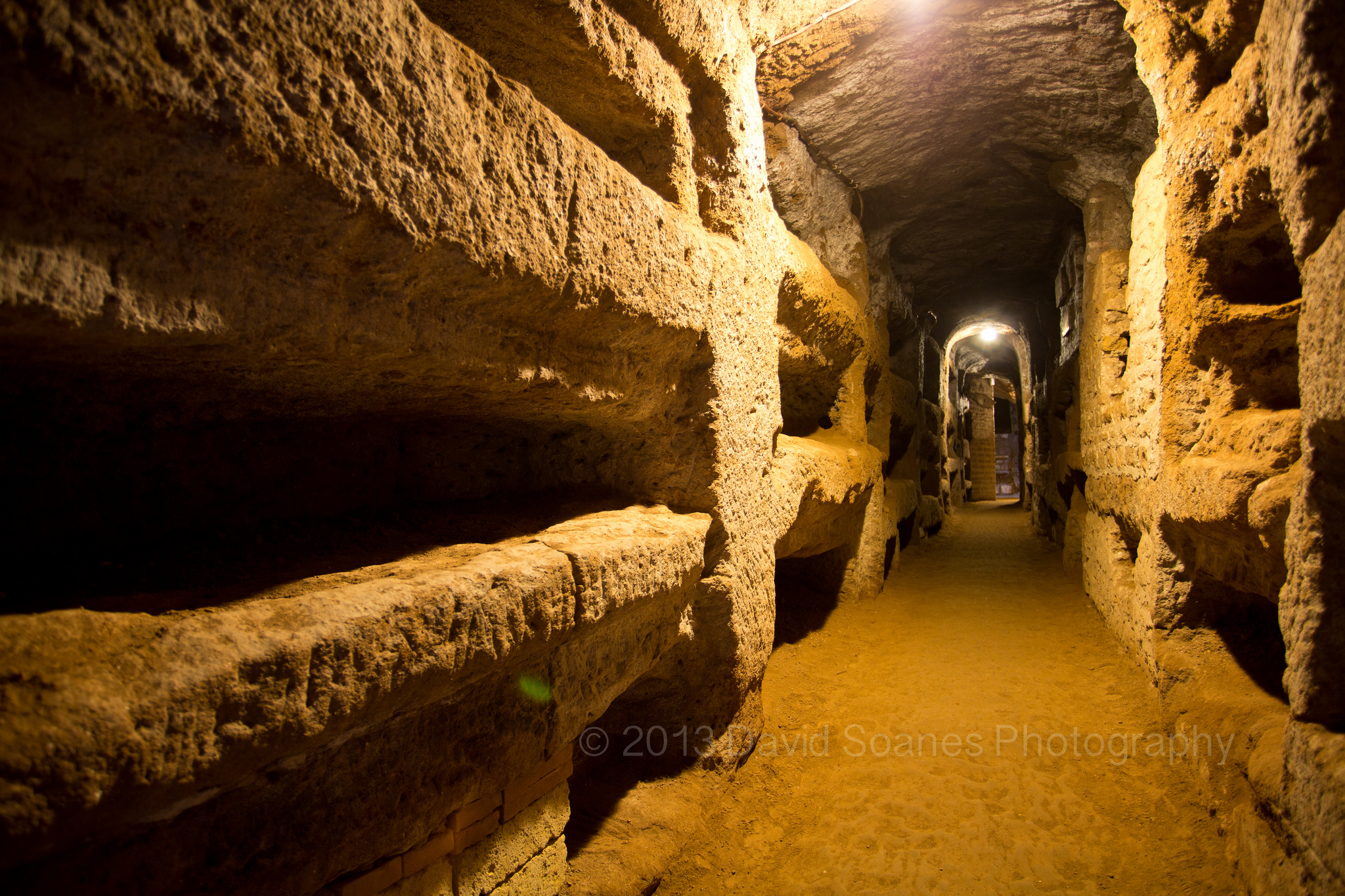
– Her beloved confessor, Mgr. Fournier, appeared to her after his death and announced: “Sorrow will extinguish the Church for a certain time and that time is written in Heaven.” Marie- Julie says: “There will be a complete and perfect overthrow of everything… All Church work will stop. There will be complete destruction and death.” The Church will exist “only as a structural organization,” but She will “continue in the Catacombs.” Jesus told her He would “carry away the Church with all her walls and ornaments.”
– Regarding the false Vatican 2 church, she prophesied that Church law would be violated by both priests and the people who follow them. Most priests and bishops will defect from the faith and the number of the faithful will be “very small… Ministers of God will be the first to apostatize.” In the 1880s Jesus told her: “Disciples not of my Gospel are now working hard to remake according to their ideas and under influence of the enemy of souls a mass that contains words odious in my sight… Religion will remain only in “the lone souls of a few who will be harassed and persecuted.” There will be a “new clergy” and “new mass… new preachers of new sacraments, new baptisms new confraternities… There will not remain any vestige of the Holy Sacrifice.” St. Michael told her Satan would have possession of everything and “all goodness, faith and religion will be buried in the tomb. So why have so few read and taken note of these words written so long go?
Next, we include as whole pages her later words to the faithful, taken from the Marquis de la Franquerie’s Marie-Julie Jahenny, the Breton Stigmatist https://archive.org/details/PropheciesOfMarieJulieJahenny/page/n5/mode/2up):


St. John of the Cross told Marie-Julie: “It is a sure sign that God loves us when He makes us suffer on earth. He who does not suffer, is not the true friend of God. The Lord admits us (into) His grace; thank him. Remember that when we feel the pains of life, we experience His grace. When the Lord begins a work in which He wants His glory to break forth, he surrounds it first with persecutions, the cross, neglect, all kinds of penalties. This is the real charm of the Finger of God. It is necessary that one who is in the friendship of the Lord be tested, that everything in his soul is purified.”
“Under the fury of the storm, what will you do? Wait, pray and do what God wants. Love God with all our heart, faithfully serve God, serve him through the obscurities that are in us, serve despite the darkness where God leaves us and where we need to walk, serve Him all the same. Even when the light of your soul is absolutely extinguished, do not lose heart, go through all the dangers, face the dangers and God will fill you with His grace and His comfort. Who can make us happy on earth, except the peace of God that lives within us, working in us, that prays in us? Without this peace, man becomes like one damned, he runs and precipitates himself into the first gulf that he meets, because it is the devastation inflicted within him by his unregulated passions. Yet this is what happens in many hearts.”
Marie-Julie also was told in her ecstasies: “To keep peace, there is one thing to do, it is to say what God wants, it is to obey the Will of God, it is nothing that can be found in the human creature. It is to be found in God, since He is the Treasure of all… Pray for the Church threatened by a conspiracy hatched by a horrible jealousy of perverted minds banded together to overthrow it. The storm is terrible, but the Church will remain infallible and its walls shall not be shaken. But there will be martyrs … Pray for the Church and ask God for the return of a lost family, a people corrupted, a degraded society. All are our brothers in the Lord. They are souls redeemed at the price of His Blood. Prayer is the only remedy.”
To this can be added nothing more. She has said it all, and it seems that now is the time she foretold and her remedies are those that may help us to endure what lies ahead. Catholic prophecy as a whole is insistent that the only one who can save us from this terrible chastisement is Our Lord Himself, working through His Blessed Mother. Man must do God’s will and obey His law, and God will do the rest. As Marie-Julie said, “When everything seems lost, then will be the time of victory.”
by T. Stanfill Benns | Jan 15, 2021 | Blog
+ St. Paul, First Hermit+
As the spiral downward inexorably continues, those now belatedly understanding where all this is heading are beginning to panic. In the face of the inescapable they are forgetting that Holy Scripture encourages us to avoid this very reaction and to remain calm and trust in God; to distrust the false Christs and prophets, political and clerical alike, and to refuse to give in to the terror they are attempting to instill in us. In the process even Catholics who should know better have forgotten how we are to measure and interpret these times and the traps we must avoiding order to assure our eternal salvation.
One of these traps is the tendency to assign to passages of the Apocalypse an interpretation that is not seated in the spiritual realm but is more suggestive, instead, of the literal opinion of that book common to Protestants. Rev. Hugh Pope, O.P., S.T.M, D.S.S.cr, (a one-time professor of New Testament exegesis at the Collegio Angelico in Rome) made some very astute observations on the various methods used by commentators to interpret the Apocalypse. In his The Catholic Student’s Aids to the Bible, Vol. 5, he writes:
“The Apocalypse must be judged from the standpoint of prophecy…The interpretation, then, of the Apocalypse must be governed by the rules which hold good in the interpretation of all prophecy. For the original hearers…of the prophecies of Isaias or Jeremias, only one thing was certain, namely that, being divinely inspired prophecies, the things foretold would infallibly come to pass… Since, then, the ultimate goal of the Apocalypse is the last things, full light will not be thrown on this prophetic book till those last things have received their ultimate fulfillment.” Pope explained that the attitudes of commentators “has led to much harmful interpretation of the Apocalypse.” And indeed it has, even among Catholic commentators. Rev. R. Gerald Culleton says much the same: “All true prophecy is from God, for His glory and the sake of the ‘elect.’ As it becomes fulfilled it establishes its own divine origin and the reliability of the documents which convey it,” (The Reign of Antichrist, 1951). And nearly all Catholic commentators agree that the Apocalypse is to be taken in the spiritual, not the literal sense. The literal sense is not entirely excluded, but the spiritual sense must be primary. As Pope Leo XIII cautions in Providentissimus Deus:
“The sacred writings are wrapped in a certain religious obscurity and no one can enter into their interior without a guide.” He goes on to quote from the Vatican Council which reminds Catholics that “the true sense of Holy Scripture is that held by our Holy Mother the Church, whose place it is to judge the true sense and interpretation of the Scriptures… no one is permitted to interpret Holy Scripture against such sense or also against the unanimous agreement of the Fathers.” While some may believe this author has done this in holding Paul 6 as Antichrist, read the disclaimer on the opening page of this website: all written here is subject to the judgment of a future Pope, should we ever be fortunate enough to see one. I have done my best to align everything written on these topics with the comments of approved Scripture scholars and theologians, also any available papal documents. We are given a certain leeway in these times because we have no true pontiff or hierarchy to appeal to.
Can we deny that apocalyptic prophecy has been fulfilled in our day? Many do; the only thing we are saying here is that wherever we observe that several approved Church authors have opined on a Scriptural passage, unless it is directly contradicted by what we see before us, we must follow their opinions rather than holding our own as Protestants are wont to do. I will give an example of one such opinion circulating on the Internet which some true Catholics now hold. It reads like this: The current COVID-19 vaccines, because at least some of them have been developed using aborted fetal material, are the mark of the beast. Now of course if Catholics know or even suspect certain vaccines have been developed using aborted fetal material, they are bound not to receive them on moral grounds, and there is a basis for this supposition. On the other hand, if it could be shown to be relatively certain that other vaccines were not developed in this manner and there is a serious reason for receiving one, there would be no sin in doing so.
The problem with the vaccine from aborted tissue and the claim that it is the mark of the beast is that many now living today as Catholics probably received vaccines decades ago, either as young adults or children, that already were contaminated with fetal tissue (see https://www.chop.edu/centers-programs/vaccine-education-center/vaccine-ingredients/fetal-tissues). At that time no one knew of this contamination. So if this line of thinking is followed and such a vaccination is the mark, those receiving it would merit eternal damnation. But how could such people merit damnation if they did not know the vaccine contained fetal tissue? Of course if one received a vaccination knowing the tissue was there and intending to do so for material and social gain, then that would merit damnation as a serious sin unless they truly repented and made amendment. And while the suspect vaccines are certainly one of many tools in the arsenal maintained by those operating under Antichrist’s remaining system, and so indirectly are a product of that system, they cannot be said to correspond with the spiritual meaning of the mark of the beast.
The commentators tell us the true nature of the mark, although all do not comment on its actual components or meaning. Fr. E. S. Berry (The Apocalypse of St. John) and H. B. Kramer (The Book of Destiny) indicate the mark is a hellish form of Baptism and intimate the mark on the hand could be false Holy Orders. Fathers Berry, Arminjon (The End of the Present World and Mysteries of the Future Life), Huchede (History of Antichrist) also Abp. Sheen describe an entire counterfeit church or religion in opposition to the true Church, which means that church would have its own rites. Catholics receive Baptism on their foreheads and most Catholics know that during the ordination ceremony, priests are anointed on their hands (thumbs and index fingers) which touch the Sacred Host, giving the power to transform the bread and wine into Christ’s Body and Blood. But it is the bishops who are the primary pastors of the Church, not the priests, and the only valid episcopal rite of the Church below shows what relevance this reference to hands and forehead really holds regarding apostolic succession.
Laying on of the Hands
“Then the Consecrator and the assistant bishops (all wearing mitres) touch with both hands the head of the one to be consecrated (who is still kneeling) saying: “Receive the Holy Ghost.” (In the NO rite, this action is done in silence.) He makes the Sign of the Cross on the cloth crown of the mitre, and then anoints the rest of the crown while saying: “May thy head be anointed and consecrated by heavenly benediction in the pontifical order. “May thy head be anointed and consecrated by heavenly benediction in the pontifical order. And making with his right hand, the sign of the cross three times over the head of the Elect, he says:
“In the name of the + Father, and of the + Son, and of the Holy + Ghost. R. Amen. V. Peace be with thee. R. And with thy spirit.” [From the above wording it is clear that the Bishop-elect’s head is actually being anointed now and that the Consecrator is actually blessing him in this moment using the Pontifical blessing of a bishop.]
“While Ps. 132 is being sung, the Bishop-elect has one long strip of cloth placed on his neck. The Consecrator sits down and wearing his mitre anoints the hands of the Bishop-elect who is kneeling before the Consecrator. The hands are anointed in the form of a cross. The Consecrator dips his thumb in the oil and draws two lines from the thumb of the right hand to the
index finger of the left hand and from the thumb of the left hand to the index finger of the right hand. (See https://www.hrcac.org.uk/Comparison-of-Old-and-New-Consecration-Rites-2.pdf).
All of the above must be taken in the spiritual sense in which it is intended. The reference to this mark of the beast in Apocalypse is spiritual. The sea beast in Apocalypse Chap. 13 institutes new sacraments to “replace” the old. This is the Man of Sin, Antichrist in person. There is nothing that says that the successors of Antichrist might not also promote some identification sign that must be received on the hand or forehead that would mark citizens in a way that could determine whether they buy or sell, but this is only a material extenuation of the spiritual reality. Christ teaches us in Matthew 10:28: “And fear ye not them that kill the body, and are not able to kill the soul: but rather fear him that can destroy both soul and body in hell.” We should fear only that which will certainly kill our souls — the falsification of the Church established by Christ and the Sacraments He instituted. The political remnants of Antichrist’s system can definitely kill our bodies, but we cannot lose sight of the true spiritual meaning of this mark and hope to save our souls. It is the key to everything we must believe and all we must do to persevere unto the end.
Antichrist did not come to destroy political empires, although in the course of his mission these also were destroyed. His sole target was the Church. Rome was the location of his throne and his successors yet rule there to carry out his agenda. This is the Lawless One and his system; there are two entities. Spiritual meanings cannot propose new doctrine, only illuminate doctrines already existing. Everyone knows that the pope was considered by the world to be the enemy of everything Protestant, pagan and especially Masonic. That Satan, and ultimately his “son,” Antichrist, would consider him his foremost enemy and covet his throne has been demonstrated time and time again throughout history, beginning with Simon Magus and antipopes classified by the Church as antichrists throughout history. That in consequence he would set out to also destroy any possibility that the papacy could revive itself is only a given. Hence we have the NO sacraments and the mark.
Much more could be said on this topic, and God willing, will be said in the weeks to come. For those who seek them out, the texts of Holy Scripture comfort God’s people consumed with fear in these times. Christ has never abandoned us; He is with us now more surely than ever before. No one knows what might happen over the next several days, weeks or months, but we all should pray for each other, put our spiritual affairs in order and thank God for the many blessings He has granted us in being able to live in this country and freely practice our faith all these years. Pray, watch, and make reparation for the many evils that have been perpetrated under the guise of good. Place your trust in Jesus’ Sacred Heart alone.
by T. Stanfill Benns | Jan 3, 2021 | Blog
+The Most Holy Name of Jesus+
The following presidential document was forwarded to me by a reader, and while the feast day of the saint the proclamation honors has passed, the sentiments in the proclamation below speak for the man who for the past four years has been the victim of countless ad hominem attacks. Donald Trump is no saint and has never pretended to be. But he loves his country and the document below is something all Catholics should consider well.
Proclamation on the 850th Anniversary of the Martyrdom of Saint Thomas Becket
Today is the 850th anniversary of the martyrdom of Saint Thomas Becket on December 29, 1170. Thomas Becket was a statesman, a scholar, a chancellor, a priest, an archbishop, and a lion of religious liberty.
Before the Magna Carta was drafted, before the right to free exercise of religion was enshrined as America’s first freedom in our glorious Constitution, Thomas gave his life so that, as he said, “the Church will attain liberty and peace.”
The son of a London sheriff and once described as “a low‑born clerk” by the King who had him killed, Thomas Becket rose to become the leader of the church in England. When the crown attempted to encroach upon the affairs of the house of God through the Constitutions of Clarendon, Thomas refused to sign the offending document. When the furious King Henry II threatened to hold him in contempt of royal authority and questioned why this “poor and humble” priest would dare defy him, Archbishop Becket responded “God is the supreme ruler, above Kings” and “we ought to obey God rather than men.”
Because Thomas would not assent to rendering the church subservient to the state, he was forced to forfeit all his property and flee his own country. Years later, after the intervention of the Pope, Becket was allowed to return — and continued to resist the King’s oppressive interferences into the life of the church. Finally, the King had enough of Thomas Becket’s stalwart defense of religious faith and reportedly exclaimed in consternation: “Will no one rid me of this meddlesome priest?”
The King’s knights responded and rode to Canterbury Cathedral to deliver Thomas Becket an ultimatum: give in to the King’s demands or die. Thomas’s reply echoes around the world and across the ages. His last words on this earth were these: “For the name of Jesus and the protection of the Church, I am ready to embrace death.” Dressed in holy robes, Thomas was cut down where he stood inside the walls of his own church.
Thomas Becket’s martyrdom changed the course of history. It eventually brought about numerous constitutional limitations on the power of the state over the Church across the West. In England, Becket’s murder led to the Magna Carta’s declaration 45 years later that: “[T]he English church shall be free, and shall have its rights undiminished and its liberties unimpaired.”
When the Archbishop refused to allow the King to interfere in the affairs of the Church, Thomas Becket stood at the intersection of church and state. That stand, after centuries of state-sponsored religious oppression and religious wars throughout Europe, eventually led to the establishment of religious liberty in the New World. It is because of great men like Thomas Becket that the first American President George Washington could proclaim more than 600 years later that, in the United States, “All possess alike liberty of conscience and immunities of citizenship” and that “it is now no more that toleration is spoken of, as if it was by the indulgence of one class of people, that another enjoyed the exercise of their inherent natural rights.”
Thomas Becket’s death serves as a powerful and timeless reminder to every American that our freedom from religious persecution is not a mere luxury or accident of history, but rather an essential element of our liberty. It is our priceless treasure and inheritance. And it was bought with the blood of martyrs.
As Americans, we were first united by our belief that “rebellion to tyrants is obedience to God” and that defending liberty is more important than life itself. If we are to continue to be the land of the free, no government official, no governor, no bureaucrat, no judge, and no legislator must be allowed to decree what is orthodox in matters of religion or to require religious believers to violate their consciences. No right is more fundamental to a peaceful, prosperous, and virtuous society than the right to follow one’s religious convictions. As I declared in Krasiński Square in Warsaw, Poland on July 6, 2017, the people of America and the people of the world still cry out: “We want God.”
On this day, we celebrate and revere Thomas Becket’s courageous stand for religious liberty and we reaffirm our call to end religious persecution worldwide. In my historic address to the United Nations last year, I made clear that America stands with believers in every country who ask only for the freedom to live according to the faith that is within their own hearts. I also stated that global bureaucrats have absolutely no business attacking the sovereignty of nations that wish to protect innocent life, reflecting the belief held by the United States and many other countries that every child — born and unborn — is a sacred gift from God. Earlier this year, I signed an Executive Order to prioritize religious freedom as a core dimension of United States foreign policy. We have directed every Ambassador — and the over 13,000 United States Foreign Service officers and specialists — in more than 195 countries to promote, defend, and support religious freedom as a central pillar of American diplomacy.
We pray for religious believers everywhere who suffer persecution for their faith. We especially pray for their brave and inspiring shepherds — like Cardinal Joseph Zen of Hong Kong and Pastor Wang Yi of Chengdu — who are tireless witnesses to hope.
To honor Thomas Becket’s memory, the crimes against people of faith must stop, prisoners of conscience must be released, laws restricting freedom of religion and belief must be repealed, and the vulnerable, the defenseless, and the oppressed must be protected. The tyranny and murder that shocked the conscience of the Middle Ages must never be allowed to happen again. As long as America stands, we will always defend religious liberty.
A society without religion cannot prosper. A nation without faith cannot endure — because justice, goodness, and peace cannot prevail without the grace of God.
NOW, THEREFORE, I, DONALD J. TRUMP, President of the United States of America, by virtue of the authority vested in me by the Constitution and the laws of the United States, do hereby proclaim December 29, 2020, as the 850th anniversary of the martyrdom of Saint Thomas Becket. I invite the people of the United States to observe the day in schools and churches and customary places of meeting with appropriate ceremonies in commemoration of the life and legacy of Thomas Becket.
IN WITNESS WHEREOF, I have hereunto set my hand this twenty-eighth day of December, in the year of our Lord two thousand twenty, and of the Independence of the United States of America the two hundred and forty-fifth.
*******************************************
A few comments are in order here. First of all, aside from the mention of Novus Ordo Chinese bishops (who while not Catholic are still clergy being persecuted in China), this proclamation appears to be sincere and entirely orthodox. Secondly, it emphasizes the obligation of all those who truly believe in God to obey Him, and not government officials who, as happened in pagan times and even in St. Thomas Becket’s day, would order Christians to disobey God’s laws. The proclamation is delivered in respectful even reverential tones, and most importantly, it used the life of a Catholic archbishop to illustrate the necessity of placing God first if this country is to expect to live in peace and be worthy of God’s grace.
We are facing a week that will decide the fate of all Christians of every stripe in this country, and indirectly, in the entire world. Trump knows this, and he is reminding us of his commitment to defend our right as Catholics to profess our faith. I have limited knowledge of presidential proclamations, but I think it is safe to say that no modern president has made such a statement of faith in reference to the Catholic Church. He appears to be appealing to us to stand firm in the event that he loses any option to serve another term, which he may. Pray God his words will stand as a warning heeded, and not become a prophecy of future persecution of Christians under Biden’s socialist regime.
by T. Stanfill Benns | Dec 24, 2020 | New Blog
+Mary ChristMass and a blessed New Year!+
Introduction
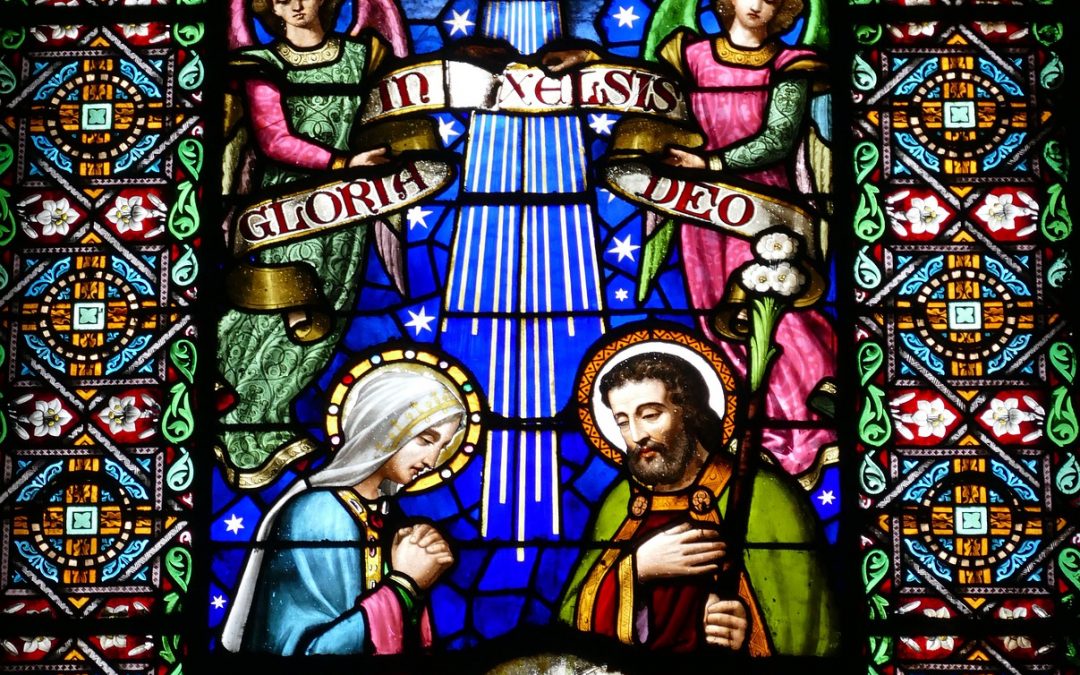
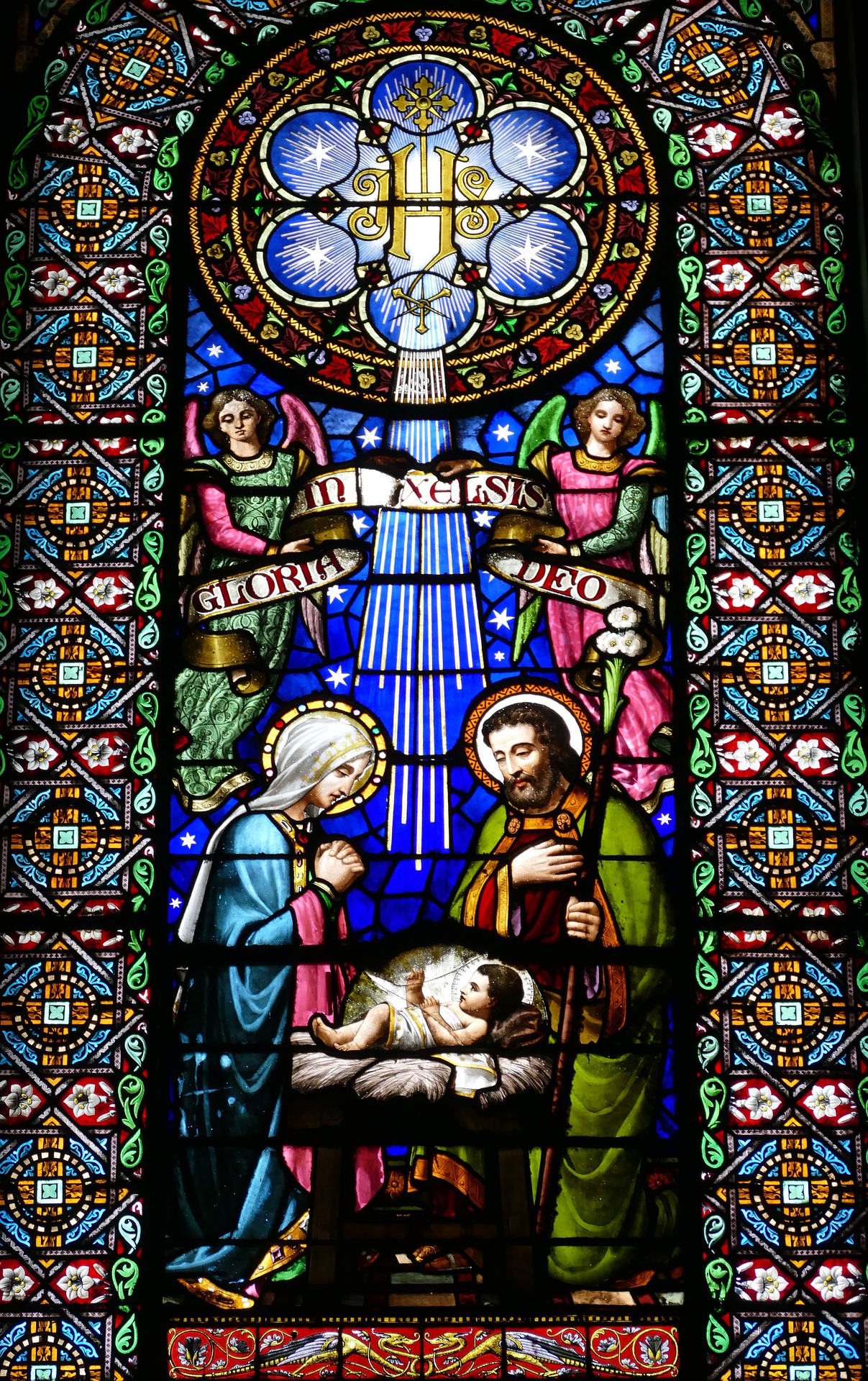
This ChristMass will be one that American Catholics will not soon forget. Communist and third-world countries have long seen the unrest we are now experiencing but never in this country have we seen such chaos and confusion. In these times we must lift up our heads and search the heavens, imploring God to grant us the graces we need to save our souls. We have already seen the brightness of the Star of Bethlehem there, reminding us, perhaps, that we could soon see the cross of redemption fixed in the sky, telling us that Christ is on His way to visit the earth. Many now, both those calling themselves Catholic and non-Catholics alike, are speaking of the imminent arrival of Antichrist. But as explained many times in this blog and in website articles, the Man of Sin proper has already come and gone. All that remains is for those now continuing his system to open their final act on the world stage and complete the fulfillment of Bible prophecy. Antichrist’s diabolical system is definitely in play here, as explained below in Daniel’s vision of the latter days. We have seen the land and sea beasts of Apocalypse, Chapter 13. But Daniel details for us the nature of the fourth beast or kingdom, as he calls it, from which these beasts issue, and that is the New World Order system we now see in action.
Daniel’s Visions (Chap. 7, vs. 15-28)
“My spirit trembled, I Daniel was affrighted at these things, and the visions of my head troubled me. I went near to one of them that stood by and asked the truth of him concerning all these things, and he told me the interpretation of the words, and instructed me: These four great beasts are four kingdoms, which shall arise out of the earth. But the saints of the most high God shall take the kingdom: and they shall possess the kingdom for ever and ever.
“After this I would diligently learn concerning the fourth beast. which was very different from all and exceeding terrible: his teeth and claws were of iron: he devoured and broke in pieces, and the rest he stamped upon with his feet: And concerning the ten horns that he had on his head: and concerning the other that came up, before which three horns fell: and of that horn that had eyes, and a mouth speaking great things, and was greater than the rest. I beheld, and lo, that horn made war against the saints, and prevailed over them till the Ancient of days came and gave judgment to the saints of the most High, and the time came, and the saints obtained the kingdom.
“And thus he said: The fourth beast shall be the fourth kingdom upon earth, which shall be greater than all the kingdoms, and shall devour the whole earth, and shall tread it down, and break it in pieces. And the ten horns of the same kingdom, shall be ten kings: and another shall rise up after them, and he shall be mightier than the former, and he shall bring down three kings. And he shall speak words against the High One and shall crush the saints of the most High: and he shall think himself able to change times and laws, and they shall be delivered into his hand until a time, and times, and half a time. And judgment shall sit, that his power may be taken away, and be broken in pieces, and perish even to the end. And that the kingdom, and power, and the greatness of the kingdom, under the whole heaven, may be given to the people of the saints of the most High: whose kingdom is an everlasting kingdom, and all kings shall serve him, and shall obey him.
“Hitherto is the end of the word. I Daniel was much troubled with my thoughts, and my countenance was changed in me: but I kept the word in my heart.”
Babylon in history
The history of God’s chosen people, taken as a whole, teaches some very straightforward and important lessons. Holy Writ provides the basic summary of the machinations of God’s enemies throughout history, from the earliest days of the Israelites up to our own day. While Satan wishes all things to appear new, there is very little variation on his original scheme to deprive man of eternal happiness with his Maker.
The book of Genesis records the history of Satan’s assault on man, and Ven. Mary of Agreda, in her “Mystical City of God,” portrayed him as the eternal protagonist from the very beginning. Satan’s primary failing, she explained, was envy of the Son whom God the Father announced would redeem the world. Until this announcement came, Satan himself had presumed primogeniture in Heaven. That another would assume flesh, outstrip his gifts of grace and usurp his favor with the Almighty enraged him. On realizing the intentions of God, he revealed the true extent of his envy and hatred of the Word. He expressed this by issuing his fateful boast to make the persecution and destruction of the Divine Word his eternal mission, citing the defilement of Mary Most Holy as the means to attain this end.
Addressing this blasphemy, the Father solemnly proclaimed the final victory would belong to the Immaculate Conception, who would crush Satan’s proud head. He then flung him and the followers he had recruited deep into the center of the earth, where the Evil One and his demons have never ceased to issue forth and persecute men.
The next confrontation came in Eden. There Satan, in the guise of a serpent, first unveiled his system of Gnosis (knowledge of things forbidden by God), telling Adam and Eve that knowledge of both good and evil would make them God’s equal. Again the Creator reminded Satan of his destruction by the Woman. For our first parents, who left us the ignoble legacy of original sin, the price of pride and disobedience was the loss of Paradise. But for those who followed the serpent, the wages of Gnosis were eternal death in Hell.
Not one to waste time, Satan soon found accomplices among Adam’s descendants willing to imitate his example and accept his occult knowledge. The heavenly image of Satan’s fall from favor was mirrored in Cain’s murder of his innocent, well-intentioned brother Abel. Abel, a shepherd, prefigured Christ, the Good Shepherd, offering the sacrifice of his first fruits. Cain, envious of his brother’s goodness and eager for material gain, offered God only what he felt he could afford to spare – an offering deemed unacceptable in God’s eyes. When God informed Cain of his shortcomings, he followed in Satan’s footsteps. While Satan had assailed the Word spiritually, Cain physically assaulted and murdered his brother, then denied his deed to God. Satan has been a liar and a murderer from the beginning, as Holy Scripture attests.
Branded and sent into exile as punishment for his sins, Cain did not have an equal in sinfulness until the days of Noe. Adding lewdness to the long list of Satan’s deceits, Cham or Ham, the son of Noe, sinned by laughing at his father’s nakedness after Noe unintentionally became drunk from the fruits of his first vineyard. Noe cursed Cham for his immodesty and the taint of this curse apparently filtered down to Cham’s grandson, Nemrod, ruler of Babylon.
As Babylon’s ruler, Nemrod denounced God, wishing to receive the honor and glory his subjects offered to God for himself. He authored secular humanism by teaching them that they could ascribe all these physical and intellectual gifts to themselves. Styling himself as the strongest and craftiest ruler of his day, Nemrod then became the first to demonstrate that might makes right, tyrannizing his people for his own ends. According to Hebrew and Oriental traditions given some credence by the Church, he founded the Sabaean religion, archetype of pagan belief. In it was encapsulated all pagan belief, from Babylonian times to the present. He taught the people of Babylon that the sky was a crystal ceiling, the patriarchs that had died and gone to heaven being the very planets in the sky. Deity became synonymous with nature and the force that accounted for the heavens and earth. Unable to spiritualize this creative force, the early apostates worshipped the reproductive forces in man and nature. (This is the true origin of the legends that atheists claim prove Scripture to be nothing more than one possible explanation of actual events.)
Now the Sabaeans believed that meteors and certain stones were pieces of these supposed patriarch-planets fallen to earth, and they began worshiping the stones as gods. In the early stages of their disbelief, before they were recognized as having completely apostatized from the One God, they would secretly use these stones to build their altars of sacrifice, unbeknownst to their fellow worshippers who offered sacrifice to the true God. As the convert, Rabbi Drach, explains: “Our fathers, sons of Sem, preserved in the sanctuary of the Temple of Jerusalem the Beth-el Stone of Jacob (Jacob’s ‘stone pillow’), and in this stone they worshipped the Messiah. This cult was imitated by our neighbors of Phoenicia, sons of Cham, who had a common language,” (“Trail of the Serpent,” by Inquire Within). Later, the stones worshipped by these early idolaters were chiseled into phallic and other shameful shapes and hidden from view, accounting early on for the secrecy inherent in the mystery religions. Remnants of this worship can be seen today in “worry” stones and “pet rocks.”
Before the apostasy fostered during Nemrod’s reign, God made known His intention to separate the various tribes of peoples, sending them into different lands so that His designs for populating the entire earth might be accomplished. Nemrod and his subjects set themselves against this plan by building the Tower of Babel, claiming, the ancient traditions related, that as punishment God would renege on His promise never again to destroy the earth by flood. They sought to unite as many of their people as possible to preserve the one language they feared to lose in separation.
Nemrod boasted his tower would reach the planet-gods of heaven. Like Satan, his father, he feared God would deprive him of his kingdom. He was desperately attempting to attract as many adherents to his new religious-politico empire as he possibly could. The infidelity occasioned by worshiping men as gods (the father-patriarchs and themselves) had resulted in the degradation of women, immorality and depravity. Before the tower was completed and Nemrod’s scheme could succeed, God changed the tongues of the various families so they could no longer understand one another and were forced to separate. Thus was the first attempt at one-world government and religion foiled by Divine intervention. But Nemrod’s people, the sons of Sem, continued to live between the Tigris and Euphrates. And from this continuation of the Babylonian empire arose the Egyptian and other pagan mystery religions.
Babylon is the code word used by early Christians to identify Rome. In the Apocalypse we find reference to the whore of Babylon and Babylon the Great, which is destined to fall; repaganized Rome and her earthly satellites. Chapter 13 of Apocalypse identifies three separate beasts that will manifest themselves during Antichrist’s reign. The sea beast is generally interpreted by Catholic commentators as Antichrist proper and the land beast as the false prophet, although some reverse these two roles. Then there is the third beast which is also the fourth kingdom, spoken of by Daniel the prophet. It also is referred to in Apoc. 17 as the whore of Babylon, across whose forehead is written “mystery.”
This kingdom is symbolized by a woman who rides the Antichrist beast, or in other words is carried along with him (the horns receive a kingdom WITH the beast, Apoc. 17:12). One specific king in particular will side with Antichrist and his system. Babylon the great is pagan Rome allied with Freemasonry, Socialism and Communism. This alliance began during the reigns of Roncalli and Montini and continues in our own day with Antichrist’s system. The false prophet (Angelo Roncalli, known as John 23) first prepared the way for Giovanni Montini (Paul 6) by making him a cardinal then announcing the calling of the false Vatican 2 council. Paul 6 was unmistakably identified in many ways with the number six, and this has been demonstrated in the writings of various authors, myself included, for decades. Scripture clearly tells us who Antichrist proper is, for this beast, Paul 6, usurped the papacy then abolished the Latin Mass when he who withholdeth was taken out of the way (Pope Pius XII). Antichrist has come, but the ultimate material reign of the system he established is about to be revealed. If it is represented by a particular political figure, so be it, but he must not be confused with Antichrist proper, who in every sense can be only a spiritual figure.
Two trends in Scripture commentary
Commentators seem to be caught up in two different excesses in predicting Antichrist’s reign. Some deny anything that would seem to support the Protestant contention that Antichrist could in any way be identified with the papacy. They enter into long and drawn-out explanations as to why these Protestant teachings on the pope as Antichrist are heretical and not a true fulfillment of the prophecies. This is true and perhaps it was necessary to some extent, but it should not eclipse the actual situation today, but they do not explain that it could have an entirely Catholic interpretation. No one is saying a true pope is or could ever become Antichrist. We are saying that a man who is only posing as a true pope became Antichrist, one who was never validly elected and could never, therefore, have continued the papal succession. None of the commentators even considered this with the exception of Rev. E. S. Berry, who believed the false prophet would “probably set himself up in Rome as a sort of antipope during the vacancy of the papal throne [mentioned in Apoc., Ch. 12]. Of course this is true, for it is exactly what Roncalli did. What Berry misses is that the Antichrist himself will also be a false pope.
The other excess is related to the above but varies from it somewhat. These commentators hold that the papacy can never cease to exist, despite what Henry Cardinal Manning and others (including Fr. Berry) teach regarding he who withholdeth. Some teach a pope could actually become a heretic and still remain pope (material-formal); others believe that some bishop of Novus Ordo origin could “turn’ and be elected a true pope without ever possessing apostolic succession, contrary to all Church law and teaching. The first excess group fears to finger Montini as Antichrist because they believe it comes too close to the papal antichrist theory, a heresy, even though Pope Paul IV tells us exactly how such a thing could happen in his Cum ex Apostolatus Officio. The second excess group isn’t worried about heresy; they long ago compromised themselves by accepting men as their “clerics” who had no valid claim to either apostolic succession or a mission granted by the Church. They are a new non-Catholic religion with new minsters who parody Mass and Sacraments but can transmit nothing. They secretly realize their lack of jurisdiction for their clergy poses a valid threat to their membership, so they must have a pope to make it appear they can function validly and “prove” the Church still exists.
Both groups would necessarily need to style any man considered Antichrist as a political figure to satisfy their needs and prejudices as well as their illogical conclusions. But the Church does not deal in politics and the affairs of the secular world; She deals only in the spiritual realm. Antichrist proper can project a material manifestation but only if it is firmly held and understood by Catholics that his primary role is and must be spiritual since it is the spiritual realm that he so profoundly impacts. He ruled as an imposter stripping the Church of all that Christ established on earth. No political figure could ever hope to effectively deceive the elect and seduce the faithful by doing such a thing from outside the confines of the Church; he would be seen as the enemy. No; it would need to be done from within, with at least the appearance of authority, to fulfill Scripture prophecy completely. This is not to say that these prophecies will not and cannot have a secondary more literal fulfillment, but in actuality it is only an extension of the initial spiritual fulfillment.
What we may be seeing in the formation of the New World Order is the open and undeniable cooperation of Francis with the conspirators, for is he not also Antichrist by extension, being in his direct line of descent? Remember that the devil wishes to impersonate Christ perfectly; he too shall have his own satanic succession and each one of his “pontiffs” will be a mirror image of Antichrist with all the same power, just as St. Peter was. But this succession is the system of Antichrist, for only one of these men could be the actual Man of Sin according to the Church, and we know this man had to be Montini, in all likelihood. Holy Scripture gave us all the signs we needed to identify him, and the disappearance of the papacy cannot be explained unless we admit his existence. The whore of Babylon lent her power to the evil governments of the world when Roncalli/Montini embraced Freemasonry, Socialism and Communism. This is only the culmination of that alliance, with a formal acceptance now coming from Francis. But the betrayal of the Church began long ago, even before the death of Pope Pius XII. Francis’ role is to fulfill the Protestant claims that the Church was indeed Antichrist, alienating non-Catholics with sympathies toward Catholicism, in order to wipe out the Church’s salvific mission forever. Traditionalists will play the role of the true Church and deceive any remaining elect. Eventually the powers that be will tire of Rome’s affiliations and Apocalypse predicts they will destroy the city, a physical fulfillment of the longstanding spiritual reality. Then even the semblance of any religion will disappear and Satanism will fill the void.
When will Christ interrupt this chain of events? That is His carefully guarded secret. Below we will quote a Novus Ordo work which refers to the writings of St. Louis Grignon de Montfort, writings of this saint not otherwise available to us. The work is from Fr. Andrea D’Ascanio OFM Cap., at the Marianum Pontifical Faculty of Theology in Rome. It consists mainly in quotes from de Montfort, but certain comments on these writings, where they remain in keeping with the faith, have also been retained.
Abbreviations used to cite Montfort’s works:
LCM Letters to Members of the Company of Mary; LEW, The Love of Eternal Wisdom; L Letters; LFC, Letters to the Friends of the Cross; FP, Fiery Prayer; RM, Rule for the Missionary Priests of the Company of Mary; SR, The Secret of the Rosary; SM, The Secret of Mary; TD, Treatise on True Devotion to Mary and RHP, Rules for the Holy Pilgrimage to Our Lady of Saumur. Fr. D’Asconio’s text is below.
“Who will these servants, slaves and children of Mary be?” They are those the Spirit has chosen so that “his holy Mother may be known, honoured and loved as never before” in the last times, at the conclusion of the ancient battle between the woman and the serpent, between her offspring and the serpent’s offspring (Gen 3,15). At that time Mary’s power will be revealed, right when Satan will try to strike her “heel”, that is ‘ses humbles esclaves et ses pauvres enfants’ to whom she will convey her grace. They will be the great saints of the last times who, “in union with Mary, will crush the head of Satan with their heel, that is, their humility, and bring victory to Jesus Christ” (TD 54).
“Their main characteristic will be a profound inner life; following John’s example they “stay at home with their mother” (TD 196) devoted to prayer, following the example and in the company of she who has always loved meditation and prayer. Their main concern must be their own interior perfection, “compared to which all other work is mere child’s play,” (TD 196). They will live the first and only commandment of Love by seeking God with all their heart, with all their mind and with all their strength, like the first monks and hermits who abandoned the world in order to achieve complete unity with Him… They will go out into the world only to carry out the duties of their status following the will of God their Father and Mary their Mother.” (This is the connection to St. John the beloved disciple we have referred to in previous blogs. He and Our Lady are with us today — TSB)
“In one of his works of 1919, P. Lhomeau, commenting on the apostles of the last times according to Monfort, thus summarizes what the Church means by “last times”: “Christian language refers to the “last times” as a period of indeterminate length which can involve years or centuries, in which any kind of catastrophes or events, especially the misfortunes of the Church, its downfalls and victories. In the end, everything will be extreme and, so to speak, terminal in character, and will prepare for the second coming of Christ (…). That is what we call parousia. This return of Christ is the object of our faith; and the Master Himself ordered us to watch and wait (…). Its date is in the secret of God.” There has been much talk on the meaning of Montfort’s expressions concerning the second and last coming of Jesus, which theologians have interpreted in different, and at times contrasting, ways. According to Montfort’s most profound commentator there are two deluges, a ‘fiery deluge of pure love’ which will convert all men and also a ‘divine fire of his anger’ which ‘will reduce the whole world to ashes.’
“The reign especially attributed to God the Father lasted until the Flood and ended in a deluge of water. The reign of Jesus Christ ended in a deluge of blood, but your reign, Spirit of the Father and the Son, is still unended and will come to a close with a deluge of fire, love and justice. When will it happen, this fiery deluge of pure love with which you are to set the whole world ablaze and which is to come, so gently yet so forcefully, that all nations, Moslems, idolaters and even Jews, will be caught up in its flames and be converted? None can shield himself from the heat it gives, so let its flames rise. Rather let this divine fire which Jesus Christ came to bring on earth be enkindled before the all-consuming fire of your anger comes down and reduces the whole world to ashes.” Is it possible that God won’t grant Mary’s heartbroken request for this prophet, in which she lives and fully identifies with? The time has not come yet. Before the altar of the Trinity, Mary will keep alive this fiery cry which her servant raises up in the name of the Church and of humanity and its effects will be seen in the most difficult moments of the last Church. (This is an echo, it seems, of the conditional Fatima promise. No one can be certain that the necessary conditions of this promise were ever fulfilled by a sufficient number of people praying OR by the consecration made by Pope Pius XII. — TSB)
“Saint Louis Mary pays the high price of a prophet who spiritually lives the dramatic final battle between good and evil; he has realized that in order to accomplish his salvific plan “Almighty God and his holy Mother are to raise up great saints who will surpass in holiness most other saints” (TD 47) and he asks for its fulfilment with all the strength of his being… Montfort understands that there is something mysterious in God’s plan which he can’t figure out: “No one knows how and when this will come to pass, but we do know that God, whose thoughts are further from ours than heaven is from earth, will come at a time and in a manner least expected, even by the most scholarly of men and those most versed in Holy Scripture, which gives no clear guidance on this subject,” (SM 58).
“Montfort [repeats] often that the final battle will take place above all in man’s inner soul… In “heaven”, that is in the dimension of the spirit, the “sun” which is God “will be darkened”: this is the result of a century of theoretical and practical atheism in which man has wanted to banish God, renewing on earth the ‘non serviam’ which already resounded in heaven. It is the dreadful ‘silence of God’ dreaded by Israel. As a result, ‘the moon shall not give her light’: the Church, which reflects the light of the sun which is God, will enter into a profound crisis whose most visible sign will be ‘the stars which will fall from heaven’. In God’s heaven the ‘stars’ are the priests (“You are the light of the world…” Matt. 5:14). (Pre-V2 Scripture commentators identify the stars as bishops or the hierarchy in general – TSB).
“From post Vatican II until today about 100,000 priests have abandoned their ministry, and this exodus doesn’t show signs of coming to an end. ‘The powers of heaven shall be moved’: The heavens are the souls of men who, having become orphans because they have lost their Father and Mother, will find themselves in a profound moral and spiritual chaos. This situation is already clear as well. ‘And then shall appear the sign of the Son of man in heaven. And then shall all tribes of the earth mourn’. The only sign of the Son of man is the Cross. This sign will appear impressed with fire in every soul. In suffering, all souls will comprehend their ingratitude and neglect for this crucified Love, they will mourn and they will be saved.” (This is the true value of being deprived of Mass and Sacraments and of the very Church Herself, this mourning. Many style it as the condemnation of stay-at-home Catholics, but instead it is the opportunity to work out our salvation — TSB.)
“The last times are those of the greatest moral decay in which we are living and of which Montfort prophesies. This vision makes his great supplication to God the Almighty Father spring from his heart: “Be mindful, Lord, of your Congregation, when you come to dispense your justice. (…) Will everything come to the same end as Sodom and Gomorrah? Is it not true that your will must be done on earth as it is in heaven? Is it not true that your kingdom must come? Did you not give to some souls, dear to you, a vision of the future renewal of the Church? Are not the Jews to be converted to the truth and is this not what the Church is waiting for? All the blessed in heaven cry out for justice to be done. And the faithful on earth join in with them and cry out: Amen come, Lord!” (FP 5). (End of de Montfort book quotes.)
Conclusion
It may appear strange to speak of Christ’s Second Coming on the eve of His birth, but the Gospel for the first Sunday of Advent itself opens the season with this reminder. Nor should we lose sight of it during the ChristMass season, especially when the signs of its close approach are so frighteningly apparent. The above paragraphs, however, should give much comfort to those who must endure these terrible trials and tribulations, for perhaps, without even knowing it, we have followed de Montfort’s advice and hopefully classify as the lovers of Jesus and Mary he describes. May the love of the Christ Child live ever in your hearts and may we all pray for a safe and peaceful New Year.